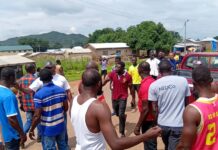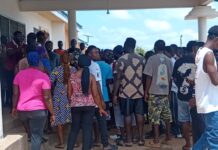

The Cardinal Namdini Gold Mine in the Talensi District of the Upper East Region has officially responded to the allegations and agitations by a pressure group called Talensi Mining Community Initiative (TAMCI) on issues of poor mining practices and human rights abuses.
TAMCI through several press conferences and demonstrations accused Cardinal Namdini Mining of division and acrimony that according to them, has created unnecessary competition and rivalry among traditional rulers, affecting unity and cooperation in the development drive.
TAMCI accused the mining company of initiating a poor resettlement and compensation package for the host communities and that, no proper compensation was done.
Among other demands, the Talensi Mining Community Initiative demanded to sign a Social Responsibility agreement with Cardinal Namdini Mining on behalf of the entire people of Talensi.

In a letter sent to TAMCI on September 4, 2025 by Cardinal Namdini Mining for the concerns raised by the pressure group, Cardinal Namdimi states “As stated in your petition, signing a social responsibility agreement with established stakeholders will strengthen and promote sustainable relationships within the entire community. Again, this approach engenders trust and ensures compliance with local governance”.
On employment bias, Cardinal Namdini says “We encourage you to engage directly with the Talensi Traditional Council to address any issues you may have with the committee. Open dialogue with the council may provide a productive avenue for resolving your concerns and advance a collaborative approach to community employment matters”.
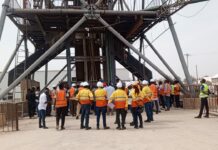
According to the mining company it has a workforce of 2,135 which 94% are locals (Ghanaians) with 50% from the Upper East Region. Out of those from the Upper East Region, 56% are from the Talensi District and the local employees are actively engaged in on-the-job training to facilitate a smooth transition for some key positions currently held by expatriates who are preparing to return home following project commissioning.
Cardinal Namdini Mining has disclosed that, a total of 123 residential houses equipped with kitchens, bathrooms, toilets, designed with gable roofs and aluzinc materials for durability and many modern equipment and materials as part of the resettlement drive. Additionally, fifteen units of teachers quarters, two health centers with six unit nurses quarters, ten boreholes, Chief palace, Church, mosque, roads, electricity supplied from the national grid and many facilities have been provided.
“The company facilitated the transportation of households to their new homes and provided transition allowances for families during the transition period. The company also ensured that adequate resources, such as farm tools, inputs, fertilizers, tractor and technical services were available for the restoration of livelihoods for project-affected persons, along with a vulnerable assistance program for households in need”.

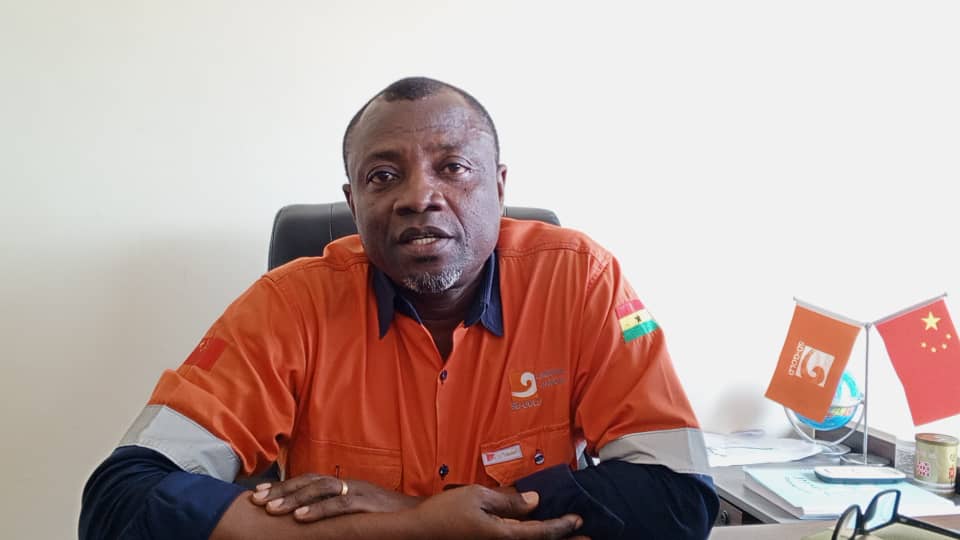
According to the head of Corporate Social Responsibility at Cardinal Namdini Mining, Mr. Adusei Kofi, they received a letter from TAMCI on May 29, 2025, requesting for a meeting on May 31, 2025 to discuss a proposed Relationship Agreement on Social Responsibility, Employment and Development Fund.
“We informed TAMCI group that, in keeping with our commitment to the sustainable development of our communities, we have started discussions on the Social Responsibility Agreement with the Talensi Traditional Council and the District Assembly. We recommended TAMCI align their proposals with that of the Traditional Council and the District Assembly to foster collaboration, as their objectives are basically the same” Mr Adusei stated.
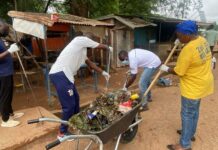
The company said they are committed to maintaining the highest standards of environmental responsibility.
” Our waste disposal practices are in full compliance with all applicable regulations and are designed to minimize any potential impact on the environment. We employ rigorous monitoring and management protocols to ensure that our operations do not pose a risk to public health or the environment”.