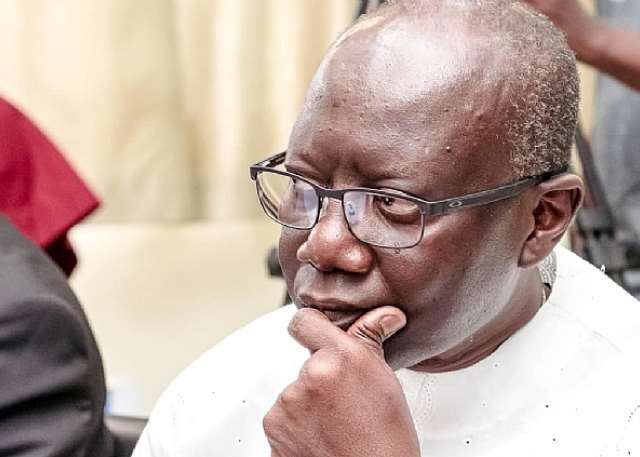

Economic policy analyst, Senyo Hosi, has criticised former Finance Minister Ken Ofori-Atta over his handling of accountability calls regarding his tenure in office, insisting that public officials have a constitutional obligation to submit themselves to scrutiny.
Speaking on the KeyPoints, Hosi described as “scandalous” attempts by foreign courts to interfere in matters relating to Ghana’s judicial and accountability processes, stressing that issues concerning public office holders should be addressed within Ghana’s constitutional framework.
According to him, the debate surrounding Ofori-Atta goes beyond that of a private citizen and touches on broader questions of constitutional accountability and governance.
“The discussion around Ken Ofori-Atta is not just about a private citizen. It is about the Constitution and the constitutional duty of accountability,” he said on The KeyPoints on June 20.
Hosi argued that public office holders are bound by constitutional principles of probity, transparency and accountability, particularly when entrusted with significant state responsibilities.
He noted that Ofori-Atta served as Ghana’s longest-serving Finance Minister under the Fourth Republic and oversaw one of the country’s most challenging economic periods.
“When you administer practically the most consequential economic crisis in a generation as Finance Minister, your decisions do not become private engagements. They are official decisions taken using the authority of the state,” he stated.
The economic analyst referenced Article 35(8) of the Constitution, which mandates the state to take steps to eradicate corruption, abuse of power and corrupt practices.
According to him, this obligation does not end when a public official leaves office, relocates to another country or acquires a different citizenship status.
Hosi expressed disappointment that Ofori-Atta had not chosen to fully engage Ghana’s accountability processes despite the public concerns surrounding decisions made during his tenure.
“It is very disappointing that with all the resources available to him, he did not choose to come and subject himself to the process of accountability,” he said.
While stressing that he was not declaring Ofori-Atta guilty of any wrongdoing, Hosi maintained that accountability and transparency require public officials to answer legitimate questions arising from their stewardship.
“It is not to say Ken Ofori-Atta is guilty of anything. But when questions remain unresolved, accountability demands that you subject yourself to scrutiny,” he noted.
Hosi further argued that attempts to avoid such processes undermine public trust and the essence of public service.
“When you decide to occupy public office and exercise public power, you must subject yourself to accountability. You cannot run away from that responsibility,” he said.
According to him, public office is a sacred trust that comes with obligations that extend beyond a person’s tenure in government.
He urged all current and former public officials to embrace transparency and accountability as essential pillars of democratic governance.
By Christabel Success Treve