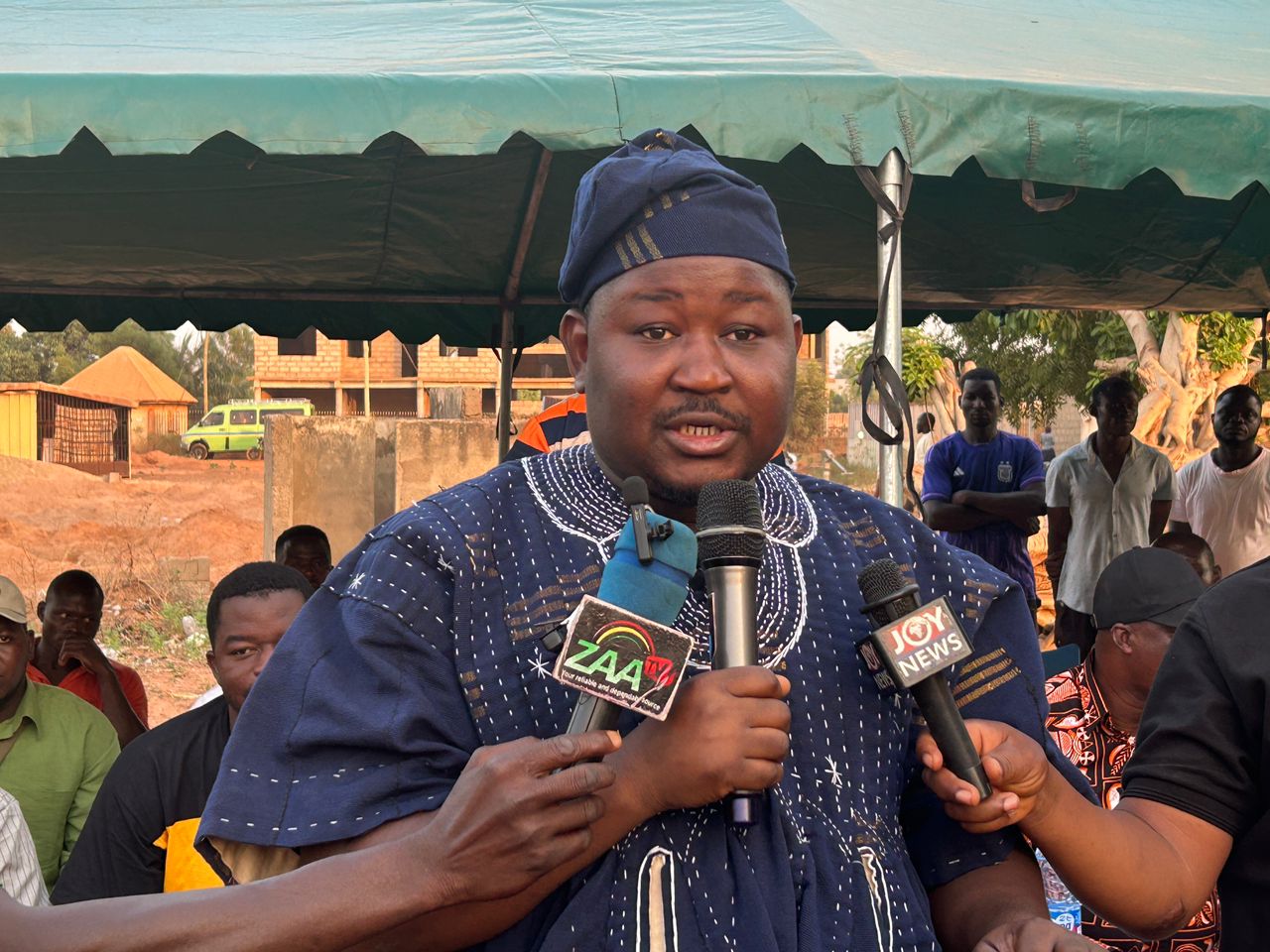

A member of the Finance Committee in Parliament, Attah Issah has hinted at plans to prosecute managers of COCOBOD in the erstwhile Akufo-Addo administration.
He gave the hint while contributing to discussions on TV3’s The KeyPoints on February 21.
“When we soon start arresting people over the rot created at COCOBOD, no one should claim they are being witch-hunted,” Mr Attah Issah.
The topic for discussion was the ‘Cocoa sector crisis.’
The MP for Sagnarigu Constituency laid the blame for the crisis solely at the doorstep of the previous administration.
“You mismanaged the sector by your reckless commitments. You inherited GHC1.8 billion yet created a mess. When you look at what happened, you ask yourself what kind of decisions were taken,” he bemoaned.
Attah Issah lamented that currently, “COCOBOD does not have a healthy balance sheet.”
The NDC MP was reacting to claims by the Director of Communications of the New Patriotic Party (NPP), Mr Richard Ahiagbah that the cocoa sector crisis to the poor decision of the management of the Ghana Cocoa Board (COCOBOD).
According to him, the crisis facing the sector is not due to poor management by the previous COCOBOD Management under NPP rather the promise by the NDC Government to increase prices of cocoa for farmers, which decision he said has backfired.
Speaking on TV3’s KeyPoints, Saturday, February 21, Richard Ahiagbah said the NDC government only took a gamble when they promised cocoa farmers of price increment and ought to apologise to the farmers.
“It has nothing to do with yesterday. It has everything to do with the season that we are in and the decisions that were taken to sell the cocoa that they had. COCOBOD decisions backfired.
“So instead of destructing everybody from the fact and focus on the issue to help farmers. What the government should have done at that emergency meeting was to decide to come out either by the Finance Minister or the COCOBOD CEO to come and apologise that we took a gamble to sell at spot prices and we were waiting the price, and for some reason we didn’t strike on time and we missed it and that decision we took is accountable for where we are,” he stated.
Mr Ahiagbah’s comments were in reaction to a statement made by the Majority in Parliament on February 19.
They lashed out at the Minority in Parliament for calling for a bailout for cocoa farmers amid a GHC60 million debt owed by the Ghana Cocoa Board (COCOBOD).
Chairman of Parliament’s Finance Committee, Isaac Adongo, argued that with such debt and financial distress, it is impossible for COCOBOD to borrow additional money from international capital markets to fund a bailout for cocoa farmers.
“COCOBOD entered 2025 with roughly GH¢17.8 billion in loans plus operational liabilities. So loans alone were about GH¢17.8 billion by the beginning of 2025.
“If you add this to other obligations, you will soon come to realise that at this point, COCOBOD was bleeding with an exposure of about GH¢60 billion,” he said.
“Certainly, that vehicle could not be sustainable and needed to be addressed,” he added.
“You have GH¢60 billion of somebody’s money. It’s not free money. You are not paying, and you are saying that we should continue to even to go and borrow more,” he noted, rejecting the Minority’s call for a bailout for cocoa farmers.
The Minority has proposed that the government release emergency liquidity support to COCOBOD, enabling the country’s nearly one million cocoa farmers to be paid promptly.
Isaac Adongo stressed that restoring financial discipline and restructuring the cocoa sector is a far more sustainable solution than relying on borrowing which he said will collapse the institution.
Adongo emphasised the need for systemic reforms that strengthen COCOBOD’s financial footing, stating that the Mahama administration is resetting the coca sector.
“These are the people who read the Bible in reverse. And these are the people advising us to add debts when we cannot even pay GHC60 billion. And because we have kept quiet somehow, they think this illogical argument they are advancing will save the people of Ghana. We’re resetting the cocoa sector,” he stressed.