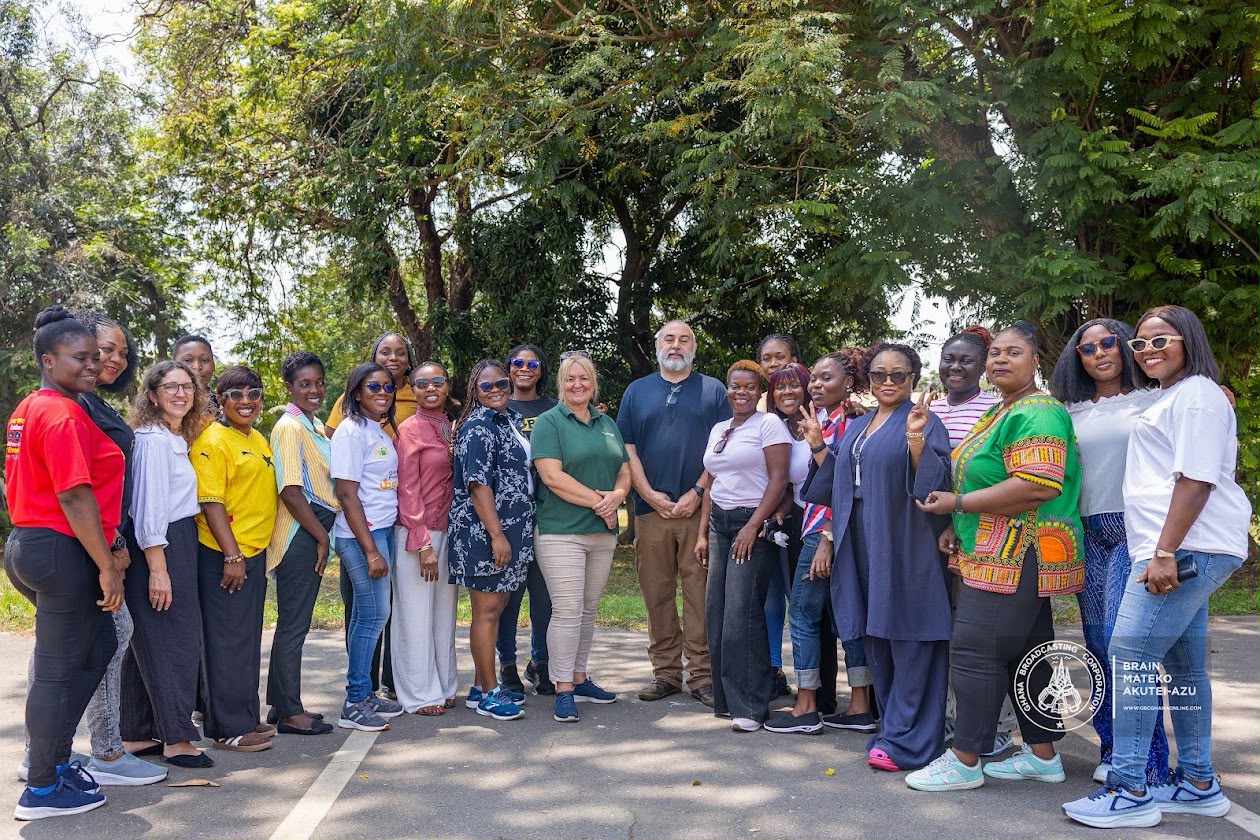

Twenty-one female journalists and media managers from Ghana and Nigeria have undergone specialised training to strengthen their ability to identify and respond to physical and digital threats while safeguarding their mental well-being.
The training was organised by the Public Media Alliance (PMA) with support from UNESCO’s International Programme for the Development of Communication (IPDC). It combined practical self-defence techniques with digital security measures and mental health support.
Held under the project “COVID’s Legacy: The Role of African Media in Keeping Women Journalists Safe,” the programme sought to build a safer working environment for women in the media and strengthen the resilience of media organisations in protecting journalists.
Participants included female journalists such as the Vice President of the Ghana Journalists Associati on, Rebecca Ekpe of the Ghana Broadcasting Corporation (GBC), and Sarah Apenkroh of TV3.
The initiative featured a two-day virtual mental health workshop on October 7 and 8, 2026, focusing on stress management, coping mechanisms, mental well-being and referral pathways for journalists experiencing psychological distress. Journalists were given a safe space to voice their challenges and share how they manage boundaries.
This was followed by a two-day residential practical workshop on October 14 and 15 in Ghana, hosted at the Ghana Broadcasting Corporation (GBC) in Accra.
Facilitated by trainers from Lazarus Safety Training, the sessions addressed physical safety, digital security, risk assessment, trauma-informed practices and strategies for responding to security threats.
Participants were also guided to develop personalised safety toolboxes containing checklists, emergency contacts, workflows and other resources to support their preparedness before and during assignments.
A first-aid instructor with Lazarus Safety Training, Laura Sullivan, took participants through proactive safety measures, particularly when reporting in potentially hostile or unpredictable environments.
During the session, she urged journalists to remain conscious of their surroundings, avoid predictable routines and work in teams whenever possible to reduce their vulnerability.
“This training is intended to help you recognise warning signs, assess threats and make informed decisions to protect yourselves while carrying out assignments,” she said.
Another trainer, Alistair Hollington, also with Lazarus Safety Training, said the physical safety sessions covered preparation before assignments, surveillance awareness, personal security, public-order situations and techniques for escaping potentially dangerous encounters.
The practical exercises included methods for breaking free when someone attempts to corner a journalist, grab her arm or seize her bag.
Hollington also highlighted the importance of being conscious of your location, using the OODA Loop — Observe, Orient, Decide, Act.
“Regularly review the personal information about yourself. Take steps to secure your devices and sensitive data. Protect information stored on your mobile phones with passcodes,” he cautioned.
The workshops form part of broader efforts to strengthen the safety, well-being and organisational support available to women journalists, while protecting press freedom and democratic participation.
By combining mental health support with practical physical and digital safety skills, the programme aims to help women journalists navigate the risks associated with their work and continue serving the public with greater confidence and preparedness.
By Sarah Apenkroh