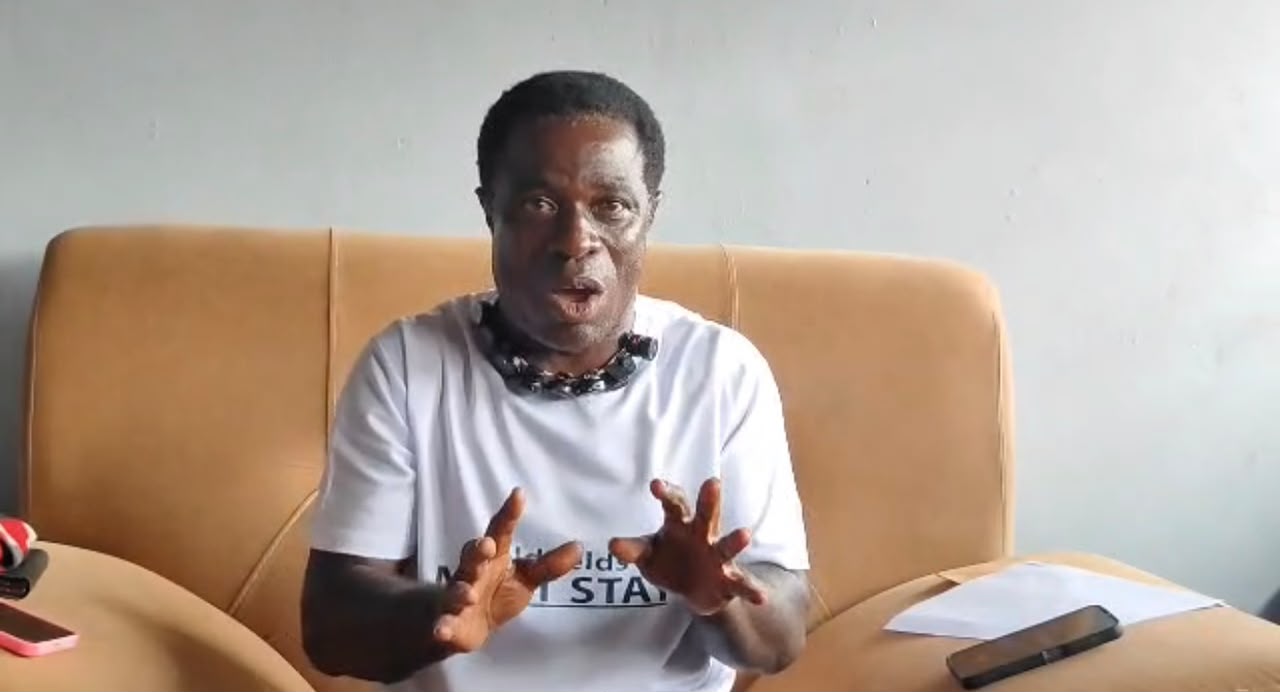

Concerned youth leaders of Gold Fields Ghana’s Tarkwa Mine host communities have rejected calls for the non-renewal of the mining company’s lease, urging the government to negotiate improved agreement terms to safeguard the mine’s future and protect local economic interests.
In a news conference led by Nana Kwasi Ansah on November 11, 2026, the youth leaders said calls attributed to the Queen Mother of the Wassa Fiase Traditional Council, Nana Abena Koadjoa II, during a traditional council meeting in Tarkwa on November 4, did not represent the collective interests of communities directly affected by Gold Fields’ operations.
They argued that rather than campaigning against the extension of the company’s mining lease, traditional authorities should be advocating for improved contractual terms that guarantee greater benefits for host communities and Ghana.
The group, representing youth from communities within the mine’s operational footprint, including Huniso, Samahu, Abekoase, Tebe and Pepesa, maintained that Tarkwa’s long-term economic sustainability should take precedence over what they described as individual interests.
The concerned youth leaders questioned proposals for sole Ghanaian ownership or local management of the large-scale mining operation, arguing that such an arrangement could threaten the mine’s sustainability.
According to them, the operation requires substantial capital investment, financial capacity and specialised technical expertise to maintain production and remain competitive.
They therefore urged the government to engage Gold Fields on a lease renewal agreement with more favourable conditions rather than pursue an ownership arrangement they consider economically unsustainable.
The group insisted that renegotiation should secure increased local community participation, stronger local content commitments and expanded infrastructure development.
The youth leaders also challenged what they described as selective criticism of Gold Fields, particularly references to development gaps in communities outside the company’s operational catchment area.
They cited Benso as an example, arguing that the community falls within the operational areas of Ghana Manganese Company (GMC), Golden Star Akyempim and AngloGold Ashanti, rather than Gold Fields.
They questioned why Gold Fields should be held responsible for development shortcomings in areas where other mining companies operate.
The group called for mining companies to be assessed based on their respective concessions and obligations, insisting that all operators must be held accountable for their contributions to host communities.
Defending Gold Fields’ contribution to its host communities, the youth leaders said investments through the Gold Fields Ghana Foundation had supported roads, health facilities, potable water projects, agriculture and educational infrastructure.
They further claimed that hundreds of young people from the host communities had benefited from tertiary scholarships, vocational training and employment opportunities.
The group maintained that these interventions demonstrate the importance of sustaining the existing partnership while negotiating improved benefits for residents.
The youth leaders urged traditional authorities to consult residents, particularly young people in the primary host communities, before making declarations on the future of the mine.
They argued that decisions concerning the mining lease could have far-reaching implications for employment, businesses, livelihoods and the economic future of Tarkwa and surrounding communities.
They also called on traditional leaders to prioritise peace, development and economic security rather than what they described as personalised campaigns.
The group further raised questions about the basis for calls to oppose the renewal of Gold Fields’ mining lease, asking whether the company had violated its lease conditions, breached environmental regulations, neglected binding community obligations or engaged in conduct serious enough to warrant a recommendation against renewal.
It maintained that any credible evidence of wrongdoing should be submitted to the appropriate regulatory institutions for investigation and action in accordance with the law.
However, where concerns relate to employment opportunities, community development priorities, procurement practices or corporate engagement, the youth leaders argued that such matters should first be properly documented and presented to the company’s management for resolution.
They called on the Ministry of Lands and Natural Resources and the Minerals Commission to pursue negotiations with Gold Fields for an extended agreement that guarantees stronger local community participation, improved local content and increased infrastructure investment.
The statement concluded with a call to protect Tarkwa’s economic future through constructive engagement and better mining agreement terms rather than actions that could undermine existing partnerships.
“Tarkwa and host communities first, not a one-man vision,” the youth leaders declared.
By Ebenezer Atiemo