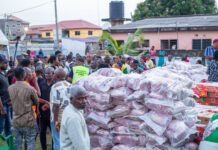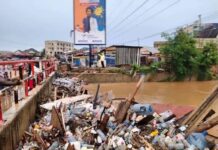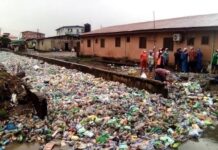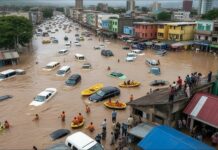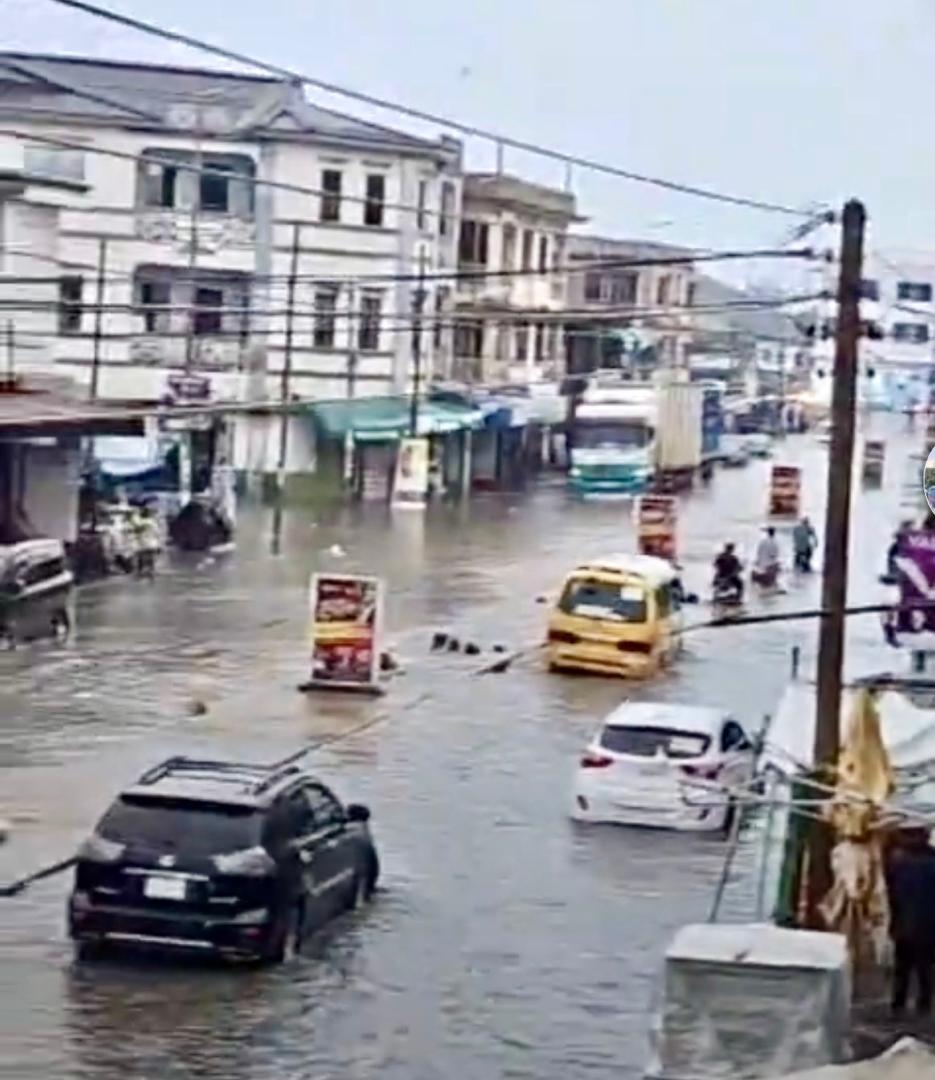

The Ghana Institution of Engineering (GhIE) has commiserated with victims of the floods that occurred in Accra and its environs on June 29.
In a Position Statement issued on June 30, GhIE regretted that the residents of Accra had to go through this annual predicament.
“To everyone who lost something today, whether a home, a livelihood, a sense of safety, or worse, the Ghana Institution of Engineering says, simply and sincerely: we are sorry, and we see you,” the GhIE wrote.
They commended that National Disaster Management Organisation officers, the fire and rescue teams, the security agencies and the ordinary neighbours who waded into the water to pull others out.
To avert such level of flooding going forward, the GhIE proposed 19 measures all stakeholders must undertake. Please read on:
1. Keep the rescue going, and find everyone. Hold the NADMO, military, police, fire and assembly teams in place at the worst-hit spots: the Tetteh Quashie and Spintex underpass, Weija and Mallam, the N1 and Kasoa corridor, Achimota and Abofu, Odawna, Adabraka, Kaneshie and Madina.
Confirming who is hurt or missing, and getting people out of low-lying homes, comes before everything else.
2. Cut the power before it kills. Today’s floods already forced emergency shutdowns at Mallam and Achimota and a fire at Odawna market. ECG and GRIDCo should switch off power in flooded zones before someone is electrocuted, and the fire service should sit ready near the markets, where flood and fire now arrive together.
3. Open the chokepoints today. Send excavators and desilting crews to the big bottlenecks, above all the Odaw and Korle system and the Odaw outfall, which keep backing water up into the city, and to the blocked road drains and culverts on the routes that flooded this morning. With more rain forecast within the day, every metre of cleared drain matters.
4. Clear the rubbish from the gutters before the next downpour. Mobilise the assemblies, the waste contractors and community labour to pull solid waste out of the main drains now, while everyone can see why it matters. And say it plainly to the public: throwing waste into a drain is not a small thing. It is a danger to your neighbour’s life.
5. Tell people clearly what to do. Use radio, TV, WhatsApp and community centres with simple, specific advice: stay off flooded roads, never drive into a submerged underpass, keep away from the Odaw, lift your valuables and documents to higher ground, and stay home if you safely can until it passes.
6. Write down what happened, properly. Map and record the damage and any casualties over the next three days. We have failed to document past floods well, and that failure has let everyone forget. What we record now becomes the basis for relief, for compensation, and for the works that must follow.
7. Fix the Odaw and Korle system as a national priority. Commission an independent review of the Korle Lagoon restoration works and the Odaw outfall to get to the bottom of the bottlenecks that now flood the city even in the dry season, and tender the repairs within this window.
8. Treat road drains as part of the flood fight. Bring the Department of Urban Roads and the Ghana Highway Authority formally into the response. Audit, rebuild and clear the roadside drains and culverts on the roads that flood every year, and make proper drainage, together with a budget to maintain it, a condition of every new road. A road built without a working drain is just a future flood channel.
9. Restore reliable waste collection, and enforce sanitation by-laws. Get established collection back on a dependable schedule in every community, so that households are not forced to choose between costly informal collectors and the nearest gutter.
Pair it with real enforcement against dumping in drains and waterways, and against the kiosks and structures obstructing them. This is a problem we can actually solve, but only if we treat collection as an essential service and enforcement as a standing duty, not a seasonal campaign.
10. Make new buildings carry their own water. Adopt a National Post Development Runoff Control Policy, so that no new development sends more water downstream than the bare land did before it was built.
It is one of the most effective flood tools in the world, and it simply makes developers responsible for the water they create.
11. Stop building in the wrong places, and mean it. Halt construction on waterways and wetlands, remove illegal structures sitting on top of major drains, ban full-plot paving, protect the buffer zones along our waterways, and actually enforce the planning law we already have.
This is the hardest step, because it touches powerful interests and uncomfortable permits. It is also the one that matters most, because no amount of engineering can save a city that keeps building over its own rivers.
12. Start showing what works. Launch pilot nature-based projects, things like rain gardens, bioswales, soak-aways, small detention basins and smarter retrofitted drains, in the fast-growing areas where the water is worst: Ga East, Adenta, Kasoa, Weija and Spintex.
Let Ghanaians see the solution working in their own neighbourhoods.
13. Build places for the water to wait. Identify and create detention and retention ponds across the city’s catchments, the open spaces and basins that hold stormwater during a downpour and release it slowly afterwards, instead of sending it all crashing downstream at once.
This was a central proposal of our May policy brief, and it is among the cheapest, fastest ways to take the peak off a flood.
Existing low-lying open land, parks and reserves can be designed to flood safely and on purpose.
14. Put one body in charge. Right now, responsibility for stormwater is scattered across a long list of agencies whose maps don’t even match the way water actually flows.
Create catchment-based planning units with the real power to coordinate them. You cannot defend a city neighbourhood by neighbourhood when the water doesn’t respect any of those boundaries.
15. Change the basic idea of drainage. Stop trying to flush water away as fast as possible, and start catching, slowing, storing and soaking it in close to where it falls, all across the catchment, including a permanent network of detention and retention ponds that hold the peak and release it gently. Work with the water instead of fighting it downstream.
16. Build flood sense into every permit. No building approval and no road in Greater Accra should be signed off without asking what happens to the water.
Make flood resilience a normal part of planning, so the city stops quietly creating new risk with every signature.
17. Make every roof a small reservoir. Adopt a National Rainwater Harvesting Policy that requires rainwater harvesting in new buildings and rewards those who retrofit.
In a city as dense as Accra, it is one of the few things that genuinely works upstream, and it gives people water in the dry season too.
18. Grow a real maintenance culture. Hand communities a stake in keeping their own drains clear, support local businesses to build and maintain this infrastructure, and fund drain and waste maintenance as the essential public service it is.
Every system we build will fail without it.
19. Pay for resilience before the disaster, not after. Treat this as climate adaptation, tie it to Ghana’s SDG commitments, and put financial protection in place so that recovery is faster and less ruinous each time the water rises.