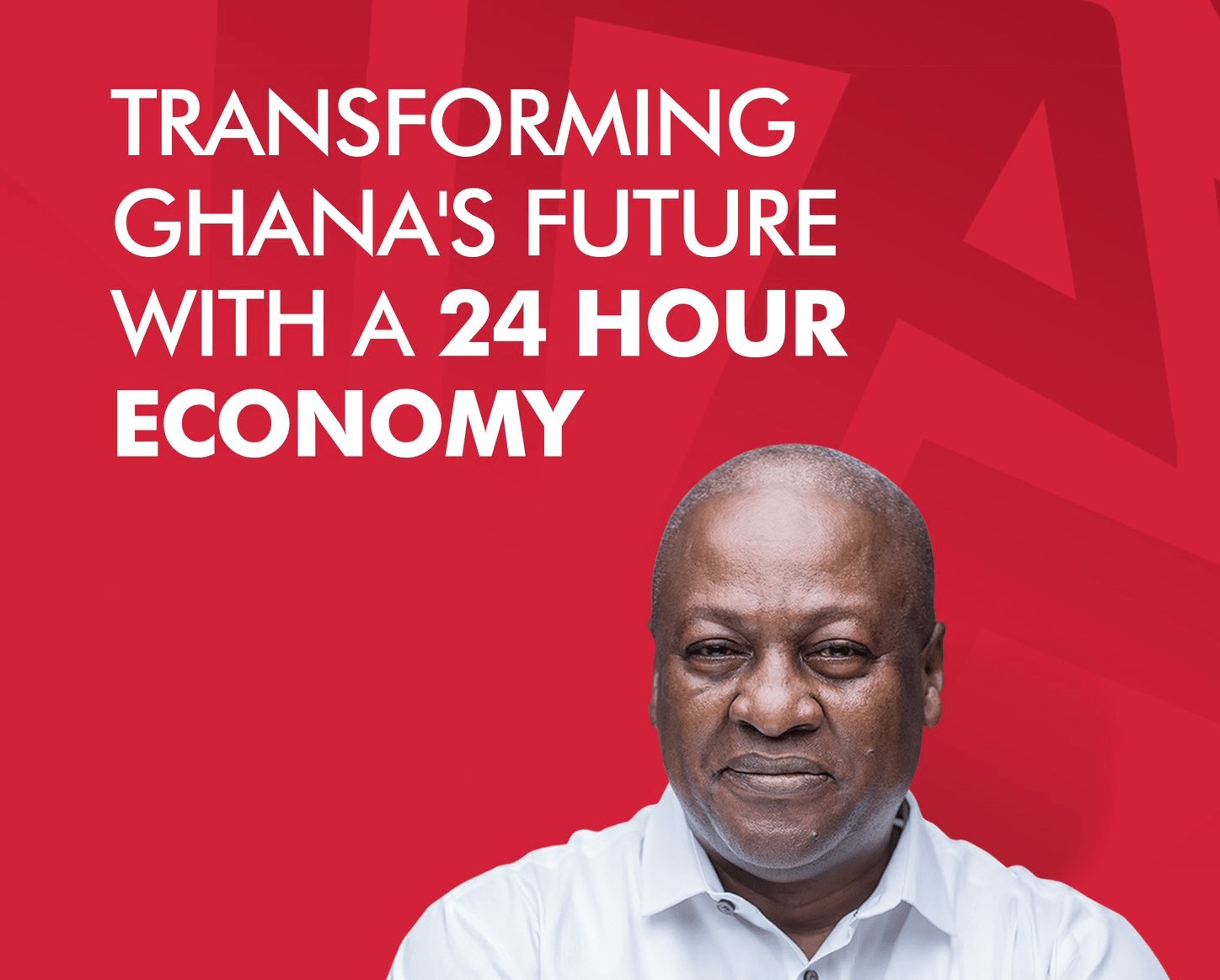

In the thick of the night, long after the sun has set, a new economy begins. One that allows workers to earn their keep, even while many others sleep.
The 24-hour economy policy seeks to boost Ghana’s economic growth by encouraging round-the-clock activities and services.
With an estimated cost of GHC4 billion, the initiative aims to enhance productivity, generate employment opportunities, and stimulate economic growth by optimising resource utilisation and infrastructure.
President John Dramani Mahama during its launch explained; “the 24H Plus agenda is not simply about extending working hours; it is about unleashing productivity, expanding opportunity, accelerating exports through well-structured, multisectoral and inclusive interventions.”
Before the official launch of the policy, several government agencies claimed to have already begun operating around the clock. But are they truly living up to their promise? The team went digging.
But first, we put Accra’s night transportation to the test.
3news’ visited the main Ashaiman station at 12:ooam in the morning and discovered the station was almost closing with only a car left to load. She engaged a bus conductor who lauded the idea of a 24hr economy.
“There’s a security here. It’s right here. We’ll be safe over here, if it is rolled out.
Clearly, with the situation on the ground transportation at night may be a bit difficult, exposing gap in the rollout of the policy.
The team then moved to specific government agencies who claimed they have already started rolling out the 24H economy policy.
Our first stop was the Driver and Vehicle Licensing Authority, which kicked off its 24-hour service on May 7, 2025.
In an interview with Director of DVLA, Julius Neequaye Kotey he explained “We divided the workers into three groups. One begins from 6am to 2pm, then from 2pm to 10pm, from 10pm to the next day, 6am. From what we did at Tema Port and our office in Adenta in the first quarter, we were able to increase revenue by 50% to 30% as compared to 2024.”
“And we’ve done 396 contract staff recruitment already. So, we provided a coaster bus to Adenta. When they close, they always take them to a place where it is good for them. And then we also have policemen now, armed policemen at Adenta.”
The team visited the Adenta DVLA office at 1:00am. It is one of the main stations that run 24-hour service.
At 1:00am, a team of six were seated at post, ready to serve any client.
“The services we offer during the night is no different from what we offer during the day. So, you can renew your license, replace your license, request for amendment or change on the license, do an international license, you do conversion of your foreign license, you can register your motorbike, tricycle or vehicle, or any other service that DVLA offers. We do it here. So, you can see here the workers at the various stations. And if you’re a client and you still need some services in terms of the drivers and vehicle license and authority, you can come here”, the team lead explained.
Our next destination was the Ghana Publishing Company, which started operating a 24-hour service on March 3rd.
Per checks, the night shift was actively working as at 2:00am..
CEO of the company Kwesi Boatey explained; “For the administrative staff, we started with a shift that allows some of the staff to come at 7.30pm and close at 4.30pm, whilst the others come at 10:oopm and they close at 7:ooam.”
“So within the peak period of 10:00am to 4.30pm, you have the full power force of the office. And from the morning from 7:ooam to 10:oopm and from 4.30pm to 7:ooam, you have half the power force. And then in the mainstream production line, we have staff working from 7.30am to 4.30pm. They close for three hours for the machines to be serviced and premises to be cleaned.” “And another shift starts at 7.30pm that closes in the morning at 5:00am.”
He further explained productivity has increased significantly.
“When we started, the gazette book if you applied, it was going to take eight weeks to get your gazette. Now, if you apply, you get it in a minimum of three weeks.
We had a premium service that took seven days to get it. Now we’ve reduced that time to three days. I dare say that the records show that we are actually even more efficient in terms of production at night than during the day.
So yes, clients can walk in because even if you walk in here, you’re not allowed into our production line. But what you’re setting off is that whilst you’re asleep, we’ll be working on your Gazette or your publication or anything we have to work on. And in the morning, you can come back for it.”
At the Ghana Ports and Harbours Authority, operations were in full swing.
From offloading to inspection and issuance of waybills, every stage of the workflow was actively underway.
As at 12:00am workers were at post, doing their work, with the policy clearly underway.
Well, despite these gains, other key government agencies are yet to follow suit.
Notable amongst them are the Passport Office and National Identification Authority, which were locked up tight at the gate when we visited.
This disparity highlights a varying pace of adoption among government agencies as the country transitions to a 24-hour economy.
And so, is Ghana really ready for an economy where productivity knows no bounds and the lights never dim? You be the judge.