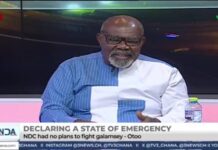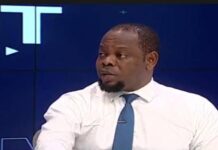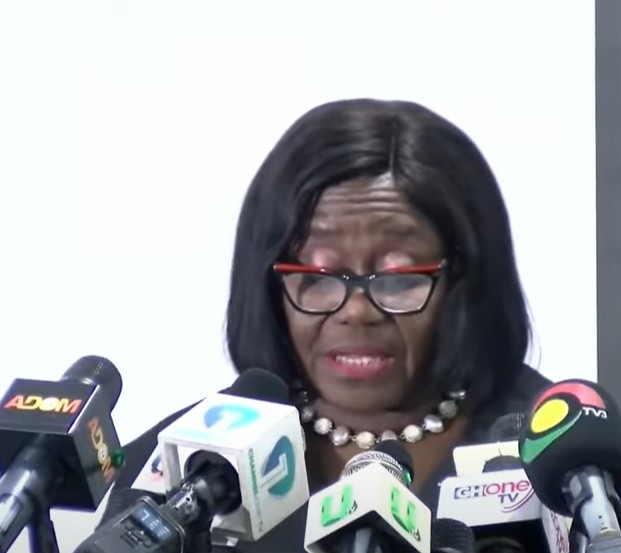

Private legal practitioner Martin Kpebu has clarified that the ECOWAS Court of Justice has jurisdiction to hear the Chief Justice’s case, even if she’s still going through legal processes within Ghana.
Speaking on TV3’s KeyPoints on July 12, he addressed confusion around whether local court proceedings could block access to regional courts.
“Under ECOWAS jurisprudence, having a case before a domestic court is not a bar to filing before the ECOWAS Court,” Kpebu said.
Citing specific cases like Registered Trustees of HEDA Resource Centre vs Republic of Nigeria (2021) and SERAP vs Nigeria (2016), Kpebu explained that the ECOWAS Court has consistently ruled that citizens can seek regional remedies while local cases are ongoing.
“Unless a case is being heard by another international court like the African Court, it is not a problem. Lawyers, journalists, everyone needs to understand this clearly,” Kpebu noted.
He encouraged the public and professionals alike to research these rulings and understand the region’s human rights protection framework, especially in politically sensitive cases like the one invoving Gertrude Torkornoo.
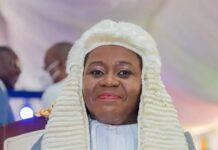
Martin Kpebu said this while contributing to discussions on Her Ladyship Justice Gertrude Torkornoo’s decision to file a fresh legal action against the Republic of Ghana at the ECOWAS Community Court of Justice in Abuja, Nigeria, challenging her ongoing suspension and alleging multiple human rights violations.
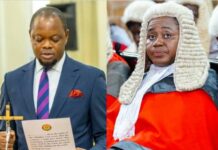
Deputy Attorney-General and Minister of Justice, Dr. Justice Srem-Sai, confirmed the development on Tuesday on his Facebook page, stating that the suit was filed on July 4.
“I can confirm that the Chief Justice—Her Ladyship, Justice Gertrude Torkornoo—has filed another court case, this time at the ECOWAS Community Court in Abuja, Nigeria, against the Republic,” Dr. Srem-Sai said.
According to him, the ECOWAS filing reiterates allegations of human rights violations that are also the subject of ongoing cases before Ghana’s Supreme Court and High Court, in relation to the removal proceedings currently being undertaken against the Chief Justice.
Justice Torkornoo, according to the deputy A-G, argues that her suspension effectively amounts to a removal from office without a final determination, thus undermining her constitutional right to function in a position to which she was duly appointed.
Background to the Suspension
Subsequently, a five-member committee chaired by Supreme Court Justice Gabriel Scott Pwamang was appointed by the President to investigate the allegations.
However, the suspended Chief Justice has consistently raised serious concerns over her treatment during the inquiry process. She has accused the committee of actions that she claims amount to abuse and violation of her fundamental human rights. These include:
- Invasive body searches
- Confiscation of her mobile devices and laptop
- Denial of access to her family during hearing sessions
Her legal challenge at the ECOWAS Court adds an international dimension to what is already one of the most significant judicial controversies in Ghana’s recent legal history.
The ECOWAS Court has yet to set a date for hearing the case.