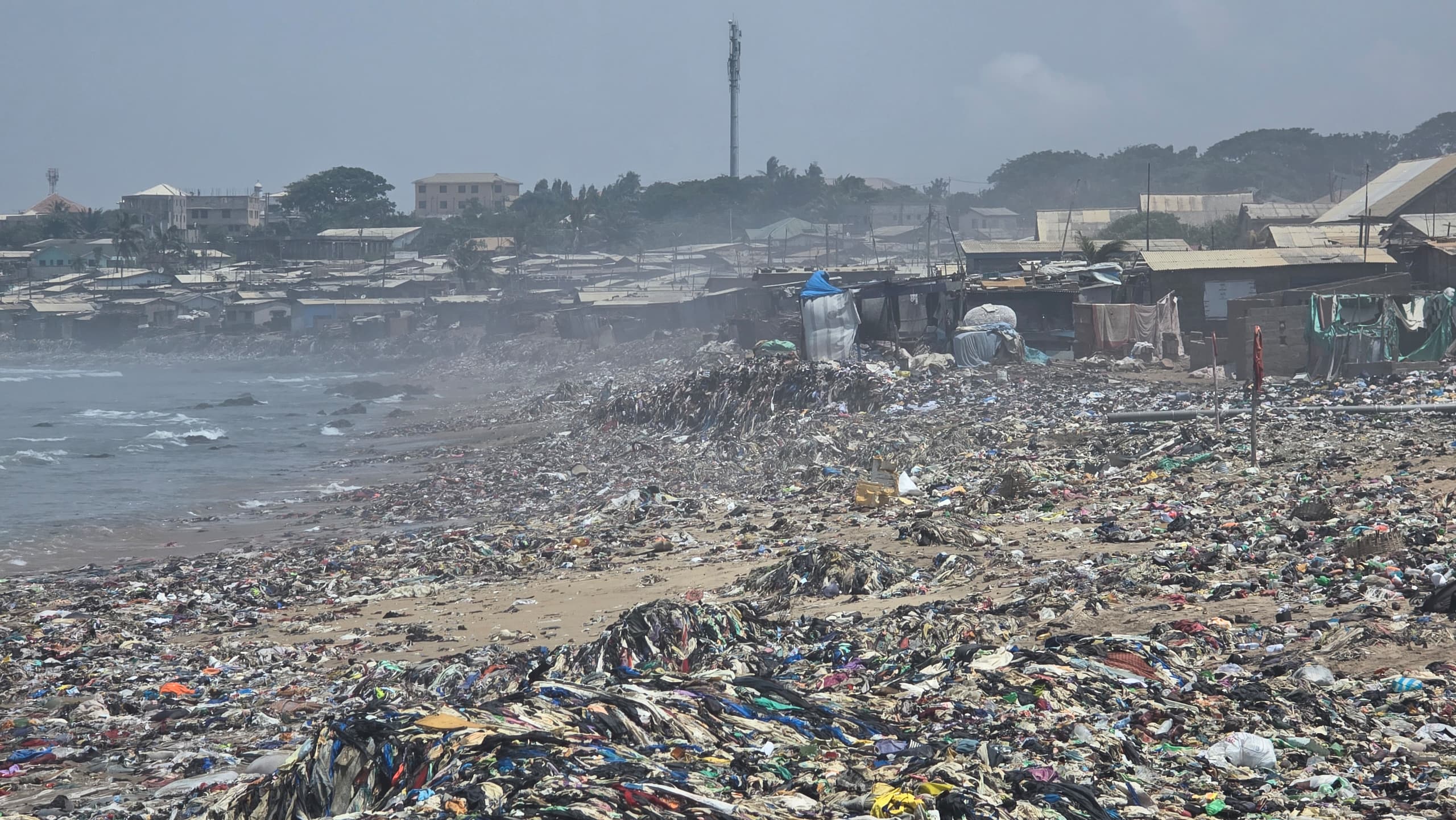

Bankuman, a densely populated fishing community in Tema New Town, is in the grips of a worsening sanitation crisis.
Home to over 10,000 residents, this coastal settlement known for its vibrant fishing and fish-smoking industry is now contending with a lack of basic waste disposal infrastructure, forcing residents to turn the beach into an open dumping ground.
With no designated landfill site or proper waste management system in place, refuse piles up just metres from the ocean. Even more alarming is the proximity of these dumpsites to the very locations where fish is smoked and processed for sale both locally and in markets across the capital, Accra.

The shoreline, which should be a natural resource and livelihood space, has instead become a makeshift landfill. The stench of rotting waste mingles with smoke from burning wood used for processing fish.

“There’s barely any distance between where the fish is smoked and where refuse is dumped,” one resident admitted, gesturing towards a cluster of smoking ovens just steps from mounds of garbage. “This is how we survive. We know it’s not safe, but what choice do we have?”

From afar, the coastline resembles a landfill site more than a beach. The accumulation of waste is not just an eyesore, it poses serious health and environmental risks, contaminating marine life and increasing the spread of diseases like cholera and typhoid.

Another pressing issue is open defecation, which remains rampant in Bankuman due to the absence of toilet facilities in almost every household. With nowhere else to go, many residents, including children, resort to defecating along the same beachfront where refuse is dumped and fish is processed.
Our camera crew captured disturbing scenes of individuals defecating in the open, seemingly undeterred by public presence or shame. It’s a daily occurrence, residents say one born out of desperation, not disregard.
Emmanuella, an 18-year-old Senior High School graduate. She recently returned to Bankuman after completing her studies and has joined her mother in the fish-smoking trade. Like many young women in the community, her dreams are shaped by circumstance.
“We wake up early to smoke fish. But by afternoon, the smell from the rubbish takes over. It affects the fish and our health, but we have to work,” Emmanuella said, standing by a wooden table lined with freshly smoked tilapia.
Her story is just one among many a reflection of the wider crisis. Residents like Emmanuella are well aware of the risks, both to their health and to the sustainability of their trade. Yet with no government support or infrastructure in place, they have no alternative.
Local leaders have made repeated calls for help appealing to the Tema Metropolitan Assembly and the Ministry of Sanitation and Water Resources but with little result. Meanwhile, the health and dignity of thousands continue to deteriorate.
Environmental experts warn that if urgent steps are not taken, the long-term impacts could be devastating, not just for Bankuman, but for nearby coastal areas and markets that depend on its seafood.
The people of Bankuman are not asking for miracles just for toilets, waste bins, and a basic waste management system.
As one resident put it: “We work hard. We feed the city with our fish. We deserve clean surroundings and safe water, just like anyone else.”
Until then, Bankuman remains a stark reminder of the cost of neglect where survival meets contamination, and resilience meets desperation.