
A Security Expert, Col. Festus Aboagye, Retired, has said the state institutions responsible for handling accidents should be given credit for how they handled the helicopter crash.
He makes the point that the institutions, including the Fire Service National Disaster Management Organisation (NADMO), worked to the best of their knowledge.
“Institutions worked to the best of their knowledge. Some of the people there in mufti were from national security, NADMO. They were there in ordinary dresses,” he said on the Key Points on TV3 Saturday, August 16.
Col Festus Aboagye further said that the fact that the helicopter that crashed went off the radar does not mean it was under stress.
He says that the helicopter flew for about 27 minutes after going off the radar.
“It is after 60 minutes that you declare the distress, it is not 30 minutes,” he said.
“There is a suggestion that the aircraft went off the radar; therefore, something might have happened. When a plane goes off radar, it doesn’t mean it encounters an accident or is under stress,” he said.
ICAO had said 30 minutes alert, 30 minutes’ dress.”
“When a plane is off radar, it does not necessarily mean that the plane has crashed. It simply means that the plane is flying at a height or in a terrain where the radar cannot detect it, anywhere between 1000 feet up to 3000 feet or maybe under 1000 feet, radars cannot reach the helicopter. It didn’t mean the plane crashed 14 mins after takeoff, no,” he stated.
He stressed that the procedure required that a distress call be made after a first indication that the helicopter could not be found.
“So, procedurally after 10:02 within thirty minutes, which is the first indication that you have not found the aircraft and cannot find it that’s 10:32 then another 30 minutes which is 11:02. If the aircraft has still not been contacted then a distress call is made. So, materially, any call or response from anybody should have begun at 11:02,” he noted.
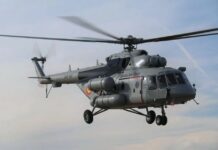
The Ghana Armed Forces (GAF) on Wednesday, August 6 announced that Airforce Z9 Helicopter has gone missing. According to GAF, the aircraft was from Accra and heading for Obausi but went off the radar.
“All efforts are being made to establish contact,” a statement said.
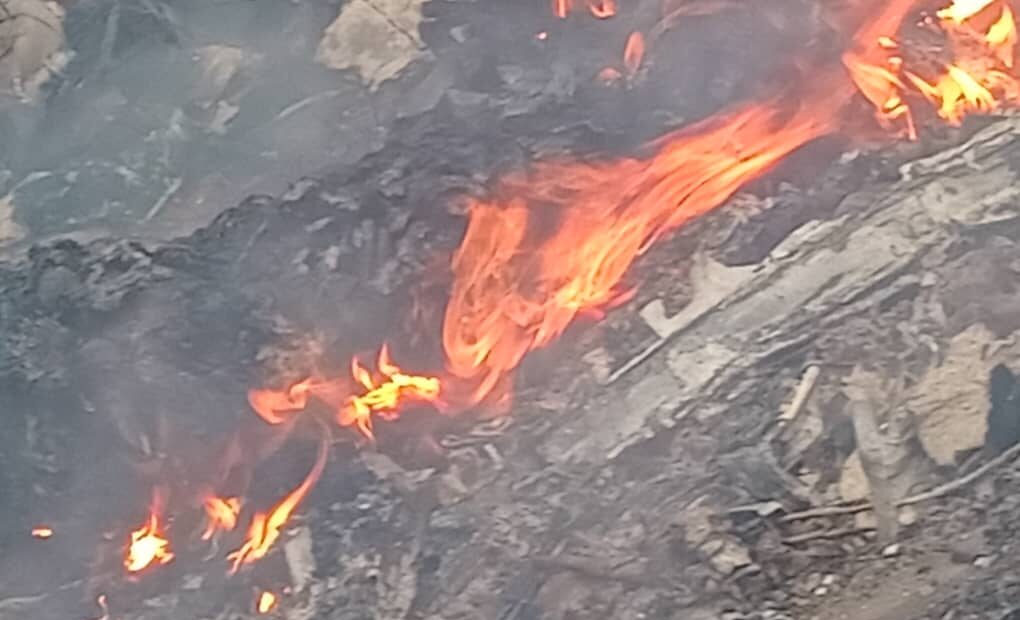
It was later confirmed that the said helicopter had crashed leading to the loss of eight lives.
The Chief of Staff, Julius Debrah, first announced on Wednesday, August 6, that Defence Minister Dr Edward Omane Boamah was among those who died in the crash. Also on board were Minister for Environment Murtala Mohammed, former Ashanti Regional Minister Samuel Sarpong, Muniru Mohammed (Acting Deputy National Security Coordinator), and Samuel Aboagye, a former Member of Parliament and Vice Chairman of the NDC.
The crew members were Squadron Leader Peter Bafemi Anala, Flying Officer Mane-Twum Ampadu, and Sergeant Ernest Addo Mensah.
The crash occurred at Adansi Akrofuom in the Ashanti Region, while the officials were on their way to a national event.
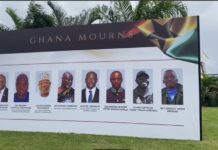
The government announced a three-day national mourning period for the victims. A wreath-laying ceremony was held at the Ceremonial Gardens at the Presidency on Thursday, August 7 and Friday, August 8, in honour of the victims.
The final funeral rite took place on Friday, August 15.