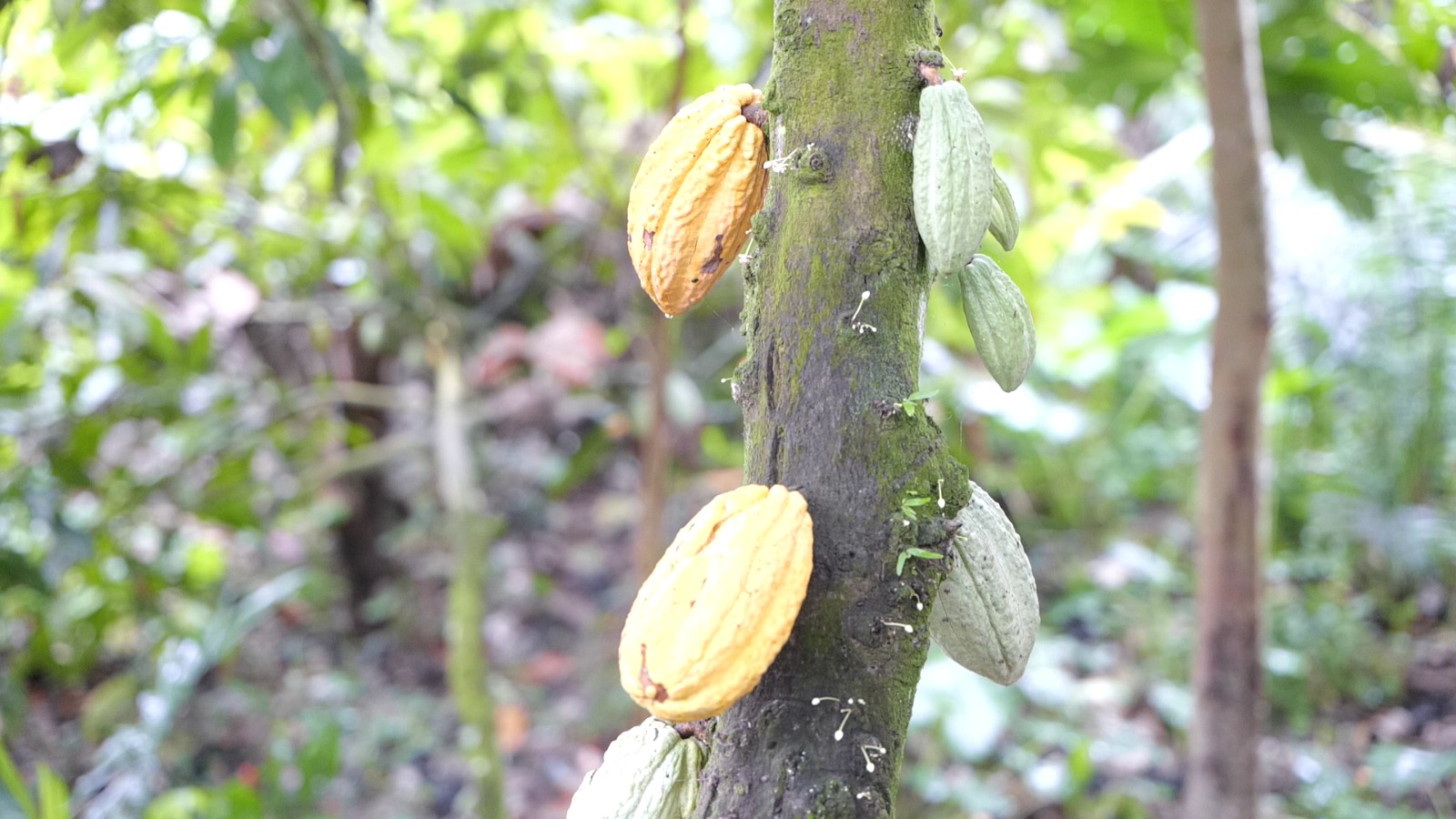

Cocoa farmers in Ghana’s Western North Region are urging the government to take decisive action against illegal mining (galamsey) that’s destroying their farmlands, polluting water bodies, and threatening their livelihoods.
Meanwhile, the communities of Jema and Asemkrom have been commended by the Produce Buying Company Foundation (PBC) for their bravery in resisting galamsey operations and have been rewarded for their efforts to promote sustainable cocoa farming.
The poor state of roads in Ghana’s Western Region, particularly the Enchi to Elubo road, is severely affecting cocoa farmers.

The deplorable roads are making it difficult for drivers to transport cocoa produce to market and farm inputs to farmers, leading to increased costs and logistical challenges.
This is hurting the livelihoods of cocoa farmers and threatening the region’s cocoa economy. Ghana’s cocoa production has hit a record low of 650,000 tonnes in the 2022 to 2023 season due to various challenges.
To reverse this trend, a comprehensive approach is needed, including sustainable farming practices, better pricing, and farmer support.
Investing in rural infrastructure, especially roads, is crucial to reduce post-harvest losses, improve transportation efficiency, and lower costs. Without these interventions, Ghana’s cocoa sector will continue to struggle.
By tackling infrastructure issues, cocoa farmers in Western North Region can boost productivity, cut costs, and raise their income.
Meanwhile, the Produce Buying Company Foundation (PBCF) is leading the charge against illegal mining, launching a campaign to protect farmlands and promote sustainable cocoa production.
The foundation emphasizes that the long-term survival of the cocoa industry hinges on environmentally friendly farming practices, and is working closely with farmers to achieve this goal.
The Produce Buying Company Foundation (PBCF) is urging cocoa farmers to prioritize sustainable farming over short-term gains from illegal mining. As part of its campaign, the foundation is highlighting the dangers of galamsey and recognizing communities that have resisted mining activities.
In the Aowin Municipality, Western North Region, Jema and Assemkrom communities are being commended for their steadfast opposition to mining, led by their chiefs and assemblyman.
These communities serve as models for sustainable cocoa farming and environmental protection.
The Produce Buying Company (PBC) presented farm inputs, agrochemicals, and sprayers to the communities of Jema and Assemkrom as a gesture of appreciation for their commitment to sustainable cocoa farming and resistance to illegal mining.

This support aims to enhance cocoa production and further encourage environmentally friendly farming practices in the region.
Speaking at the event the managing Director of PBC Seidu Yonnye called on chiefs and elders, and all stakeholders to continue leading the fight against illegal mining.

“Let us protect our lands, our water bodies, and our farms for they are the backbone of our lives and our legacy,” he said.
A farmer, Anthony Febeegli, from Jema, a cocoa farming community near Elubo, highlighted the challenges faced by farmers due to illegal mining activities.

He emphasized that these activities have negatively impacted their farming operations, particularly in accessing water for their cocoa farms.
Illegal mining activities have affected water availability for cocoa farms.

Febeegli refused offers from illegal miners to give up his cocoa farm, despite the temptation.
He said farmers face challenges such as bad road networks and lack of access to farm inputs, which can discourage them from continuing to produce cocoa.
The farmers emphasized the importance of protecting lands, water bodies, and farms, which are crucial for livelihoods and legacy.
They are seeking urgent government action to address these challenges and support the cocoa industry.