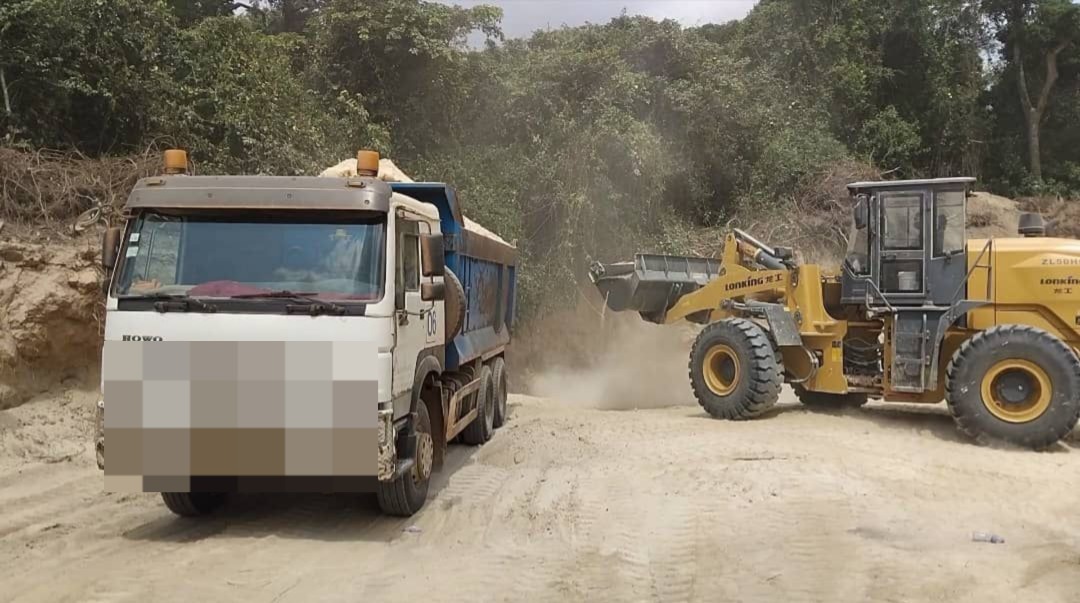

High unemployment is forcing many young people in Gyangyanadze, a community in the Effutu Municipality of the Central Region, to turn to sand winning as their primary source of income.
With limited job opportunities available, the physically demanding and environmentally damaging work has become, for many, a matter of survival.
On any given day, dozens of young men and occasionally women can be seen digging, sifting, and loading sand, which is later sold to contractors and middlemen.
“There’s no job aside from sand winning in this town. The government has not provided us with any opportunities, so the only way we can support our families is through this work,” said Bismarck, a resident of Gyangyanadze.
While the activity provides quick cash, many admit it comes at a steep cost to their health. Residents and commuters also warn that sand winning is eroding farmlands and worsening land degradation.
“We know it destroys the land, but if we don’t go to the sand pit, we won’t have money to feed our families,” explained Johnson, another youth working at one of the sites.
According to the Ghana Statistical Service, youth unemployment stood at 32% among people aged 15–24 and 22.5% among those aged 15–35 in the last quarter of 2024. National unemployment was recorded at 13.1%.
Faced with limited prospects, the young people of Gyangyanadze are appealing to government and other stakeholders to intervene. Until then, they say, their reality is not about building a better future but simply surviving each day.