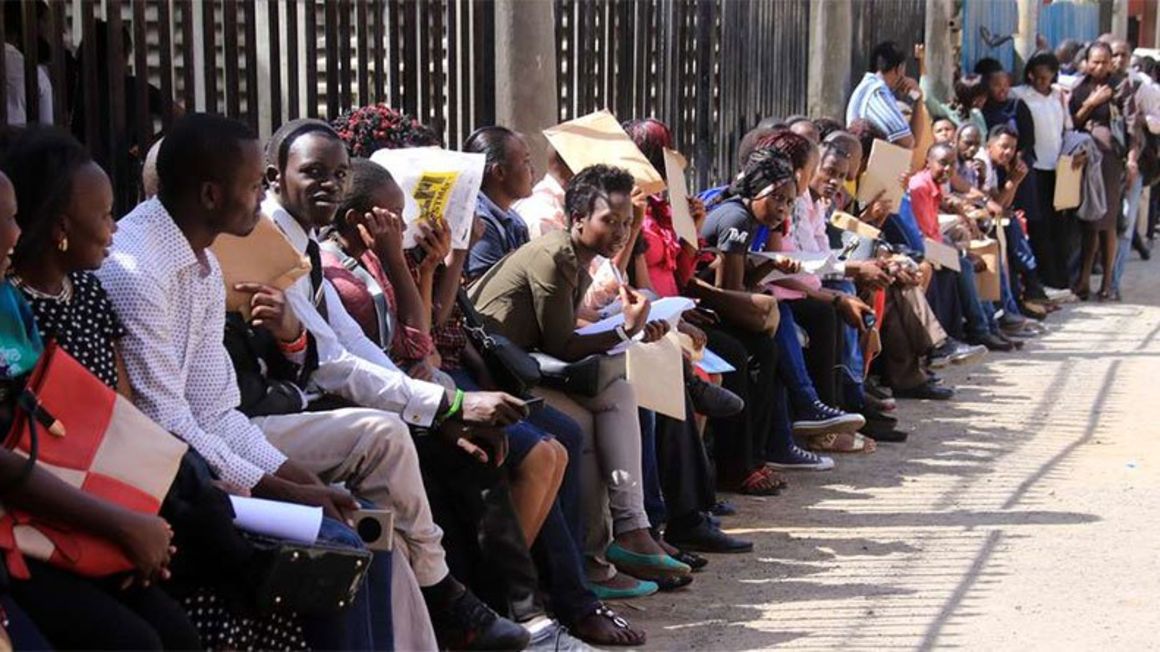

Ghana’s youth unemployment crisis continues to raise concerns, with nearly one in three young people unable to find work.
As government rolls out new initiatives, questions remain about their long-term impact.
Youth unemployment has become one of Ghana’s most pressing challenges with unemployment among young adults aged 15 to 24 standing at 32.8%. With the country’s largest population group being the youth, the figures call for urgent intervention.
Election after election, political parties make bold promises to the youth — but many of those initiatives fade away soon after they are launched.
The current government, in its campaign, pledged to place young people at the heart of its agenda. Eight months into power, a number of youth-focused initiatives have been rolled out.

But the big question is: do these initiatives genuinely address the real needs of the youth?
A public policy enthusiast, Martinson Yeboah Mintah expressed that, “the one million coders programme, the apprenticeship programme, the adwumawura programme, all these are good interventions, but the monitoring and evaluation of these programmes is where the challenge is, and if properly looked at, will significantly reduce the unemployment situation and opportunity for young people in the country.”
He also further highlights the politicization of these programmes whenever various governments come into power.
“There are people who have gone through school, they are out, but they have a certain skillset that doesn’t seem useful for the kind of job the government has created and these set of people are classified as underemployed or vulnerably employed and that number has also been on the ascendency.

We are educating a lot of young people and we aren’t creating a lot of jobs that match up their skills. There’s clearly a mismatch.” Patrick Stephenson, Director for Fiscal Governance and Policy Institute also intimates his thought on what really seems to be the problem.
He also talks about the overreliance on the public sector for the creation of jobs instead of the private sector.
As the government continues to roll out youth-focused programmes, experts stress that the real test lies not in the number of initiatives launched but in how well they are sustained, monitored, and aligned with the skills and aspirations of young people.
With Ghana’s future resting heavily on its youth, bridging the gap between policy and practice will determine whether these interventions truly transform lives or become yet another cycle of unfulfilled promises.