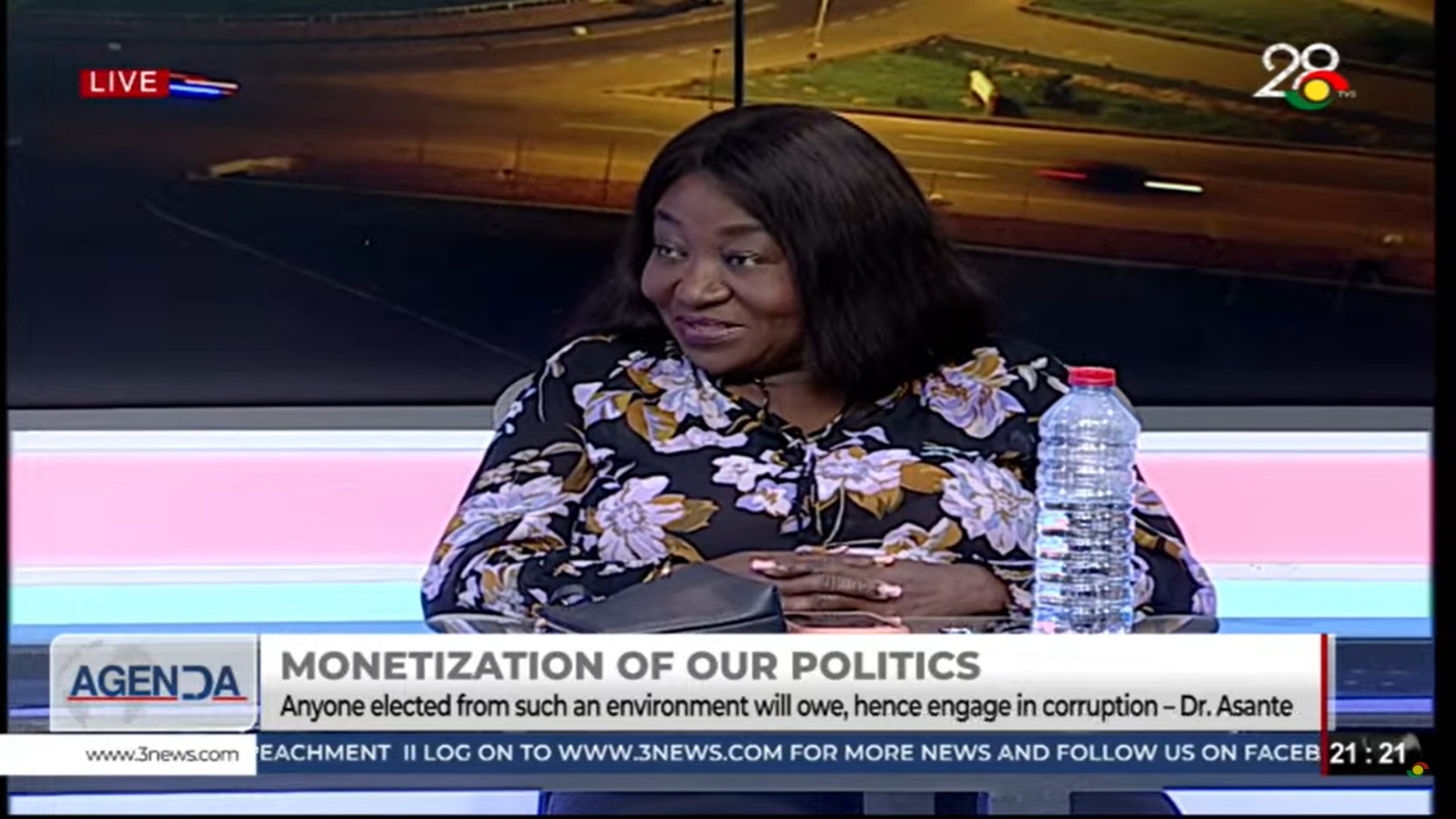

A private legal practitioner, Mrs Gloria Ofori-Boadu has asserted that the use of money to influence the outcome of elections in Ghana is real.
According to her, aspirants to political office are compelled to support delegates during the campaign period.
Mr Ofori-Boadu made the statement while contributing to discussions onTV3’s Agenda programme on October 14.
She contested the primary election in the Abuakwa Constituency on the ticket of the New Patriotic Party (NPP) in 2016 and 2024 but was unsuccessful.
“During the campaign, the delegates became like family, so some of them who were bereaved we helped them buy coffins and payment of school fees as well as general family and household bills,” she disclosed.
Mrs Ofori-Boadu added that, “it was quite a lot. Every day you get people calling to say hello and once a while they chip in.”
She noted that there is evidence to show that elections in Ghana are won by those who spend most during the campaign.
“In Ghana, all the time, the highest bidder always wins. That is the norm,” she stressed.
The discussion on the Agenda programme is against the background that in September, the Centre for Democratic Development (CDD-Ghana) revealed that the cost of winning a presidential election in Ghana has risen to over $200 million.
He explained that this development raises serious concerns about the inclusiveness and sustainability of Ghana’s democratic system.
“I think you need about $200 million to win a presidential contest. How many of you here are ever going to be in that category or cohort of candidates? Even at the parliamentary or primary level, it is nearly impossible for many of you,” Prof. Prempeh said.
“We cannot have that kind of democracy and expect it to be developmental. So, we need to worry about campaign financing and regulating our internal party democracy,” he added.
CDD-Ghana’s warning comes amid growing concerns about campaign financing, with civil society groups calling for stricter regulations to ensure fairness, accountability, and inclusivity in the political system.