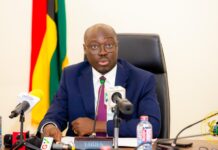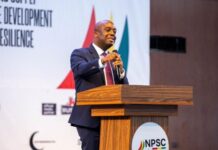

Deputy Minister of Finance, Thomas Nyarko Ampem, has cautioned that illicit financial flows (IFFs) and money laundering are severely jeopardizing African economies, describing the situation as a “doom loop.”
This vicious cycle characterized by weak regulation, massive capital flight, and shrinking fiscal capacity—poses a significant threat to the continent’s sustainable development goals.
Speaking at the opening of a three-day Joint Experts’ Meeting in Accra, organized by the Inter-Governmental Action Group against Money Laundering in West Africa (GIABA) in collaboration with the Financial Action Task Force (FATF) and the Government of Ghana, Ampem stressed that the scale of illicit financial activities is eroding post-pandemic recovery gains and diverting critical resources from development priorities.
“The spike in insecurity and money laundering has coincided with the recovery of our economies from recent global economic shocks and an increasing youthful population,” he said. “This has resulted in a doom loop where economic growth is undermined due to disruptions in economic activities, loss of significant national revenue through illicit flows and smuggling, poor delivery of public services, increasing youth discontent which fuels illegal migration, and the creation of a new generation of extremist recruits.”
Ampem stressed that the region must urgently break and reverse this cycle before the economic and social consequences become irreversible, warning that “the cost of inaction will be inestimable.”
He noted that IFFs, which include tax evasion, trade mispricing, and smuggling, deprive African governments of billions of dollars annually, weakening their ability to fund essential services such as healthcare, education, and infrastructure. According to the United Nations Economic Commission for Africa (UNECA), the continent loses an estimated US$88 billion annually through illegal financial transfers.
The Deputy Minister called for deeper regional collaboration to combat these financial crimes. “We must strengthen our institutions, close regulatory gaps, and foster real-time intelligence sharing among countries in the region,” he urged. He emphasized the need for harmonized oversight frameworks, robust financial intelligence systems, and stronger enforcement mechanisms to stem the tide of cross-border illicit transactions.
The meeting brought together policymakers, regulators, and financial experts from across West Africa to develop actionable strategies for improving coordination among national financial intelligence units, updating anti-money laundering legislation, and enhancing the monitoring of high-risk sectors such as real estate, extractives, and digital finance.
By Joseph Armstrong Gold-Alorgbey