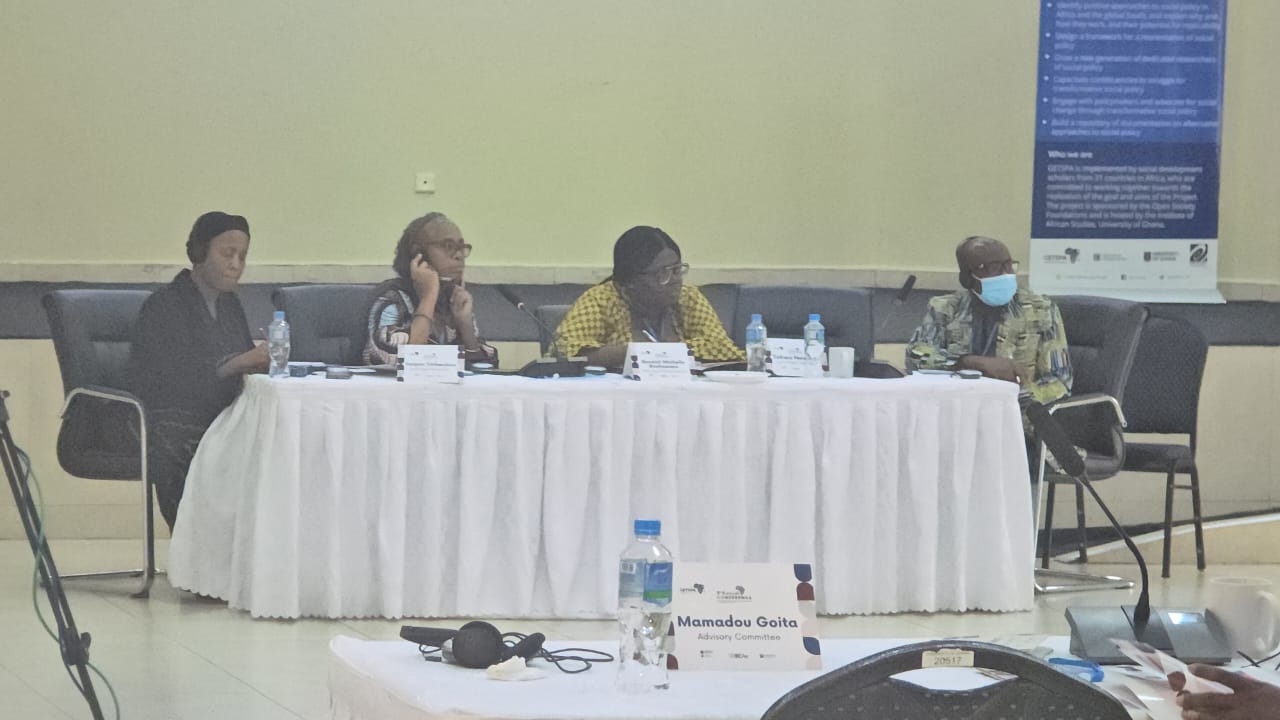

The call for African governments to refocus national priorities toward social policies that directly improve the daily lives of citizens took center stage at the just-ended GETSPA workshop in Accra.
Lead researcher with the Gender Equitable and Transformative Social Policy for Africa (GETSPA) project, Prof. Nana Akua Anyidoho, urged policymakers to shift attention from macroeconomic indicators to the fundamental needs that define a dignified life.
Speaking to TV3, Prof. Anyidoho, who is also an Associate Professor at the Institute of Statistical, Social and Economic Research (ISSER), said conversations about GDP growth and inflation often overshadow the realities confronting ordinary people.
“We talk a lot about economic policy, about GDP and inflation … but when we ask anybody what kind of life you want to live, there are basic things you want like the water to run,” she said.
She stressed that social policy must be at the heart of national development, ensuring access to essential services such as healthcare, clean water, decent work, security, and overall well-being.
Prof. Anyidoho also highlighted the experiences of informal workers, especially women traders in markets, whose needs are frequently overlooked in policy planning.
She noted research showing that out of 42 markets surveyed in Accra, only seven had childcare centers, with no regulatory framework guiding childcare in informal urban markets.
“There were no regulations … which spoke to how we could create and regulate childcare centres in urban informal markets,” she added.
Her remarks sparked further discussions among participants, many of whom echoed the need for practical, people-centered policymaking.
Dr. Regina Oforiwaa Amanfo, Social Protection Specialist with UNICEF Ghana, cautioned that the impact of economic growth remains limited when basic social services are still inaccessible to millions.
She called for policies that directly address gaps in water, sanitation, and equitable access to healthcare.
President of the Greater Accra Market Women’s Association, Madam Mercy Needjan, emphasized the long-standing neglect of informal workers despite their critical role in sustaining the economy.
She urged government to engage market women in policy processes, particularly on issues of childcare, safety, and access to credit.
From the policy side, Mr. Thomas Kusi-Appiah, Social Development Director at the Ministry of Gender, Children and Social Protection, acknowledged that many national policies fail at the implementation stage.
He highlighted the need for stronger coordination between ministries and district assemblies to ensure that social programs reach those who need them most.
Gender and development advocate, Mrs. Angela Dwamena-Aboagye of the Ark Foundation, called for a social policy approach that goes beyond welfare provisions.
She described GETSPA’s work as timely and evidence-based, saying it “brings to light the lived realities of marginalized groups.”
Academic researcher Dr. Edward Amarteifio of the University of Ghana’s Centre for Social Policy Studies underscored the importance of data in shaping meaningful interventions.
He warned that the lack of childcare facilities in markets and other social infrastructure gaps continue to trap women in cycles of vulnerability.
Civil society voices also featured strongly, with Ms. Selina Owusu of SEND Ghana stressing that government cannot solve social challenges alone.
She called for sustained partnerships with NGOs, communities, and the private sector for inclusive and sustainable outcomes.
A youth perspective came from Miss Benedicta Osei of the Ghana Youth Federation, who urged leaders to intentionally involve young people in policy dialogues especially on decent work, skills development, and social protection systems.
The GETSPA workshop forms part of ongoing efforts to rethink social policy in Africa through a gender-equitable and transformative lens.
Participants agreed that meaningful development must be grounded in the lived experiences of citizens, rather than abstract economic indicators.