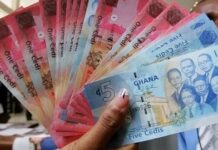

Public debate on Ghana’s economic management has recently centred on the Bank of Ghana’s regular interventions in the foreign exchange market, often in tranches of about US$10 million, aimed at stabilising the cedi and restoring confidence.
While these efforts are understandable, labour leaders caution that currency stability must not be achieved at the expense of Ghanaian workers.
“A rapidly depreciating currency affects everyone, but it hits workers and low-income households first and hardest,” Deputy General Secretary of the Teachers and Educational Workers Union (TEWU), Gifty Abena Turkson, has noted.
According to her, sharp depreciation quickly translates into higher prices for fuel, food, medicines and transport, eroding workers’ purchasing power long before wages are adjusted.
She acknowledged that measures to slow the cedi’s fall can offer temporary relief, but stressed that macroeconomic stability should not be treated as an end in itself. “The real question is whether the path to stability is sustainable, equitable and aligned with the needs of workers who keep the economy running,” she said.
Ms Turkson pointed out that foreign exchange interventions rely on public resources, increasingly drawn from Ghana’s natural wealth, particularly gold. “These are national assets held in trust for current and future generations,” she argued, adding that their use should be guided by social priorities such as job creation, quality public services and strong social protection.
She observed that many workers see little direct benefit from FX interventions. “Education workers, health workers and other public servants continue to struggle with high transport fares, rising food prices, expensive accommodation and escalating utility bills,” she said, noting that even when the cedi stabilises, prices rarely fall back.
In the education sector, she said these pressures are worsened by delayed budget releases, inadequate infrastructure and shortages of essential equipment. “When significant public resources are used to defend the currency without matching investment in education, workers and students are short-changed,” she warned.
Ms Turkson also raised concerns about sustainability, cautioning that repeated FX injections expose the economy to future shocks. “Commodity prices are volatile, and when reserves come under pressure, the adjustment can be sudden and severe,” she said, recalling that such episodes often lead to inflation, spending cuts, job losses and renewed austerity that disproportionately affect workers.
Another issue, she said, is opportunity cost. “Every US$10 million used in the FX market is US$10 million not invested in productive sectors,” she noted. She argued that the same funds could support vocational training, rehabilitate schools, equip hospitals, expand local food production or create jobs for young people.
She further highlighted the distributional impact of FX interventions, noting that large importers and financial institutions tend to benefit more directly than informal workers, small traders and rural households. “Without deliberate policy design, such interventions risk reinforcing existing inequalities,” she cautioned.
Ms Turkson clarified that she was not calling for inaction in the face of currency instability. “A disorderly collapse of the cedi would be catastrophic, especially for vulnerable households,” she said. However, she stressed that FX interventions should remain temporary emergency measures, not permanent tools of economic management.
According to her, Ghana’s deeper challenge is structural. “An economy dependent on primary commodity exports and imported finished goods will always put pressure on the currency,” she said, arguing that long-term stability depends on diversifying exports and adding value to raw materials.
READ FULL ARTICLE HERE
By Daniel Opoku