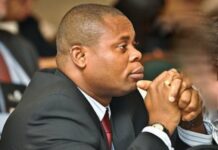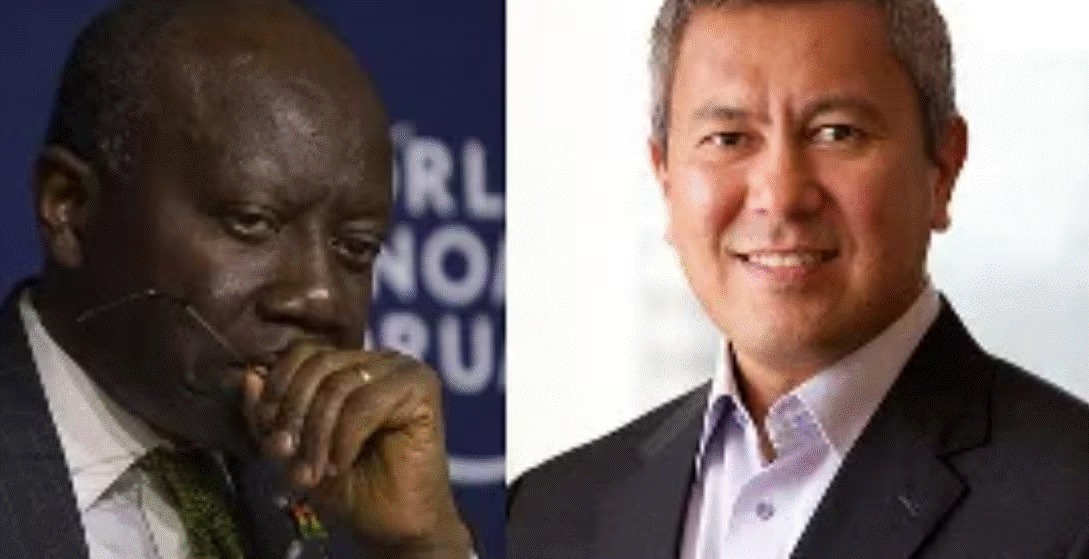

Professor Stephen Kwaku Asare has told Enayat Qasimi, a United States-based Lawyer for former Finance Minister, Ken Ofori-Atta, that the case against his client is not being driven by an opposition Attorney-General or a new government seeking revenge.
To that end, Prof Asare said, it cannot be accurate to describe the trial as political persecution.
His comments come after Enayat Qasimi stated, among other things, that his client has not been given the rights that he’s guaranteed under the Ghanaian Law. Qasimi argued that the red notice that was issued on his client was needless because Mr Ofori-Atta had informed authorities that he was in the United States receiving medical attention.
“Ken Ofori-Atta is committed to fully complying with the laws of Ghana and is fully committed to answering for anything that he did while he was the finance minister,” Enayat Qasimi said in an interview with the BBC.
He added, “Ken Ofori-Atta has never been given the rights that he’s guaranteed under the Ghanaian Law.”
In a Facebook post responding to him, Prof Asare said “When a case is framed around procurement structures, revenue flows, contracts, and institutional processes, and sweeps in actors without political profiles, the claim of persecution starts to look less like analysis and more like theatre.
“Meanwhile, the former President, former Vice-President, and a long list of ministers from the same administration are freely roaming the country, giving interviews, attending events, living openly. None claims persecution. None is abroad pleading victimhood. So what exactly is ‘political’ here?
“It seems more of a fallback slogan than a serious argument. You cannot be selectively absent, cry foul from overseas, and still demand the moral high ground. If the process is defective, the Constitution provides a remedy: come home, go to court, and challenge it. Political motivation is not proven by press releases and foreign interviews; it is tested through lawful engagement.”
Below is his full post on Facebook…
On Christmas Eve, we are being told that Oga is “fully committed to complying with the laws of Ghana” while remaining outside the jurisdiction, sidestepping lawful processes, and subcontracting accountability to BBC interviews.
That alone would be funny if it weren’t tragic. Accountability is not a podcast. It requires presence, process, and submission to jurisdiction.
Then comes the punchline: “political motivation.”
Political by whom?
The case is not being driven by an opposition Attorney-General or a new government seeking revenge.
It is being pursued by a Special Prosecutor appointed by the previous government.
You are charged together with several others, including private individuals and entities, on allegations of corruption, abuse of office, and violations of public revenue and procurement procedures.
That is the textbook opposite of a political witch-hunt. Political prosecutions isolate political opponents; they do not bundle politicians and private actors into the same factual matrix of alleged wrongdoing.
When a case is framed around procurement structures, revenue flows, contracts, and institutional processes, and sweeps in actors without political profiles, the claim of persecution starts to look less like analysis and more like theatre.
Meanwhile, the former President, former Vice-President, and a long list of ministers from the same administration are freely roaming the country, giving interviews, attending events, living openly. None claims persecution. None is abroad pleading victimhood.
So what exactly is “political” here?
It seems more of a fallback slogan than a serious argument.
You cannot be selectively absent, cry foul from overseas, and still demand the moral high ground.
If the process is defective, the Constitution provides a remedy: come home, go to court, and challenge it. Political motivation is not proven by press releases and foreign interviews; it is tested through lawful engagement.
On Christmas Eve, this story belongs where it fits best: comedy.