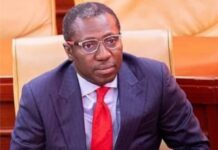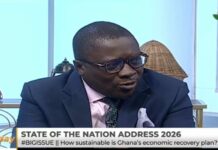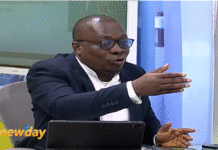

Private legal practitioner Andy Appiah-Kubi says Ghana’s transportation challenges are undermining economic progress and public wellbeing, despite recent positive macroeconomic indicators such as declining inflation.
Speaking on the KeyPoints, on January 17, Mr. Appiah-Kubi argued that while inflation figures may be improving, the lived experience of Ghanaians tells a different story, largely because of persistent transport inefficiencies.
According to him, transportation remains one of the most critical areas requiring urgent, deliberate attention.
He argued that Ghana’s overreliance on road transport is unsustainable, pointing out that road infrastructure is extremely expensive to build and maintain.
“If you are looking at road transport, managing that infrastructure alone is very costly,” he said.
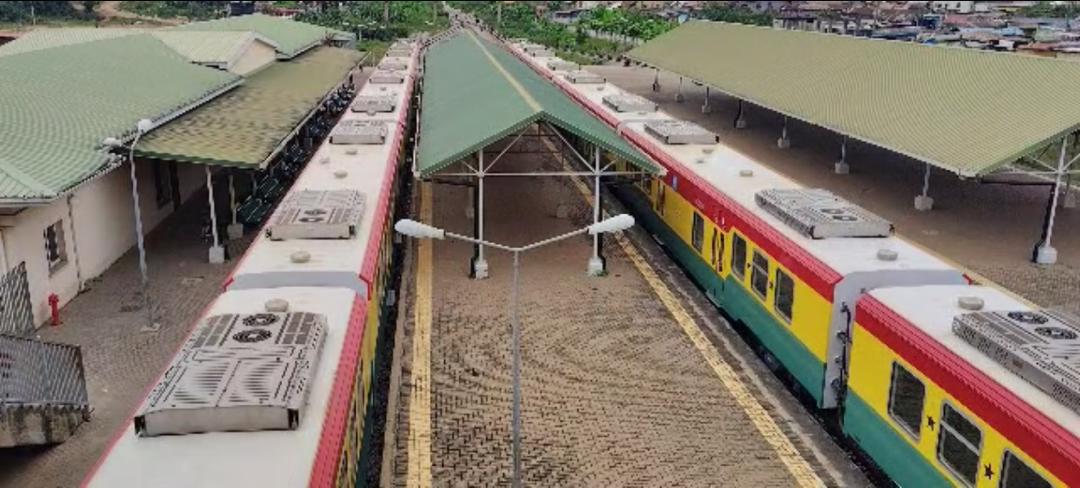
He stressed that when compared to road maintenance, investment in rail transport offers better long-term value and efficiency.
“In urban settings, public transport is far better than private transport,” he noted.
“And rail transport solves many of the problems we currently face.”
Mr. Appiah-Kubi expressed disappointment that several rail projects have stalled due to political and policy decisions, despite clear investor interest.
He revealed that he was aware of private sector groups that had applied to undertake railway projects under previous administrations, but those initiatives never materialised.
“I am very sad that those projects were not realised, largely because of policy and political interests,” he said.
He argued that the choice of financing models has also undermined delivery.
“When you choose the wrong financing model, that is where the problems begin,” he explained.
“Some projects would have been delivered faster and better through private sector participation.”
“I don’t see why government should spend money on certain roads when private investors can fund them and recover their investment within a short time,” he said.
According to him, government resources should be directed toward areas that do not naturally attract private capital, while commercially viable routes should be opened up to investors.
“Instead of government struggling to find resources, we should be marketing these projects so investors can put their money in,” he added.
According to him, expanding roads alone, such as adding more lanes or buses, will only worsen congestion.
“Looking at road transport again will only compound the situation,” he warned.
Drawing from his experience in public service, Mr. Appiah-Kubi said Ghana has the capacity to attract investors, but bureaucratic bottlenecks often frustrate progress.
“There are investors willing to come in, but bureaucracy slows everything down,” he said.
Mr. Appiah-Kubi concluded that rail transport, both underground and overhead, remains the most sustainable solution to Ghana’s urban transport crisis.
“Rail is the solution,” he said.
“More buses on the road will not fix the problem.”
By Christabel Success Treve