
When Ghana’s Ministry of Foreign Affairs announced that it had approved the issuance of a Ghanaian passport to American streamer Darren Watkins Jr., popularly known as IShowSpeed, the news travelled fast. So did the debate.
The decision came at the end of IShowSpeed’s highly publicised “Speed Does Africa” tour, which climaxed with what many described as a “homecoming” in Ghana on Monday, January 26.
Videos from the visit went viral almost instantly, drawing millions of viewers and placing Ghana at the centre of global online attention.
His visit to Ghana was not a routine celebrity stopover. It was immersive, symbolic and widely broadcast.
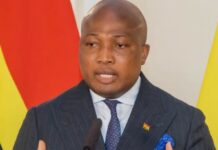
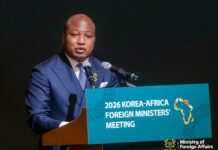
The Ministry of Foreign Affairs, through Minister Samuel Okudzeto Ablakwa, framed the passport approval as a decision grounded in “irrefutable ties” to Ghana, following consultations and verification. It was presented not as a novelty but as recognition, a seal placed on an already established relationship.
Writing on his official Facebook page, the Minister explained that the approval followed discussions with Ghanaian travel vlogger Wode Maya and a verification of Speed’s personal ties to the country.
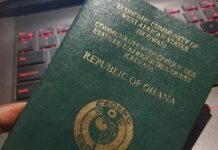
“Following our discussions and subsequent confirmation of the irrefutable ties of IShowSpeed to Ghana, I am pleased to inform you and our compatriots that the Ministry of Foreign Affairs has approved the issuance of a Ghanaian Passport to IShowSpeed,” the Minister stated.
He also thanked both Speed and Wode Maya, who himself received a diplomatic passport in 2025, describing them as worthy ambassadors of the Ghanaian spirit.
Still, a passport is not a souvenir. It is the state’s most powerful symbol of belonging.
A Visit That Became a Statement
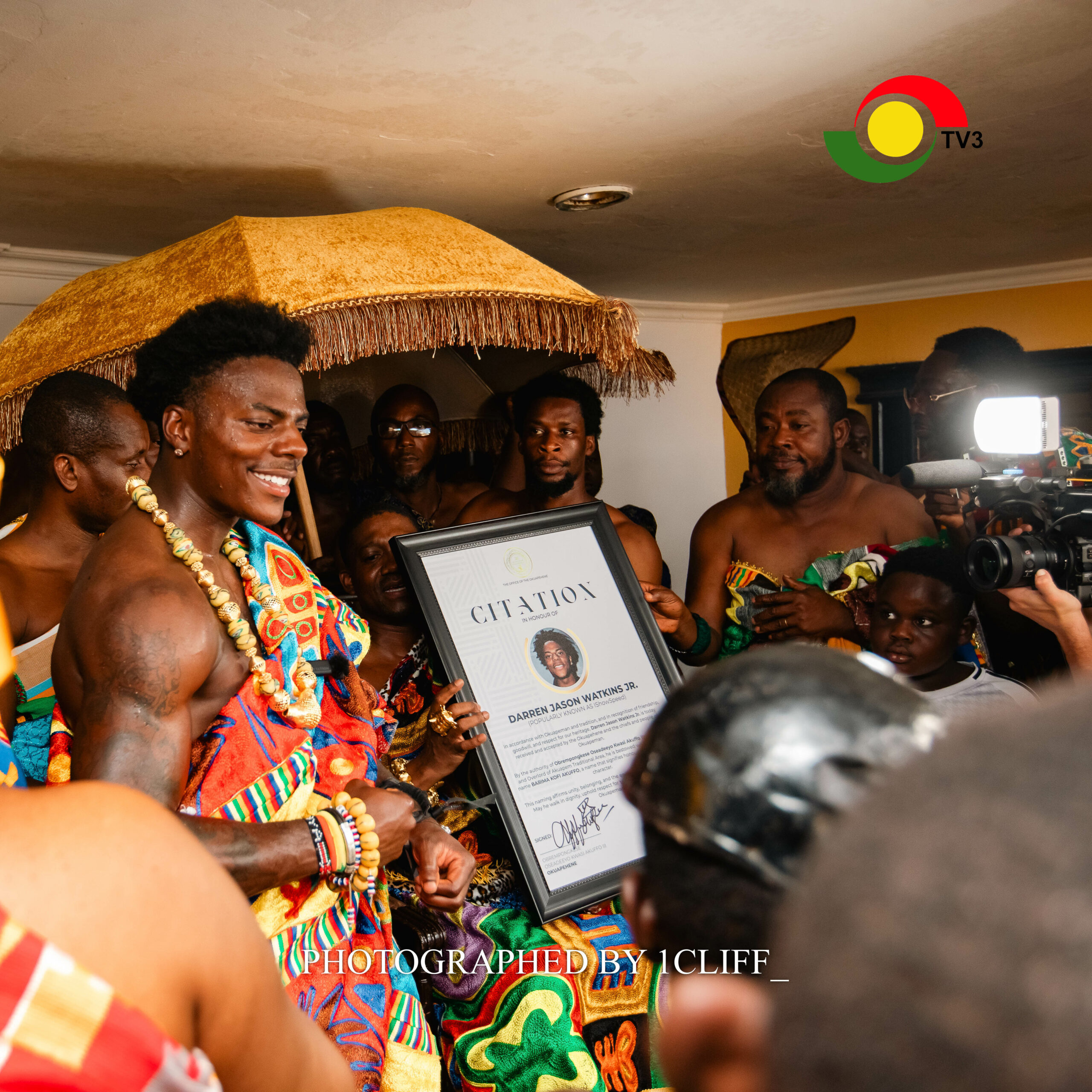
IShowSpeed’s visit went beyond content creation. During his stay, he was traditionally enstooled in Akropong and given the name Barima Kofi Akuffo at a spiritual naming ceremony.
He visited sites such as the Asenema Waterfalls, appeared before massive crowds at Independence Square, embraced local customs, tasted Ghanaian jollof, and interacted with local creatives, the visit generated unprecedented digital visibility for Ghana among Gen-Z and global youth audiences.
The images and videos were loud, colourful and deeply symbolic. To supporters, they showed genuine cultural engagement. To critics, they raised questions about how quickly symbolism was followed by state recognition.
A key detail, however, is that Speed publicly disclosed that his mother is Ghanaian. Under Ghanaian law, citizenship by descent is recognised. In that light, the passport approval was not necessarily a gift, but an acknowledgement of lineage, accelerated by visibility.
Still, the speed and public nature of the decision brought renewed attention to how Ghana grants citizenship, and to whom.
Ghana Has Been Here Before, Just Not Like This
Ghana has a long history of extending citizenship to people of African descent with strong cultural, historical or personal ties to the country.
In May 2024, American music legend Stevie Wonder was officially granted Ghanaian citizenship at a ceremony in Accra. The award followed his long-expressed desire to become Ghanaian, a wish he had spoken about publicly for years, including during a 2021 interview with Oprah Winfrey.
At Jubilee House, Stevie Wonder took the Oath of Allegiance, received a certificate of citizenship and a Ghanaian passport, and was presented with a kente cloth while seated on a traditional stool. Former President Nana Addo Dankwa Akufo-Addo described the moment as a reflection of Ghana’s values and its commitment to Pan-African unity.
Stevie Wonder joined a long list of notable figures; including W.E.B. Du Bois, Maya Angelou, Rita Marley and George Padmore, who made Ghana their home and were later recognised as citizens.
The IShowSpeed case, however, marks a shift in emphasis from ancestry and residence to cultural reach and digital influence.
Influence as Currency in Modern Diplomacy
It would be disingenuous to dismiss the strategic logic at play. In an era where creatives command audiences larger than many national broadcasters, states increasingly deploy soft power through culture, storytelling and personality.
Beyond high-profile individuals, Ghana has also granted citizenship to hundreds of ordinary members of the African diaspora.
In November 2024, 524 diaspora Africans were officially granted Ghanaian citizenship at a ceremony at the Accra International Conference Centre. The event built on earlier ceremonies held in 2019 and was part of the broader Year of Return and Beyond the Return initiatives.
Former President Akufo-Addo at the time described the ceremony as an act of healing and reconnection, acknowledging Ghana’s role in the transatlantic slave trade and the responsibility to welcome descendants back home. He reminded recipients that citizenship is more than a legal status, it is a commitment to Ghana’s values, laws and image.
For many returnees, the passport carries deep emotional meaning. Keachia Bowers, one of the recipients, said the document represented ancestors who never made it back to Africa. Others, like Dejiha Gordon, described citizenship as a way to reclaim identity and belonging.
These programmes also have an economic dimension, encouraging diaspora investment, skills transfer and long-term settlement.
Where the Lines Begin to Blur
Citizenship is not merely about affection for a country or the scale of one’s platform. It is a legal status that carries rights, obligations and long-term implications. When exceptions appear opaque, public trust weakens.
If influence can accelerate or bypass established naturalisation pathways, then clarity becomes essential. Otherwise, the state risks sending mixed signals: that citizenship is earned through contribution — except when visibility shortcuts the process.
This does not mean the decision is wrong. It means it must be explained within a coherent framework.
The Ministry of Foreign Affairs has justified this approach as a way to modernise diplomacy, recognising that creatives often reach wider global audiences than traditional state actors. The move has not been without controversy, especially following the 2025 cancellation of hundreds of improperly held diplomatic and service passports.
Still, the state has been clear that influence, when managed transparently, can be a national asset.
Why the IShowSpeed Case Is Different
What makes the IShowSpeed case stand out is how public and fast the process was. Unlike traditional naturalization cases, which can take months or years behind closed doors, this process moved quickly, amplified by social media and global news coverage.
In the digital age, where attention travels faster than official letters, the world watched Ghana welcome one of its own in real time a modern spectacle of ancestry, law, and influence coming together on a public stage.
This has led to divided public opinion. Some see the decision as smart soft power, free global publicity that money cannot buy. Others worry about transparency, fairness and whether fame is beginning to blur legal processes.
These concerns are legitimate. Citizenship must not appear transactional or selective. The law must remain clear, consistent and publicly understood.
The Question Ghana Must Answer
The real issue is not whether IShowSpeed “deserves” a Ghanaian passport. That framing is reductive. The deeper question is:
What model of citizenship is Ghana consciously or unconsciously constructing?
Is Ghana moving toward:
– A diaspora-centric citizenship, grounded in ancestry and historical redress?
– A cultural citizenship, based on contribution to national image and identity?
– Or a hybrid model, where influence, ancestry, residence and service coexist — but within transparent rules?
If the latter, then policy must catch up with practice.
Ghana has deliberately positioned itself as a home for the African diaspora and as a cultural hub with global reach. That vision has brought investment, attention and renewed pride. But it also demands clarity.
A Ghanaian passport carries rights, but also responsibility, to respect the law, uphold national values and contribute positively to society.
As Ghana continues to welcome returnees, recognise global Africans and leverage soft power, the rules must remain transparent. Influence may open doors, but citizenship must always rest on law, principle and shared commitment.
The conversation sparked by IShowSpeed’s passport is necessary. How Ghana manages it will define the credibility of its diaspora and citizenship policy in the years ahead.
On this side, we stand supportive, yet cautious. The IShowSpeed passport signals a bold and creative approach to connecting the diaspora and recognizing cultural influence.
It celebrates Ghana’s openness and the pride of reclaiming a global citizen as one of our own.
Yet, we must also be careful not to make exceptions so public and fast that they appear arbitrary or bypass established processes.
This is not about rejecting the decision, but about ensuring that future cases maintain transparency, fairness, and respect for both legal procedures and the symbolic weight of Ghanaian citizenship.
Handled well, the IShowSpeed case could strengthen Ghana’s global brand, modernise its citizenship discourse and reaffirm its leadership in African soft power. Handled poorly, it risks commodifying one of the republic’s most sacred instruments.
Citizenship should inspire aspiration, not confusion. Belonging should feel earned, not arbitrary.