
West Africa’s agricultural sector is undergoing a shift towards cleaner and more sustainable practices, as the Innovate for Clean Agricultural Technologies (INFoCAT) project reached its conclusion on 29 and 30 January 2026.
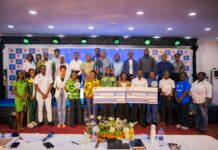
The project culminated in a high-level end-of-project workshop held at the University of Ghana, Legon, bringing together stakeholders from across the region. The event highlighted the achievements of young innovators whose technologies are helping to replace manual farm labour with renewable energy solutions.
Speaking at the workshop, the Principal Investigator of INFoCAT, Professor Fatima Denton, said the project was designed to address the energy burden faced by women in agriculture.
“This project is about responding to the needs of women in their agricultural activities, whether it is dehusking or other farm tasks,” she said.
The Principal Investigator added that, “The aim is to introduce innovations that reduce the energy burden, so they do not have to expend excessive physical effort just to complete basic agricultural work.”
Launched two years ago by the United Nations University Institute for Natural Resources in Africa (UNU-INRA) and funded by Canada’s International Development Research Centre (IDRC), the INFoCAT initiative sought to connect young clean-technology innovators with the practical needs of rural smallholder farmers.
The project supported innovators in Ghana, Senegal and Côte d’Ivoire to develop and scale renewable-energy-powered agricultural technologies, with a focus on improving productivity, reducing drudgery and promoting climate-smart farming practices.
As part of the event, the Best INFoCAT Agri-Tech Innovator prizes were awarded to promote the scaling and adoption of clean agritech solutions:
• Wobil Technologies, led by Erica A. Appiah and Charity Abena Azogmi, received US$25,000 for their grain winnower, an innovation that cleans grains such as rice, soya beans, maize, and other cereals.
• Villiam Star Ltd, represented by William Mikado and Gifty Samani from Ghana, received US$12,000 for their cassava peeling and washing machine.
• Moussa Ndoye from Senegal received US$25,000 for his peanut thresher and sheller innovation.
• Amdy Moustapha Niass from Senegal received US$12,000 for his mini renewable energy powered plant.
• Lognigue Emmanuel Yeo of Lynays Corporation from Côte d’Ivoire received US$25,000 for a solar smart irrigation system that supports efficient water management.
• Achi David of AD Solar received US$12,000 for solar dryers designed for vegetables.
With INFoCAT positioned at the intersection of entrepreneurship, clean energy, agriculture, and gender inclusion, the Principal Investigator also called on regional bodies to build on the project’s success.