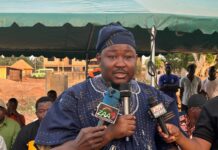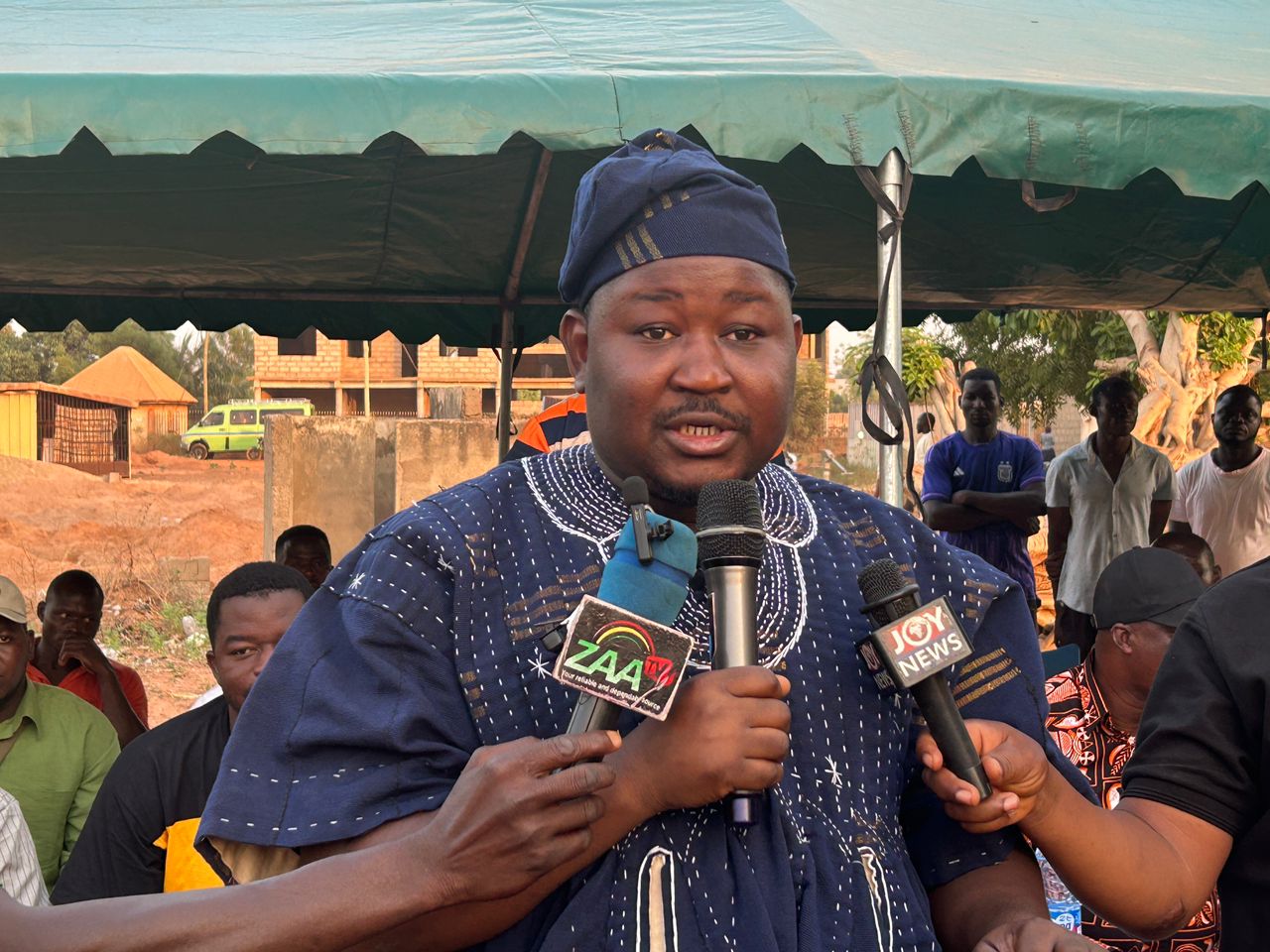

The Member of Parliament for Sagnarigu, Attah Issah, has attributed the ongoing financial challenges facing the Ghana Cocoa Board (COCOBOD) to what he described as a heavy legacy debt inherited by the NDC at the end of 2024.
According to him, COCOBOD entered 2025 with approximately GH¢17.8 billion in outstanding loans, excluding other financial obligations, placing significant pressure on the current administration.
“I am talking about loans that they actually went to take that this current government has to pay principal and interest,” he stated.
Mr. Issah noted that since assuming office, the governing National Democratic Congress (NDC) has already paid GH¢3.4 billion out of the GH¢17.8 billion loan stock.
“The legacy financial burden and debt of COCOBOD as at 2024. COCOBOD entered 2025 with roughly GHC17.8 billion in loans alone. I am talking about loans that they actually went to take that this current government has to pay principal and interest.
“The current NDC government out of the GHC17.8 billion, has already paid GHC3.4 billion,” he said.
He revealed that as of February this year, COCOBOD owed the African Development Bank about GH¢1.872 billion from a facility contracted in 2024.
He explained that by the time the NDC took office, the outstanding amount to the Bank stood at GH¢1.72 billion, but GH¢1.2 billion had already been repaid under the leadership of COCOBOD Chief Executive Dr. Randy Abbey and the Finance Minister.
The MP further disclosed that interest accrued on the AfDB loan had reached GH¢209 million, of which GH¢165 million has been paid by the current COCOBOD Management.
He outlined additional liabilities, including a 10-year loan from the Bank of Ghana with a principal of GH¢1.3 billion and interest of GH¢65 million, GH¢1.8 billion owed to the Ministry of Finance, and cocoa bonds totalling GH¢9.3 billion.
Mr. Issah argued that the scale of the debt had weakened COCOBOD’s balance sheet and undermined its ability to secure new financing.
“You cannot go out to borrow with such books because every person you will go to borrow from will look at your capacity to pay,” he said.
He explained that the Ministry of Finance is undertaking financial restructuring measures, including converting short-term loans into equity, to improve COCOBOD’s balance sheet and make it more attractive to investors.
“And that is why the financial engineering done by the Ministry of Finance is to convert the short-term loans into equity to free the COCOBOD of having good balance sheet to attract investors,” he stated.