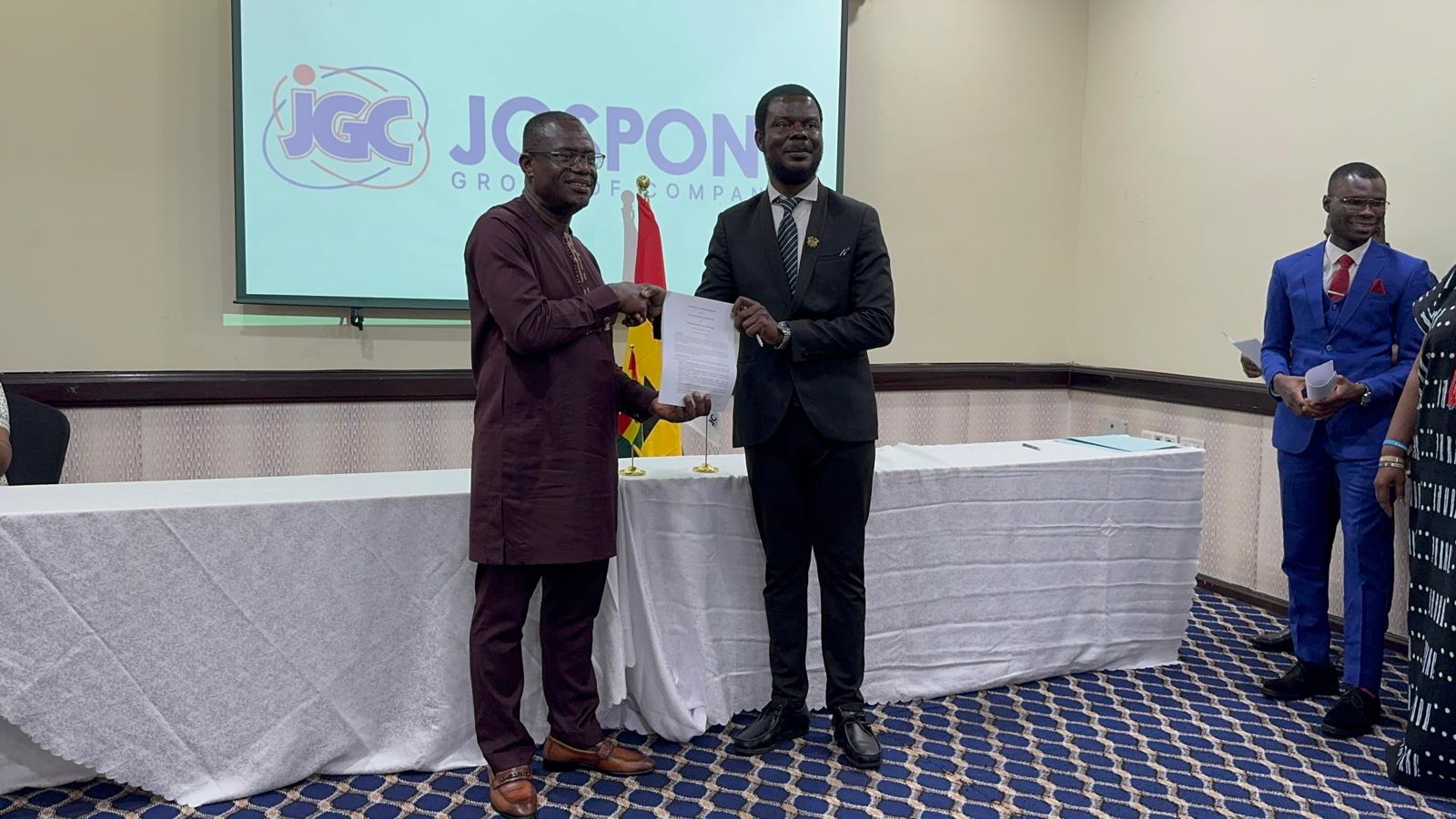

The recent NUGSA Germany Official Website Launch and the Ghanaian Scholars in the Diaspora (GSD) – GRAIN Project Memorandum of Understanding Webinar, held on 7 March 2026, brought together a distinguished group of speakers, scholars, institutional partners, and student leaders from across Europe and Ghana.
The event marked a defining moment not only for the National Union of Ghanaian Students’ Associations (NUGSA) – Germany but also for the broader conversation about how diaspora knowledge can shape the future of Ghana and the African continent.
The webinar served as both a celebration of NUGSA Germany’s growing institutional strength and a strategic forum for dialogue on how Ghanaian scholars abroad can contribute meaningfully to national development.
A Shared Vision from Global Speakers
Speakers at the event emphasized the importance of structured diaspora engagement and the need to harness the intellectual resources of Ghanaian students and scholars living abroad. Participants noted that Ghanaian students studying in Germany and across Europe are gaining exposure to some of the world’s most advanced research systems, technological innovations, and policy environments.
According to speakers during the webinar, the challenge now is not the absence of talent but the absence of structured platforms that connect diaspora expertise with development initiatives in Ghana and Africa.
The event itself represented a step toward solving that challenge. By bringing together Ghanaian students, diaspora scholars, institutional partners, and stakeholders from multiple countries, the forum created an environment where ideas, research interests, and development strategies could be shared across borders.
Speakers highlighted that such platforms are critical for transforming diaspora knowledge into practical solutions for national development.
The GRAIN Project: A Platform for Knowledge Exchange
One of the central themes of the event was the introduction and discussion of the Ghanaian Scholars in the Diaspora (GSD) – GRAIN Project, which aims to establish a structured network linking Ghanaian academics abroad with institutions and development initiatives in Ghana.
During the webinar, speakers explained that the GRAIN initiative has the potential to serve as a bridge between research and development by facilitating collaboration in areas such as innovation, policy research, technology transfer, and mentorship.
Several participants noted that similar diaspora-driven knowledge networks have played significant roles in the technological advancement of countries such as India, China, and South Korea. The speakers suggested that Ghana and other African countries could benefit greatly from adopting similar models that connect their global talent with national development strategies.
NUGSA Germany’s Institutional Growth
A key highlight of the event was the launch of the official NUGSA Germany website, which speakers described as an important step toward strengthening the organization’s institutional capacity and digital presence.
According to speakers and participants, the platform will help the association improve communication among Ghanaian students across Germany while also creating a visible interface for collaboration with partners in Ghana, Europe, and beyond.
For many attendees, the development represents the evolution of NUGSA Germany from a traditional student association into a strategic diaspora institution capable of facilitating academic partnerships and policy dialogue.
Speakers commended the leadership of NUGSA Germany for their vision in building an organization that not only supports students socially and academically but also positions them as contributors to Ghana’s development agenda.
Global Implications for Ghana and Africa
Beyond the immediate institutional benefits for NUGSA Germany, the discussions at the webinar carried broader implications for Ghana and the African continent.
Speakers emphasized that Africa’s development in the 21st century will increasingly depend on its ability to harness knowledge, innovation, and global networks. In this context, diaspora students and scholars represent one of the continent’s most valuable yet underutilized resources.
Participants argued that stronger collaboration between governments, academic institutions, and diaspora organizations could unlock new opportunities in research, technology development, entrepreneurship, and policy innovation.
For Ghana in particular, speakers highlighted that partnerships between diaspora networks, local institutions, and private sector organizations could accelerate progress toward building a knowledge-based economy.
A Defining Moment for NUGSA Germany
The success of the webinar reinforced NUGSA Germany’s growing role as a key platform for Ghanaian students in Western Europe. The event demonstrated the organization’s ability to convene international stakeholders, facilitate intellectual dialogue, and initiate programs with long-term development potential.
For many participants, the webinar was more than an institutional event—it was a demonstration of how diaspora student leadership can contribute to global conversations about development, knowledge exchange, and international cooperation.
As discussions continue and the GRAIN initiative evolves, NUGSA Germany is increasingly being recognized as a bridge between Ghana’s global academic community and its national development ambitions.
If sustained and supported by partners across governments, universities, and international institutions, the work initiated at this event could have far-reaching implications—not only for Ghana but for Africa’s broader engagement with àits global diaspora www.nugsagermany.de