
The Chamber of Agribusiness Ghana has called for an urgent national tomato emergency strategy following Burkina Faso’s export ban on the produce.
The Chamber warned that Ghana faces a severe supply gap, rising prices, and deep structural weaknesses in its food system.
In a press statement issued on March 20, 2026, the Chamber of Agribusiness Ghana urged government to immediately implement a coordinated national response to stabilise tomato supply and achieve food sufficiency within 12 months.
According to the Chamber, Ghana consumes about 800,000 metric tonnes (MT) of tomatoes annually but produces only 510,000 MT at peak capacity, leaving a supply deficit of 290,000 MT. The situation is worsened by post-harvest losses estimated at between 20 and 50 percent each season.
The Chamber also described Burkina Faso’s export ban as a “structural break” rather than a temporary disruption, exposing Ghana’s long-standing dependence on external supply and underinvestment in its own agricultural systems.
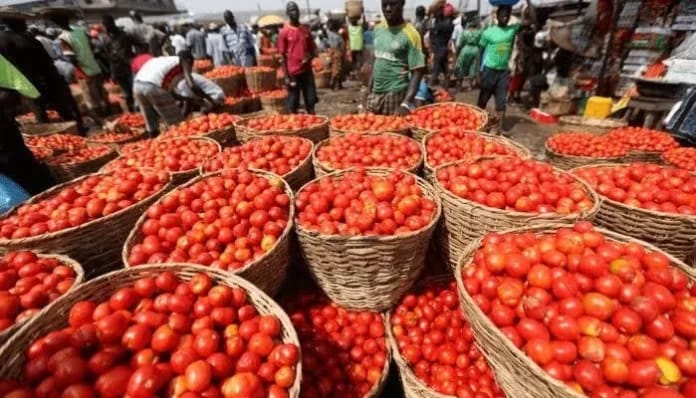
It warned that, the impact is already being felt across the country, with rising tomato prices in major urban markets, a dry-season supply shortfall of up to 300,000 MT, increased imports of tomato paste, and income losses for traders who rely on cross-border supply chains.
To address the crisis, the Chamber proposed a National Tomato Emergency Strategy built on five key pillars: expanding irrigation, reducing post-harvest losses, reviving processing plants, supporting farmers with inputs and finance, and aligning trade policies to protect local production.
Under the plan, about 15,000 hectares of irrigated farmland would be activated within 90 days, potentially adding over 180,000 MT of output. The strategy also seeks to recover up to 100,000 MT of tomatoes lost annually through improved storage and cold chain systems.
The Chamber emphasised that success would depend on strong public-private partnerships under the Grow Ghana Agro-Corporate Partnership Framework, which aims to mobilise agribusinesses, financial institutions, and farmer cooperatives.
The Chamber further called on government to take seven immediate actions within 30 days, including declaring a national emergency, allocating at least GHS 430 million in funding, rehabilitating irrigation infrastructure, reviewing import tariffs, and establishing a dedicated agricultural financing window.
The statement signed by the Chief Executive Officer of the Chamber, Anthony Kofituo Morrison, stressed that the solution lies within Ghana’s own systems, noting that the crisis presents an opportunity to rebuild a resilient and self-sufficient tomato sector.
Read more TOMATO EMERGENCY STRATEGY AS DIRECT RESPONSE TO BURKINA FASO’S FORMAL EXPORT BAN.