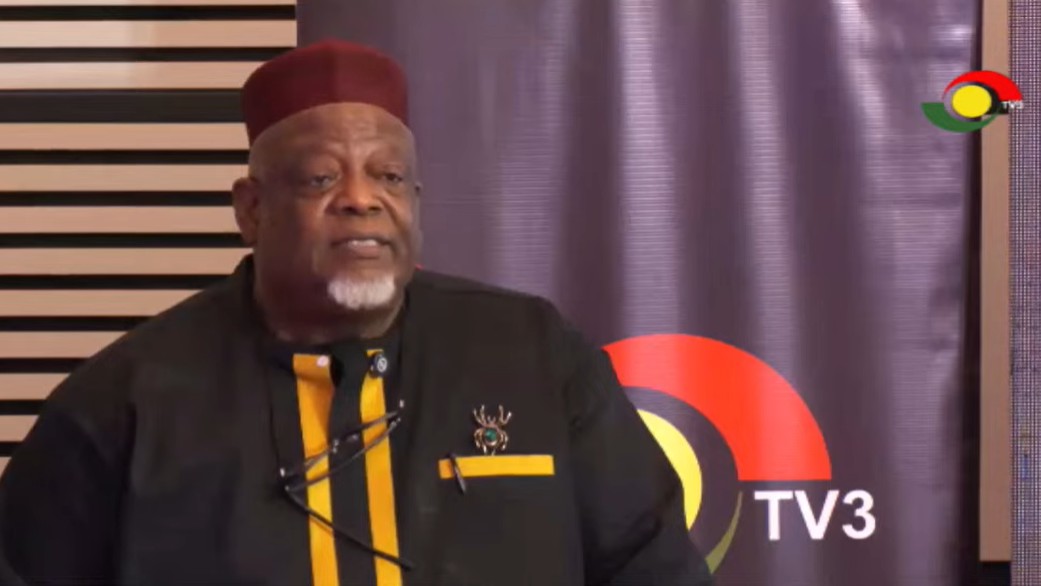

The Chief Executive Officer of Dalex Finance and financial analyst, Joe Jackson, has argued that Ghana’s struggle to translate its natural resource wealth into economic prosperity stems more from local weakness and not foreign dominance.
Speaking during the Economic Dialogue on the theme: “Who owns the Ghanaian economy” organized by Media General in Accra on Thursday March 26, 2026, Mr. Jackson noted that while Ghana has established itself as a global leader in resource extraction, it has failed to convert that advantage into sustainable wealth creation.
He stressed that the commonly cited issue of foreign dominance in key sectors is merely a symptom rather than the root cause of the problem.
“Ghana, we have become a global leader in extraction but not into wealth creation. But guess what, this is not the disease all these is the symptom, foreign dominance is not the disease, that is not it,” he stated.
According to him, foreign influence thrives only where there are domestic vulnerabilities.
“Nobody imposes foreign dominance; it is invited by local weakness,” he said, urging Ghanaians to confront underlying systemic issues rather than attributing challenges solely to external actors.
Mr. Jackson pointed to the country’s capital constraints as a critical factor undermining development.
He highlighted that despite Ghana having approximately GH¢60 billion in pension funds, very little of this capital is channelled into productive sectors of the economy.
“We should hold our heads high because nobody is imposing it on us, it is the fact that we are weak that is why somebody can take over. Just look at the capital deficit, we have GHC60 billion of pension funds, none of it goes to the productive sector,” he added.
He criticised the current structure governing pension fund investments, noting that excessive safeguarding of contributors’ funds has limited the ability of these funds to support national development.
The Dalex Finance CEO further observed that, unlike Ghana, many countries strategically deploy pension funds as instruments for economic growth, investing in infrastructure, industry, and other productive ventures.
In contrast, he argued, Ghana has rather used its pension funds as a “piggy bank” for government, without maximising their developmental potential.
“We can have conversations about the fact that we are so corrupt and so scared about our future that we tied the pension funds in such legislation but it doesn’t go anywhere but it still does not absorb us from the fact that other countries are using their pension funds as a development tool, we have put it away as a piggy bank for government.”