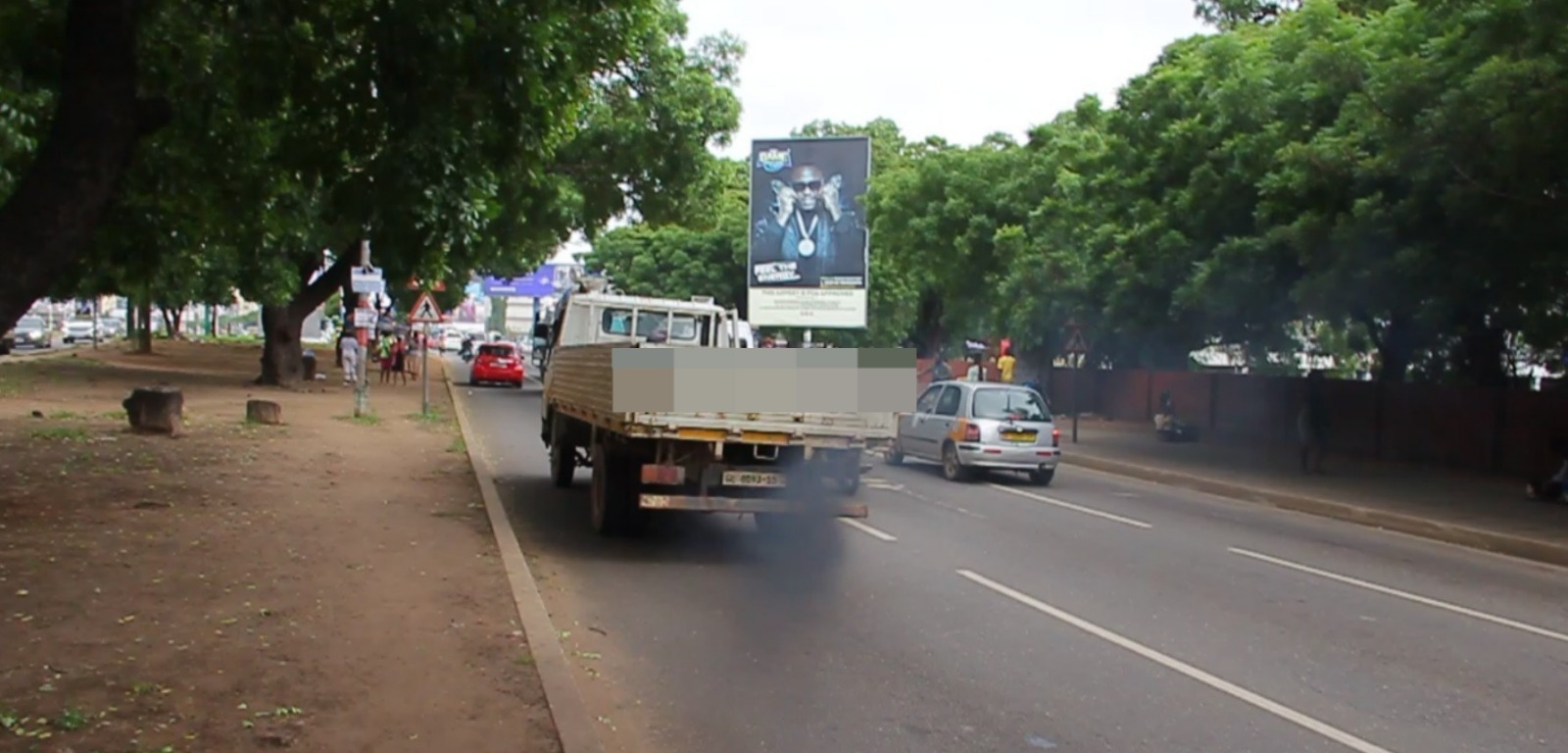

Every day, cars, buses and trucks release harmful gases and small particles into the atmosphere, contributing to air pollution, climate change and a growing public health burden.
At the 37 Military Bus Terminal in Accra, many drivers and commuters acknowledge the dangers associated with vehicle emissions.
Ernest, a commuter, says, “It can cause illnesses, and for people with conditions like asthma, it can trigger attacks.”
Despite this awareness, some of the drivers say replacing ageing vehicles or carrying out regular maintenance is expensive.
Isaac is a driver and attests to this claim. “When a fuel pump becomes faulty, the vehicle produces excessive exhaust smoke. Sometimes, as drivers, we continue using the vehicle because replacing the faulty part is expensive.”
Globally, air pollution is one of the leading environmental health risks, with vehicle emissions playing a significant role.
Professor Reginald Quansah is an associate professor with the University of Ghana School of Public Health.
He explains that while many people may not fully understand how vehicle emissions affect the air they breathe, the health consequences are dire.
“We’re talking about diseases related to the heart and the respiratory system. We’re talking about asthma and other heart diseases. We know that it also, in a way, contributes to cancer-related conditions. And there is a lot of evidence suggesting that it can also affect the brain.”
The World Health Organisation in 2017 estimated that air pollution contributed to approximately 28,000 preventable deaths in Ghana annually.
The report said about 2,800 premature deaths were attributed to air pollution in the Greater Accra Metropolitan Area in 2015, with that figure expected to increase to 4,600 by 2030.
Professor Quansah says the public must adopt practical steps to reduce their exposure.
“Those of us who take trotro a lot, sometimes the smoke might not be outside the vehicle, but it’s within the vehicle. The best you can do is just open the windows and make sure you have a nose mask on. When you are boarding a vehicle, be careful of the type of vehicle you board. Don’t just jump into any vehicle because you are late. I think your health comes first. And we should always guard against our children. And as a pregnant woman, the elderly who have some compromised systems. And the other target group may be those selling along the roadside.”
On the regulatory framework for controlling vehicle emissions in Ghana, the news team contacted the Driver and Vehicle Licensing Authority (DVLA).
The Authority says while vehicle roadworthiness inspections remain in place, the Ministry of Transport is currently developing new policies and standards aimed at strengthening emission control and improving air quality.
Environmental advocate Paul Nwachukwu believes policy alone will not solve the problem.
He says effective enforcement of existing regulations is imperative.
“The ability for us to be able to enforce periodic checks is critical. Also, the issue of fuel quality is something we really need to look into. But I think also we should be able to look through where government could also assist in infrastructure, most importantly, like the charging infrastructure, which I believe would also encourage people to patronise more of the electric vehicles.”
While acknowledging ongoing efforts by government, Paul argues that public awareness remains one of the most important tools in reducing vehicle emissions and protecting the environment.
“We need to drive more public awareness on matters regarding air pollution, because if we can really look into it, being able to put up policies or put up measures that could help us regulate this, I think, yes, it will also help us in the fight for climate change.”
As Ghana’s urban population and vehicle numbers continue to grow, the challenge of keeping the air clean is also becoming more urgent.
For experts, reducing emissions will require stronger implementation of existing regulations, improved transport policies, regular vehicle maintenance, and a collective commitment from government, transport operators and the public.
By Samuel Yeboah Adams