
The Trades Union Congress (TUC) is urging its members to take their SSNIT contributions more seriously.
The workers union described SSNIT contribution as a key pathway to long-term financial security.
The call was made during an engagement between SSNIT officials and TUC members in the Western Region.
The engagement formed part of efforts to deepen awareness about the pension scheme and encourage wider participation among workers in both the formal and informal sectors.
Addressing participants, Deputy Secretary General of the TUC, Dr. Kwabena Nyarko Otoo, stressed the need for workers to take personal responsibility for their financial future by contributing consistently during their active years.
“Pension is beneficial, yet many members and Ghanaians often do not take it seriously. As a result, the benefits received after retirement can be inadequate, especially as advancing age and health challenges increase expenses. This situation arises from several factors. Therefore, our focus is to educate members to better understand the pension scheme, their responsibility to contribute consistently, and the role of SSNIT in ensuring their future security” he said.
He warned that failure to plan adequately for retirement could expose workers to financial hardship.
Meanwhile, Director-General of SSNIT, Mr. Kwesi Afreh Biney, revealed that the Trust’s investments have increased from 20.4 billion in 2024 to 27 billion in 2025.
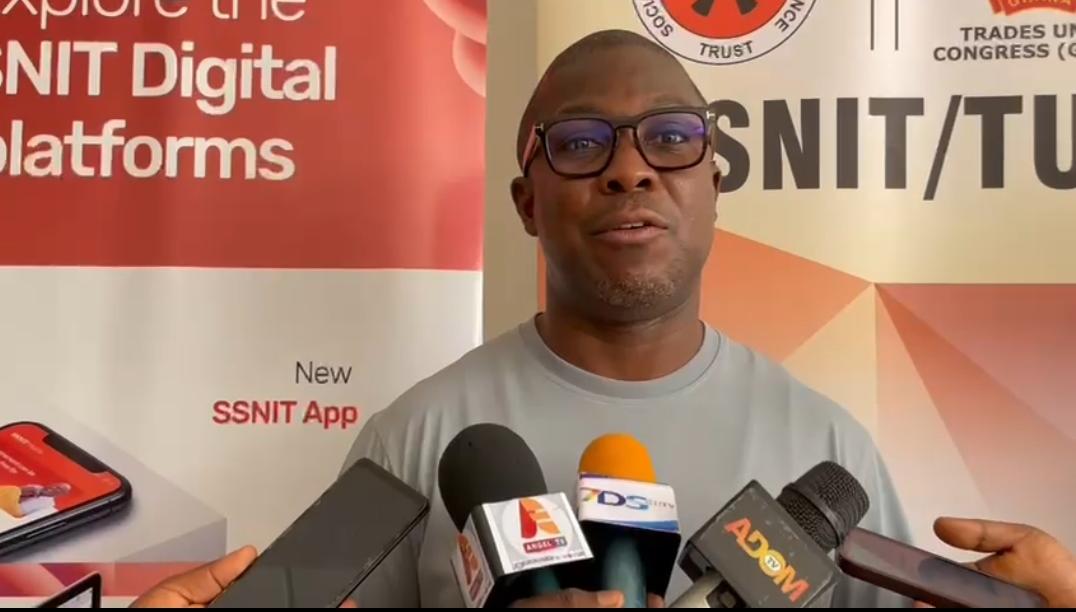
“Our engagement with TUC is aimed at building trust and clarifying issues they may not fully understand regarding SSNIT contributions. We have also recorded significant improvements across our investment portfolio. In 2024, our investments grew from 20.4 billion to 27 billion in 2025, based on our validated final figures. While the real return on investment stood at negative 4.2 in 2024, it has rebounded strongly to a positive 8.03 in 2025,” he revealed.
He encouraged workers to support the scheme, highlighting its long-term benefits.
Mr. Afreh Biney also reaffirmed SSNIT’s decision not to sell any of its hotels, stating that its hospitality investments, including Labadi Beach Hotel, remain profitable.
”We have no plans to sell our hotels. Our strategy is to turn around underperforming facilities while strengthening those that are already doing well to achieve even greater growth.
For instance, Labadi Beach Hotel has consistently performed strongly, recording a profit before tax of 72 million in 2024, which clearly provides no justification for a sale,” he stated.
“However, hotels such as Golden Beach, La Palm, Busua Beach, and Elmina Beach have recorded losses over the years. In the case of La Palm, it has only managed a marginal profit of 1.7 million in 2025 after many years. This is why we have advertised to engage a consultant to assess especially the three beach hotels and implement strategies to turn their performance around and make them profitable,” he clarified.