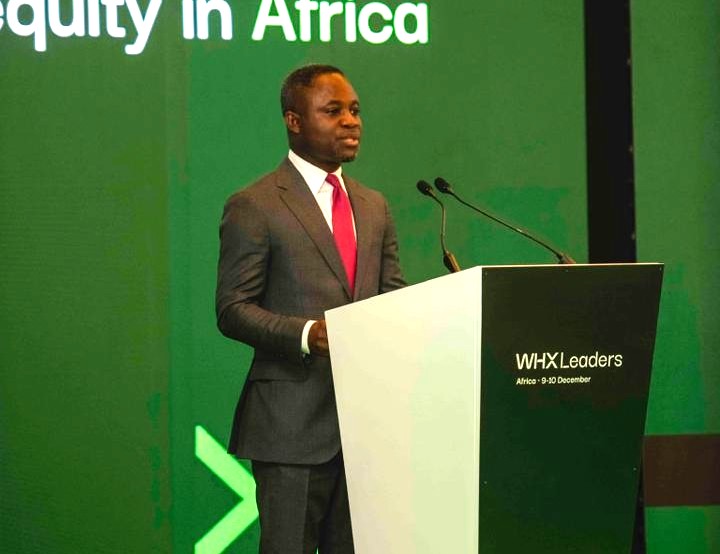

Ghana has reaffirmed its commitment to transforming health workforce development across Africa, as the country hosts the Second Africa Health Workforce Investment Forum in Accra.
Stakeholders are making a strong call to move from policy declarations to practical action on training, retention and deployment.
The Health Minister, Kwabena Mintah Akandoh, said the Accra meeting represents a shift in focus from declarations to measurable delivery.
He stressed that workforce investment is not just about increasing numbers, but also about ensuring fairness, quality, distribution, competence, motivation and dignity for health workers across all levels of care.
“This forum is not simply a continuation. It is a call to move from declaration to delivery, from plans to investment and from commitment to measurable results,” he said.
The Minister said Ghana’s participation in shaping the continental agenda dates back to earlier regional consultations held in Accra in 2022, which helped build consensus for the African Health Workforce Investment Charter.
He noted that Ghana now carries a responsibility to demonstrate how continental principles can be translated into national action.
Health workforce tied to national reforms
Mr. Akandoh linked health workforce investment to Ghana’s broader reform agenda, including the rollout of a free primary health care initiative and the Mahama Cares programme, which aims to support treatment of non-communicable diseases such as cancer, cardiovascular conditions and kidney disease.
He said both initiatives depend heavily on a well-trained, fairly distributed and motivated health workforce.
“No country can deliver effective health services if it cannot plan, train, deploy and retain the people who make the system work,” he said.
He added that Ghana has placed increased emphasis on evidence-based planning, including a comprehensive health labour market analysis conducted in 2023. The study examined the entire workforce pipeline, from training and employment to deployment and retention.
The findings, he said, raised critical policy questions, including how to balance unemployment among trained professionals with shortages in underserved areas, and how to manage ethical labour mobility while safeguarding national health needs.
He said following national consultations in 2025, Ghana has begun implementing several reforms aimed at strengthening workforce management.
These include structured health workforce exchange programmes designed to support ethical and mutually beneficial mobility of professionals, while ensuring that Ghana’s health system remains adequately staffed.
The Ministry of Health, he said, is also developing a National Health Workforce Development Plan, which seeks to position human resource investment as a core pillar of national development planning, in collaboration with the Ministry of Finance and the National Development Planning Commission.
The forum comes amid growing concern across Africa over shortages of health professionals, uneven distribution of skilled workers and rising migration to developed countries.
Delegates are expected to focus on practical solutions to improve training systems, strengthen retention strategies and ensure that investments in health education translate into sustainable health service delivery.