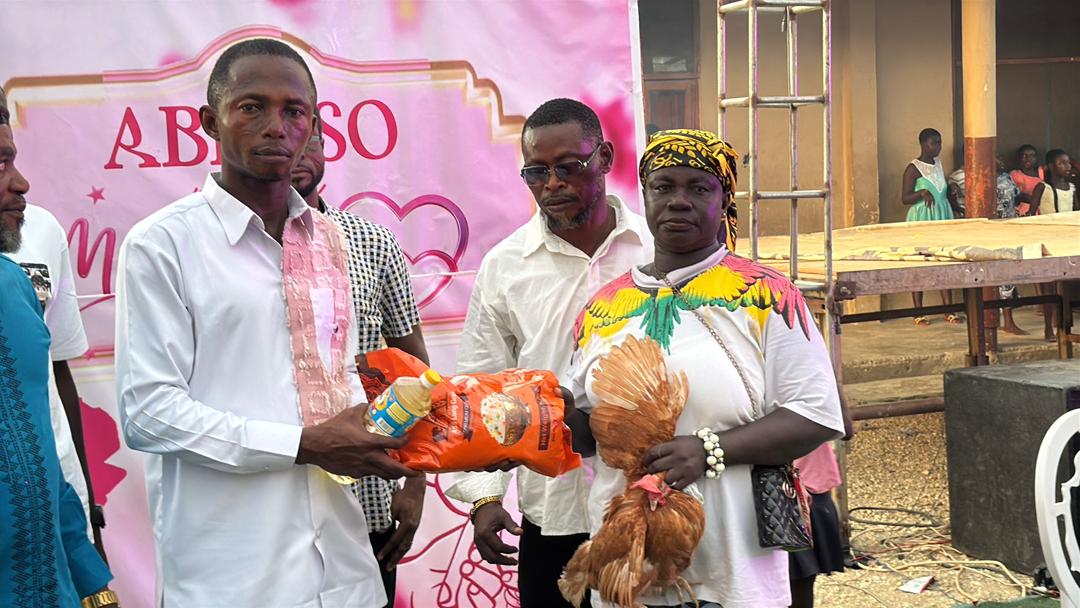

The widows of Himan Electoral Area came expecting a handshake and a kind word.
They left carrying bags of rice, bottles of cooking oil, and something far more unusual: a live, feathered chicken tucked under each arm.
This was Mother’s Day in Prestea, but not as anyone had seen it before.
Assembly Member Alexander Baako (Abroso) did not send aides or make a distant promise from a party office. He stood under a Himan community center on Sunday afternoon, personally handing provisions to over 100 aged women and widows in his community.
Each received a full bag of rice, a bottle of quality oil, and most memorably one live poultry chicken.
“A chicken is not just meat for Sunday,” Baako said, laughing as a bird flapped its wings beside him. “It is eggs for Monday, Tuesday, and Wednesday. It is a small business. It is a living companion. That is what our mothers deserve.”
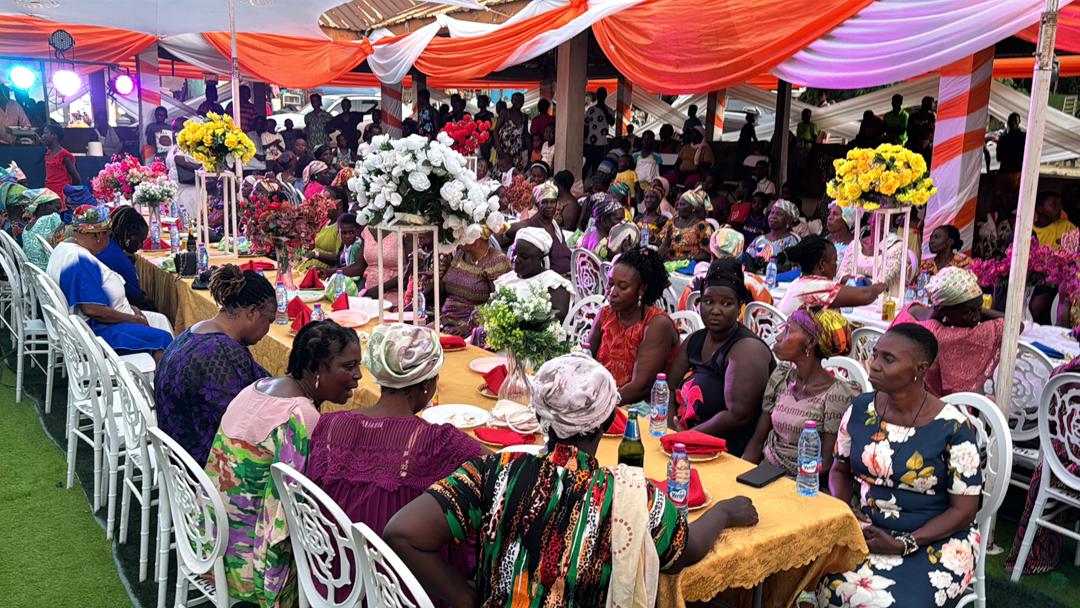
The event, held at the Himan community center, drew women from across the electoral area, some walking with canes, others carried in by grandsons. For hours, the air was thick with gratitude, clucking hens, and the low hum of highlife music from a borrowed speaker.
Maame Agnes Koomson, 79, a widow of 12 years, held her chicken like a newborn. “No one has ever given me a live animal before,” she said, her eyes glistening. “I will name it after my late husband. At least now, something in my room will make noise in the morning.”
Baako, who is known in Prestea as a hands-on assembly member, did not hide from the crowd’s questions. When one elderly woman asked why he had not done this last year, he smiled and admitted: “I did. But last year, I gave only rice and oil. This year, I added the chicken. Next year? I am promising something different again.”
Pressed for details, he wagged his finger playfully. “Wait and see. I will not do the same thing twice. These women have seen too many repeat promises. I want them to say: ‘Baako surprised us again.’”
The gesture has stirred quiet conversation across Prestea’s mining community. While many politicians distribute T-shirts and posters, Baako distributed protein and economic potential. The chickens, sourced from a local poultry farm, came with a small, printed note (in simple English and Twi) advising the women on basic care and letting them know Baako’s phone number was on the back.
“He gave us his number,” whispered Madam Ama Serwaa, 74, a widow who lost her only son to illegal mining two years ago. “He said if the chicken dies, call him. He will replace it. Which assembly member replaces a dead chicken?”
Baako, for his part, dismissed the praise with a wave of his hand. He was too busy ensuring every woman’s oil bottle was sealed and every rice bag was tied properly.
“Mother’s Day is a foreign idea,” he said, wiping sweat from his brow. “But caring for widows is not foreign to Prestea. My own mother raised me on nothing. If I cannot feed the mothers of Heman, then I do not deserve to represent them.”
As the sun began to set, the women dispersed – walking slowly, balancing rice on their heads, oil in one hand, and a live chicken in the other.
Behind them, Baako gathered a few young volunteers to sweep the park.
“Next year,” he said quietly to an aide, “I want to give each mother a cloth and cash as token.”
Whether he was joking or not, no one asked. In Heman these days, they simply wait and see.
By Ebenezer Atiemo