
Economic policy analyst, Senyo Kwasi Hosi, has lauded the Attorney-General and Minister of Justice, Dr. Dominic Akuritinga Ayine, and his team for the passage of the Legal Education Act, 2026.
He says the passage of the Act will deal with “access to legal education in Ghana has been constrained by structural barriers that had little to do with merit.”
According to him, there are many people who wanted to pursue training in the legal field but were denied by the previous regulation which allowed only once centre to admit law degree holder to train them for the profession.
His comments follow President John Dramani Mahama’s assent to the Bill on Monday, May 11, 2026, paving way for several reforms into the nation’s judicial training.
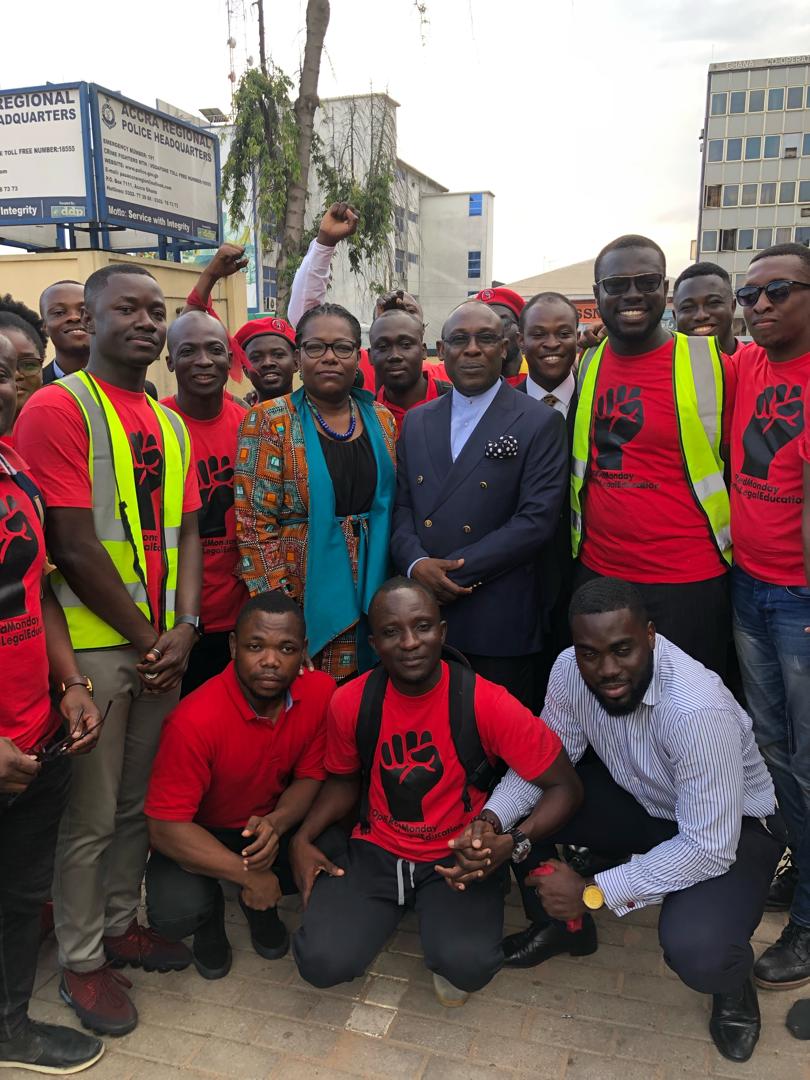
In a secular issued by Mr. Hosi on Tuesday, May 12, 2026, he recounted how he had to join some renowned lawyers and other LLB holders who were denied access to the Ghana School of Law to protest the old system.
He indicated that having more lawyers in the system was one of the means to advancing the nation’s democracy.
“In every modern democracy, the study and practice of law is not a narrow professional privilege. It is a strategic national asset. A society with broader legal literacy is a society with stronger institutions, empowered citizens, and a more resilient economy,” he indicated.
He added that the reform reflects a listening government that heeded to the calls of many on the need to reform legal education training in Ghana.
He described the move as “a monumental step towards a more inclusive, equitable, and future ready legal education ecosystem.”
Find below the full circular issued by Mr. Hosi over the passage of the Act:
LAW FOR ALL
At seventeen, I stood in a courtroom fighting to save my family home. My father was out of the country and had stood surety for a friend; when matters went wrong, our home was suddenly at risk. Our lawyer was absent that day and, in the silence that followed, I stepped forward. The court, presided over by Acquah JSC, listened to me a teenager with no legal training but with the fire to defend his family. When I finished, he told me something that has stayed with me ever since: ‘Well said, young man. If you want to be heard again, go to law school.’
That moment shaped my understanding of the law. It taught me that legal knowledge is not a privilege; it is protection. It is dignity. It is the difference between helplessness and agency. Years later when I stood with students, together with Duncan Amoah, protesting the mass failures and systemic bottlenecks in our legal education system, I recognised the same struggle: young people seeking nothing more than a fair chance to be heard. I watched determined youth in 2019, led by the venerable Jonathan Alua, arrested right in front of the seat of Government simply for demanding fairness. Many thanks to Oye Lithur and Kofi Bentil for securing their bail.
For too long, access to legal education in Ghana has been constrained by structural barriers that had little to do with merit. Thousands of qualified students were left in limbo; families carried emotional and financial burdens; and the nation lost out on the talent it desperately needs to strengthen justice delivery, contract enforcement, public accountability, and national development. It remains a national embarrassment that many of our own had to engineer pathways through countries such as The Gambia simply to unwind the doors we closed on them.
In every modern democracy, the study and practice of law is not a narrow professional privilege. It is a strategic national asset. A society with broader legal literacy is a society with stronger institutions, empowered citizens, and a more resilient economy. When more Ghanaians understand and can practise the law, the nation becomes fairer, more secure, more citizen aware, and more development ready.
It is for this reason that I wish to commend His Excellency President John Dramani Mahama and the Honourable Attorney General, Dr Dominic Ayine, together with Marietta Brew, Hon Justice Srem Sai, and their respective aides, for the work done in securing the passage and assent of the Legal Education Bill. This is not merely a legislative act; it is a structural correction, one that powers the ‘now’ and safeguards the future for generations yet unborn.
By enabling a regulated, multi institutional pathway for professional legal training, the Bill restores fairness, expands opportunity, and aligns legal education with the realities of a modern, democratic Ghana.
This decision reflects leadership that listens, understands the lived struggles of ordinary citizens, and responds with bold, corrective reform. It is a monumental step towards a more inclusive, equitable, and future ready legal education ecosystem.
For this, they deserve commendation.
Senyo Hosi
11th May 2026