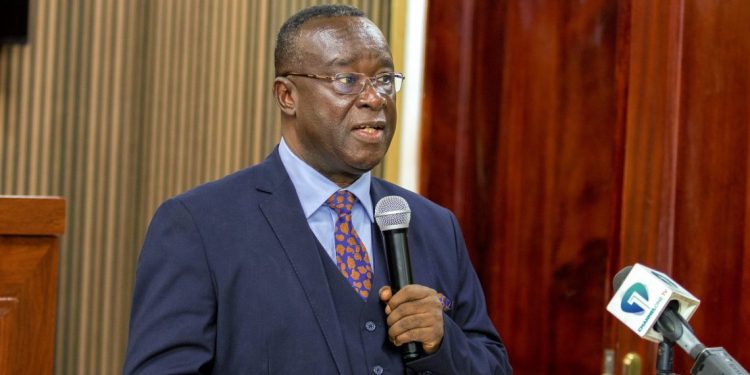

The Chief Justice of Ghana has welcomed the passage of the Legal Education Reform Bill, 2026, describing it as a decisive step toward resolving long-standing challenges in the country’s legal training system.
Speaking in Accra during the enrolment of 155 new lawyers to the Bar, just a day after Parliament passed the bill on Thursday, the Chief Justice noted that Ghana has for years grappled with balancing expanded access to legal education with the need to maintain high professional standards, often creating tension between opportunity and quality.
According to the Chief Justice, the newly passed legislation provides a pathway to address this challenge by introducing a more inclusive yet rigorous framework for legal training.
“For some time now, Ghana has struggled with a difficult balance, how to expand access to legal education while maintaining professional standards. The result has often been tension between numbers and quality, between opportunity and credibility.
“We are now resolving that tension. Only, yesterday, the Legal Education Reform Bill 2026 was passed by Parliament and will in due course become law after it receives the blessings of the President,” he stated.
Under the new system, accredited universities will be permitted to offer both academic and professional legal education, a shift expected to widen access for prospective law students across the country.
A key feature of the reform is the introduction of a National Bar Examination which ultimately erodes the Ghana School of Law and will serve as a uniform benchmark for professional qualification, ensuring that standards are maintained regardless of where candidates receive their training.
The Chief Justice expressed confidence that the reforms will enhance both the credibility and accessibility of legal education, while safeguarding the integrity of the legal profession.
“The principle is simple: opportunity must be widened, but standards must be held firmly,” he added,
The Bill, passed by Parliament, is expected to become law after receiving presidential assent, marking a transformation in Ghana’s legal education landscape.
He added that the reform would reduce institutional bottlenecks and help clear the large number of law graduates who have been unable to proceed with professional training.
“Institutional bottlenecks will be reduced and the long-standing backlog of students awaiting professional training will be addressed,” he said.
Mr Baffoe-Bonnie further said that the changes would strengthen transparency and credibility in the qualification process.
“The integrity of the qualification process will be strengthened through transparent, standardised assessments,” he said.