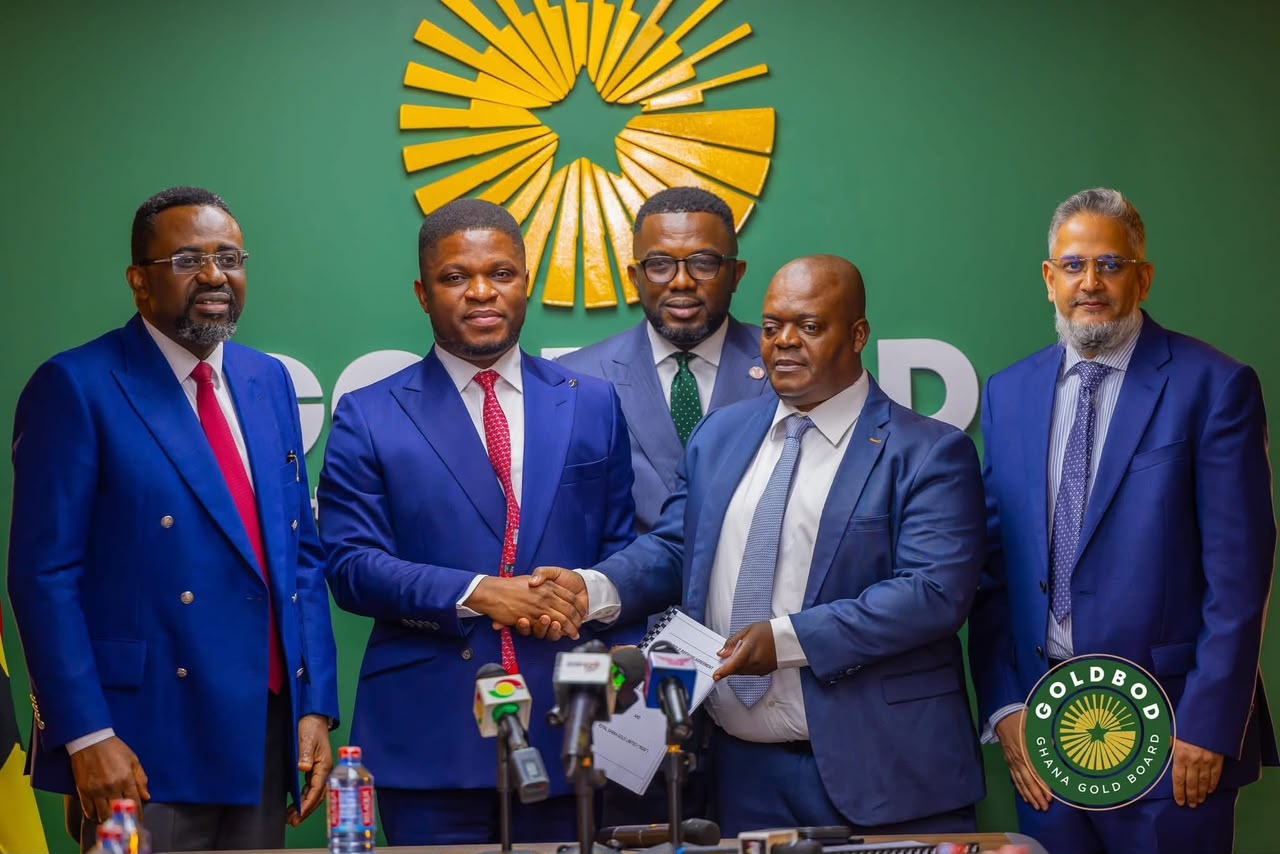

Ghana took another step toward local mineral value addition on Monday as the Ghana Gold Board signed a gold refining agreement with Royal Ghana Gold Refinery aimed at boosting domestic gold processing and reducing the export of raw minerals.
At a ceremony attended by officials from the Bank of Ghana, the Chief Executive Officer of the Ghana Gold Board, Sammy Gyamfi, described the agreement as part of President John Dramani Mahama’s broader vision to end the export of raw minerals by 2030.
Speaking at the event, Mr. Gyamfi said Ghana’s inability, over the years, to refine its own gold represented a missed economic opportunity for a major mining nation.
“When we took office on January 7, 2025, Ghana did not have any functioning gold refinery refining gold locally for export,” he said. “All the gold we produced was exported in raw form, and that narrative must change.”
Under the agreement, Royal Ghana Gold Refinery will be permitted to refine up to one metric ton of gold weekly, depending on its operational capacity. According to the Ghana Gold Board, the arrangement forms part of efforts to ensure that gold produced locally — particularly from the small-scale mining sector is refined in Ghana before export.
Mr. Gyamfi disclosed that the Gold Board currently purchases an average of 2.5 metric tons of gold every week with support from the central bank and is also in discussions with large-scale mining companies to acquire up to 30 percent of their output for local refining.
He explained that refining gold locally would allow Ghana to retain refining fees that were previously paid to refineries in countries such as Dubai, India and Switzerland.
“What this means is that the refining fees that used to leave Ghana will now remain in the Ghanaian economy,” he stated. “Jobs will be created here, technical expertise will grow here, and value retention will improve.”
The Ghana Gold Board CEO further indicated that the initiative would support the country’s push toward securing London Bullion Market Association accreditation for local refineries, a move expected to improve Ghana’s competitiveness in the global bullion market.
Governor of the Bank of Ghana, Dr. Johnson Asiama, who also addressed the ceremony, described local processing of Ghana’s natural resources as a long-overdue national strategy.
“It has taken too long for us to get to this stage,” he said. “Not just gold, but cocoa and oil as well. If we process these resources locally, we will experience significant economic transformation.”
Dr. Asiama said the central bank would continue to support efforts aimed at increasing local refining capacity, stressing that greater processing of gold would create jobs, increase state revenue and strengthen oversight across the mineral value chain.
He revealed that the Bank of Ghana still holds a minority stake in the refinery to help monitor and support the process.
Managing Director of Royal Ghana Gold Refinery, Eric Frimpong, assured the government that the refinery is prepared to begin operations immediately.
He said the company’s goal is to refine Ghanaian gold to internationally accepted standards and eventually achieve LBMA accreditation.
“Ghana has exported raw gold for centuries,” he said. “It is about time we take our destiny into our own hands and add value to what we produce here.”
Mr. Frimpong also pledged the refinery’s support for the government’s proposed 24-hour economy policy, saying the facility would operate continuously to maximize production and employment opportunities for Ghanaian youth.
Officials at the ceremony indicated that the refinery could begin processing gold as early as next week, with the first bullion bars expected to be produced shortly after initial deliveries are made.
The agreement marks the latest attempt by Ghanaian authorities to reposition the country from a raw mineral exporter to a value-added mineral processing hub in West Africa. This is the second gold refinery agreement that has been signed by the Goldbod. The first was with Gold Coast Refinery.
By Evelyn Tengmaa