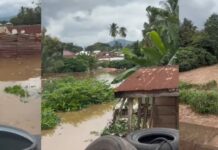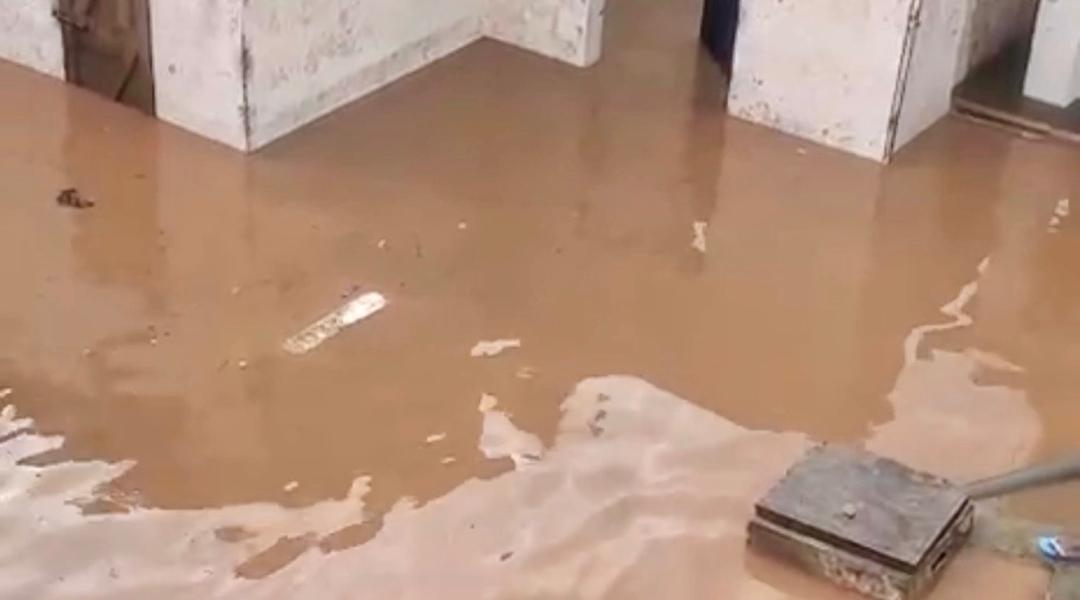

Inmates at the Sekondi Central Prison were forced to spend long hours scooping floodwater from their cells and standing for extended periods on their feet as heavy rains inundated the facility, turning parts of the colonial-era yard into a pool of stagnant water.
The disturbing situation followed the intense pressure on an overstretched drainage system within and outside the prison yard, which failed to cope with heavy rainfall and allowed floodwaters to accumulate across the overcrowded facility.
The prison, built in 1902 to accommodate about 150 to 200 inmates but now housing more than 600, was overwhelmed as water flowed into low-lying sections of the yard, trapping inmates in unsafe and waterlogged conditions for hours.
What should have been a controlled drainage network instead functioned as a bottleneck system, worsening conditions inside the facility during every major downpour.
A joint inspection involving prison authorities and engineers from construction firm Viabuild confirmed that the flooding is tied to structural weaknesses in the facility’s drainage design.
Viabuild Health and Safety Manager Edward Lee Aflade explained the problem lies in how the internal drainage system connects to external outfalls, creating a pressure imbalance during heavy rainfall. “The inner drain is carrying volumes of water into the outfall, but the connecting ones lack the capacity to push it out. So, it stays until the flow reduces before it can connect.”
The severity of the situation was further underlined by Director of Operations and Facility Management Benedict Bob Derry, who described a fundamental design mismatch contributing to the flooding. “It looks like a bigger gutter had been created to run into a smaller one. That is where the problem is coming from.”
He added that the prison’s vulnerability is worsened by its elevation, noting that runoff from surrounding areas flows back into the yard during storms. “At the back of the wall is also an exit point for water from the prison yard, which is lower than the outside. So, when water from outside runs into the yard, it results in flooding.”
Western Regional Minister Joseph Nelson raised the prospect of relocation as a more sustainable solution to the recurring crisis.
“I’m not even saying this because of the flood situation alone… the location itself makes relocation necessary. It should be somewhere with more space and better security, away from the city centre.”
By Eric Yaw Adjei