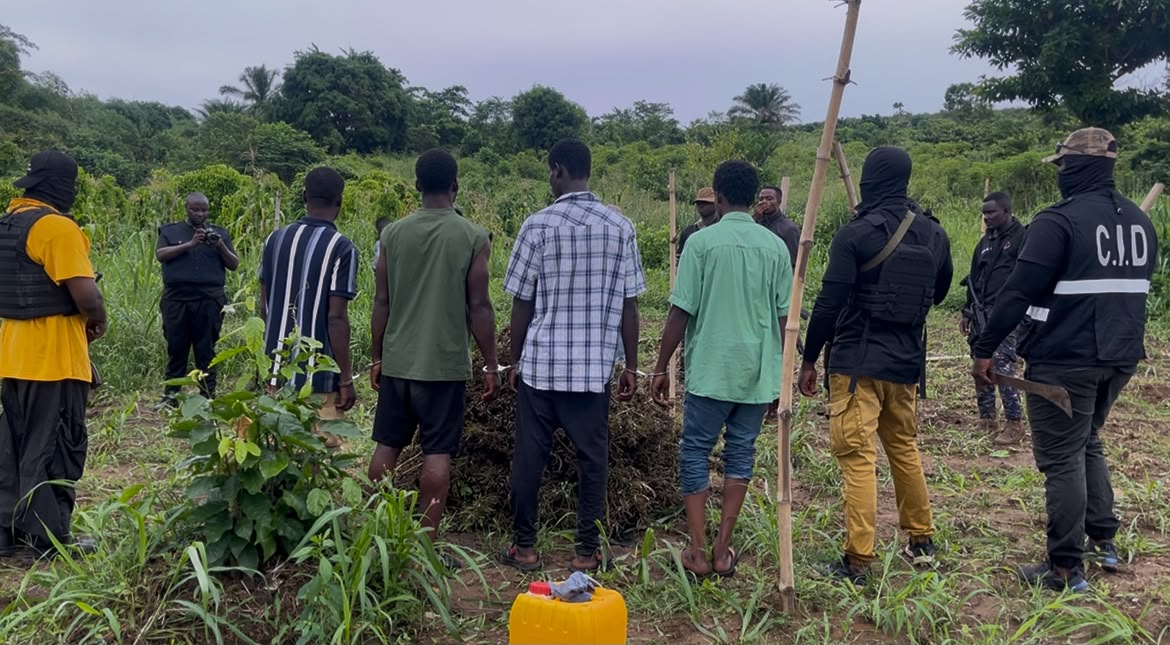

Six suspects have been arrested in connection with the cultivation of cannabis in two communities in the Eastern Region.
The suspects are currently in police custody assisting with investigations and are expected to face prosecution.
From a distance it may appear to be an ordinary farm under cultivation.
However, over seven acres of land at Nsuta Aperade in the Okere District and Nsuta Hasi in the Yilo Krobo Municipality have been used for the cultivation of cannabis.
Reaching the farms requires considerable endurance, as one has to navigate forests, farmlands, rivers and steep slopes to access the sites.
According to investigators, the difficult terrain made the locations attractive to the suspects and their accomplices, who considered them safe havens for the illegal activity.
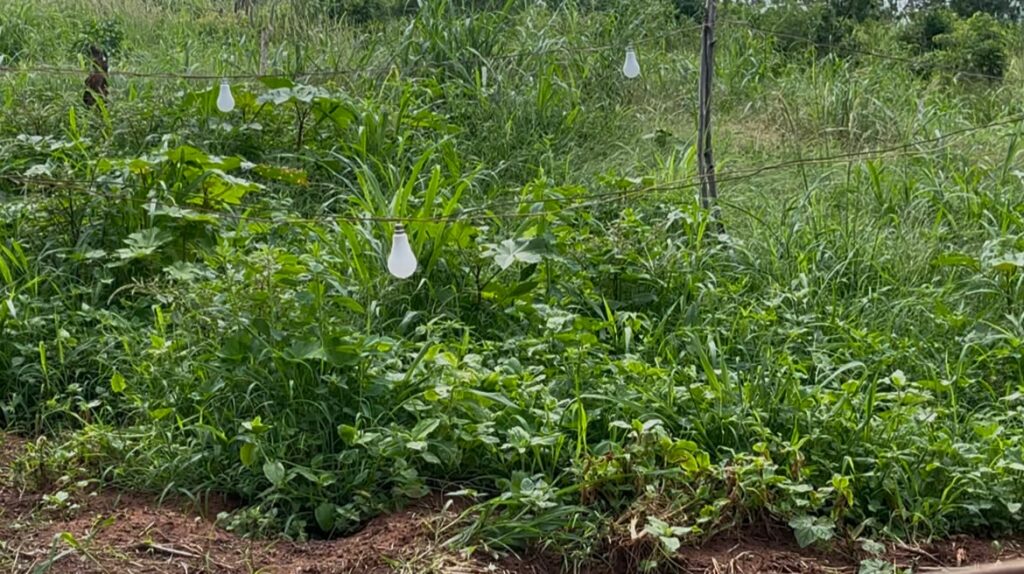
Long electrical cables have been extended to the farms to support the cultivation process.
At first glance, the installations may appear to be part of an irrigation system. The cannabis seedlings are first nurtured in small plastic cups before transplanted onto the farms under electric bulbs.
Authorities say the cultivation of cannabis in the area is becoming widespread, with some residents reportedly abandoning traditional farming activities to engage in the illicit trade.
A tip off led to the arrest of the suspects who are between the ages of 25 to 32 by officers of the Police high risk operations directorate at Kyerematen in the Eastern Region.
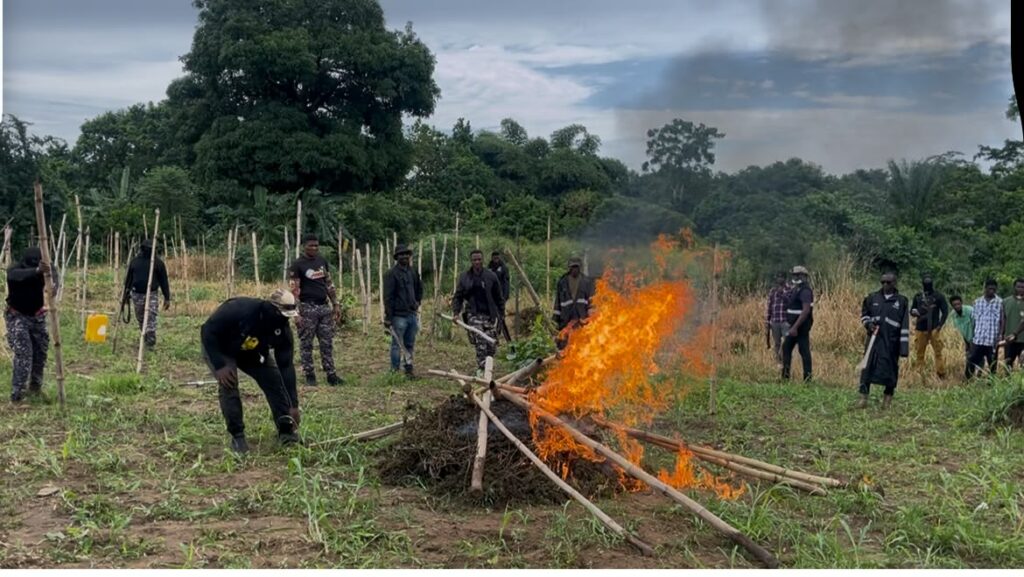
Subsequently, personnel from the Drug Law Enforcement Unit of the Criminal Investigations Department moved to the sites to destroy and burn the cannabis farms.
The suspects have built structures on the farms and installed air conditioners and other equipment to support their operations.
The Police have pledged to intensify operations to clamp down on the illegal activity and ensure they face the full rigours of the law.
Superintendent Dr. Samuel Antwi Akomeah, is the Director, Police High Risk Operations Training Centre “the target is the end users, we may not make any headway so we must tackle it from the source, which is those into the plantation of cannabis, because if they aren’t planting the end user won’t have access. In total we are talking about 7 acres of cannabis plantation at Nsuta Apreade and Nsuta Hasi, I am sure there are more. If you are into this cannabis plantation, it’s high time you put an end to it because when we come at you you would never see us.”
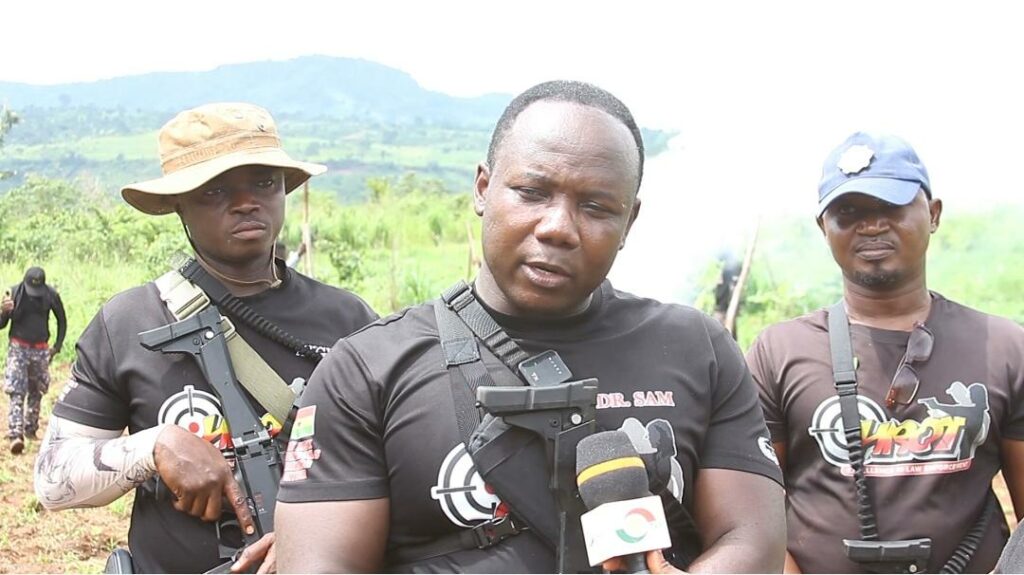
“Each and everyone into the cultivation of cannabis in this enclave must watch out, we will come like Kakai, there would be no room for escape, even if you hide in the armpit of the Pope, we would get you, there would be no mercy, even for the cripple, the long arm of the law would deal with you,” he warned.
He says preliminary investigations suggest some operators process cannabis for clients who use them in local beverages and food products, which may be consumed by unsuspecting members of the public.
“One of the groups surprisingly had its product pounded and grounded, using motar and pestle. They confessed a client in Tema who used it in sobolo, biscuits and toffee. They adulterate several beverages too, the active ingredient in the cannabis is highly active. Be watchful what you drink.”
He explained further “they call something lacker, they adulterate our local beverages, sobolo the active ingredient in the cannabis THC is highly additive. You are wondering why one particular sobolo you have become addictive, it may never been adulterated.”
A single bag of cannabis can fetch thousands of Ghana cedis, making the trade highly lucrative and increasing the risk of child exploitation.
Under Ghana’s Narcotics Control Commission Act, 2020 (Act 1019), the cultivation of cannabis is illegal unless carried out under a lawful licence issued for approved industrial or medicinal purposes with 0.3 THC ( Tetrahydrocannabinol) or less.
Plants exceeding 0.3 THC are classified as recreational or high potency and remain strictly illegal to cultivate, possess, or distribute without special ministerial authorisation.
Violators are liable to arrest and prosecution.