
The Commission on Human Rights and Administrative Justice (CHRAJ) has formally handed over the leadership and secretariat of the Network of National Human Rights Institutions in West Africa (NNHRI-WA) to Nigeria’s National Human Rights Commission (NHRC).
This marks the end of a successful six-year tenure under CHRAJ Commissioner Dr. Joseph Whittal.
The ceremony, held in Accra, on Friday June 12, brought together representatives of national human rights institutions across West Africa, officials of the Economic Community of West African States (ECOWAS), development partners and human rights advocates.
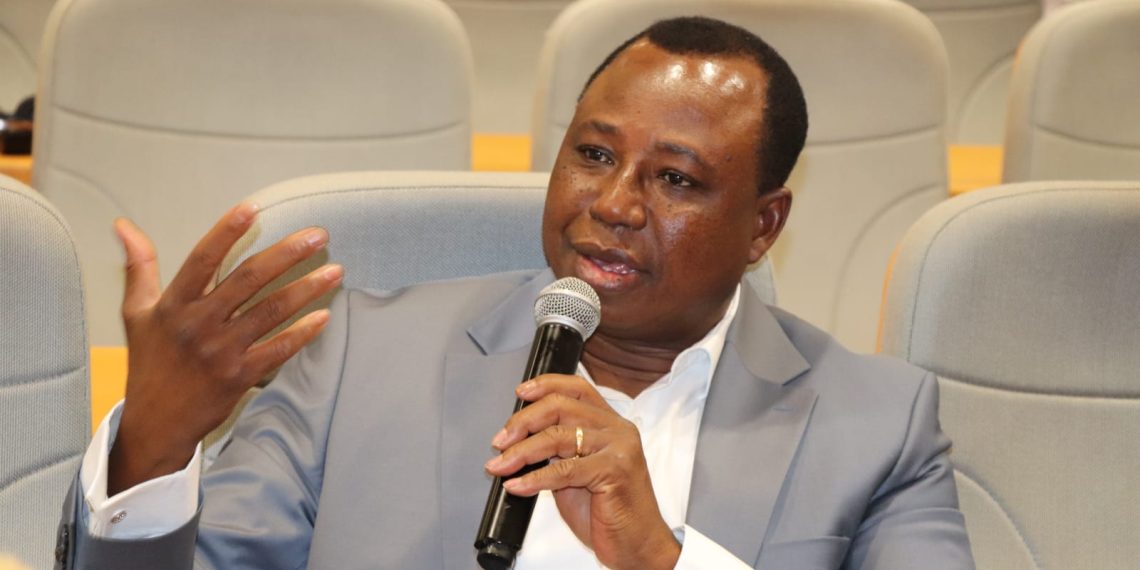
Dr. Whittal, who served as President of the Network from 2019 to 2025, officially transferred the secretariat to Dr. Anthony Ojukwu, Executive Secretary of Nigeria’s National Human Rights Commission and the newly elected President of the Network.
Addressing guests at the ceremony, Dr. Whittal reflected on the network’s achievements during his tenure, describing the period as one of resilience, institutional growth and strengthened regional cooperation despite challenges such as the COVID-19 pandemic.
“When I assumed office in 2019, our objective was clear: to strengthen solidarity among national human rights institutions in West Africa, improve the effectiveness of our network and ensure that it remained a relevant and respected voice for human rights in the sub-region,” he said.
Among the major accomplishments highlighted by Dr. Whittal was the successful relocation and establishment of the network’s secretariat in Accra, where it was registered under Ghanaian law and provided with a stronger administrative and financial foundation.
He noted that under his leadership, the network remained active throughout the COVID-19 period, organizing regional teleconferences in collaboration with the ECOWAS Commission, the Office of the United Nations High Commissioner for Human Rights (OHCHR), the United Nations Office for West Africa and the Sahel (UNOWAS), and other partners to address human rights concerns arising from the pandemic.
The network also participated in election observation missions in Burkina Faso, Ghana and Liberia in 2020, and in The Gambia in 2021, helping to promote peaceful, transparent and inclusive electoral processes across the region.
Dr. Whittal further highlighted the successful rotation of annual regional consultations and general assemblies among member states, including meetings held in Abuja, Banjul and Cotonou, which he said enhanced ownership and visibility of the network.
One of the landmark achievements of his administration, he noted, was the completion of a constitutional review process culminating in the adoption of a new constitution for the network in Abuja in July 2025.
He also pointed to significant financial gains made during the period, revealing that the network’s financial resources had grown from approximately US$16,000 in 2019 to more than US$94, 845 by the end of his tenure.
“This remarkable progress reflects prudent financial stewardship, improved revenue mobilization and the growing commitment of member institutions to the long-term sustainability of our network,” he said.
Dr. Whittal commended the ECOWAS Commission and other development partners for their technical and financial support, which enabled the network to sustain its activities and respond to emerging human rights challenges in the region.
As he stepped down, he urged the incoming leadership to consolidate the gains made, strengthen the secretariat, ensure financial sustainability and maintain focus on pressing issues such as democratic governance, shrinking civic space, migration, detention conditions, reparative justice and slavery-related reparations.
In his acceptance speech, Dr. Ojukwu paid tribute to Dr. Whittal and the outgoing secretariat for their dedication and leadership.
“Dr. Whittal has steered the ship of this body through challenging periods and kept faith with our vision and objectives,” he said.
Dr. Ojukwu outlined an ambitious vision for the network, centered on strengthening cooperation among national human rights institutions, building institutional capacity and enhancing regional monitoring and reporting on human rights issues.
A key component of his agenda, he announced, is the establishment of a regional human rights situation room and data centre to provide real-time information on human rights developments across West Africa.
“We shall set up a sub-regional situation room and data centre to help us see the human rights situation in West Africa at a glance,” he stated.
He also pledged to deepen collaboration with regional institutions, including the ECOWAS Commission, the ECOWAS Court of Justice and the ECOWAS Parliament, while expanding partnerships with the United Nations system, development partners, civil society organisations, academia and the media.
Acknowledging the changing landscape of international development assistance, Dr. Ojukwu said the network would pursue innovative approaches to ensure sustainability and strengthen its impact across the region.
He expressed appreciation to the ECOWAS Commission for its continuous support, particularly in capacity-building programmes aimed at enhancing the effectiveness of national human rights institutions and improving compliance with regional reporting obligations.
The Network of National Human Rights Institutions in West Africa was established in 2006 under the ECOWAS Supplementary Protocol on Democracy and Good Governance and serves as a platform for cooperation among national human rights institutions across the sub-region.
By Evelyn Tengmaa