
I am a member of the Mathematics Phobia Persons Association (MaPhoPA). No, it is not formalized but we exist- Those of us who see maths questions and wonder where to start the solution from.
I blame my maths teachers at the primary and secondary school levels because it was at GIMPA that I was made to understand that all one needs to do, as far as solving maths questions is concerned, is to know the formulae. And of course, show working.
There is also the acronym BODMAS. Full meaning is; Bracket, Order, Division, Multiplication, Addition and Subtraction. If you fail to grasp its essence in the primary school, you will hate mathematics forever.
That’s because BODMAS represents the correct order of operations when solving complex mathematical equations with what they call power raised to… featuring x and y, find x.
So, B means that you tackle the part of the equation that has brackets first. O means dealing with the part of the question that has “Powers” and square roots etc next.
Thereafter, you Divide, Multiply, Add before you Subtract. If you dare subtract before adding, your answer will be far from right.
Plus, there are certain variables that you hold constant while solving mathematical equations. Without this essential knowledge, man you are doomed! One of the concepts whose value is predetermined is cos 90°.
According to the literature, “the value of cosine trigonometric function for an angle is equal to 90 degrees. And the value of cos 90° is 0.”
In plain language, whatever you do that gives you a zero effect or result is cos 90°. I got introduced to this concept by my first son, who studied building technology.
He managed to convince me that an idea I was proffering to a mason would not solve the problem at hand. “It will result in cos 90°” he suggested.
The problem to be solved
The urban transport system in Accra is inefficient. Many workers spend approximately six hours to and from work, depending on which part of the city one resides.
A 26.9 kilometre trip from the Central Business District of Accr a to Kasoa which Google says should take 42 minutes by car, takes three hours during the rush hour.
Similarly, a 25 kilometre trip from the CBD of Accra to Oyarifa which should take 47 minutes can take two to three hours.
Again, a 14.5 kilometre trip to Teshie-Nungua from the same starting point that should end in 25 minutes could take over two hours.
Now the stressful zone- the CBD to Nsawam route. A 35.4 kilometre drive of 1 hour and ten minutes can take forever during the rush hour.
The Cause
Traveling by road is the only means of transport in Accra. Except residents of Tema and Afienya and its environs who have access to the Tema-Mpakadan rail services.
Even they say, they could do with a few more trips during the rush hour. There is another train that plies Accra-Nsawam which, from my search, has not functioned for a while now.
As such, in the morning when everybody sets out for work, especially on the routes aforementioned, road transport is the only option.
On the mostly three-lane dual carriage roads that make up the routes under reference, one can find vehicles providing ride hailing services (A.k.a Uber), motorcycles, private vehicles, a few high occupancy commercial buses, a couple of Metro Mass Transit buses and hundreds of the commercially operated mini-buses (Alias trotro).
All these vehicles head towards one destination- the CBD, where we have most of the Ministries, Departments and Agencies as well as numerous private entities that employ thousands of the country’s workforce. The traders too- including those who sell on pavements, stalls and the main markets.
The resultant effect is that traffic moves at a snail’s pace, leaving commuters in the heat when the sun is up and all wet when it rains.
To make matters worse, on the Kasoa-Accra Road, there is a section called ‘Atala’. Each time it rains, sand collects on that portion of the road. This makes the pace of the traffic flow even slower. Thus, adding another 30 minutes to the already extended duration of the trip.
Intriguingly, the trotro operators have decided to take advantage of the long hours spent on each route. They have adopted a “short-short” approach to transporting their passengers whereby a trip from the CBD to Kasoa is divided into three- CBD to Kaneshie, Kaneshie to Malam and Malam to Kasoa. With this tactic, they make more money, obviously to compensate for the fuel consumed during the traffic jam they endure.
The solution?
In December 2025 when the commuting challenge reached its peak. The Transport Minister promised to fix it. The news became rife that high occupancy buses will be deployed to ease the burden on commuters.
This prompted me to write an article titled “From Eric’s Diary: Why Greater Accra’s urban transport system needs a ‘Big Push’” in which I suggested that we give all ‘trotros’ in the Greater Accra Region, a ‘Big Push’ out of the jurisdiction before proceeding.
Since 30th December, 2025 when this article was published, my suggestion has fallen on death ears. Instead, we heard all those who matter stress on Government’s quest to procure buses “to ease the plight of commuters.”
Upon reading this news, I asked myself. On which roads will these buses ply? You mean more buses on the routes that I have described above during rush hour?
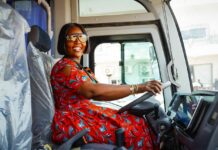
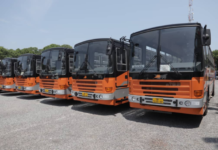
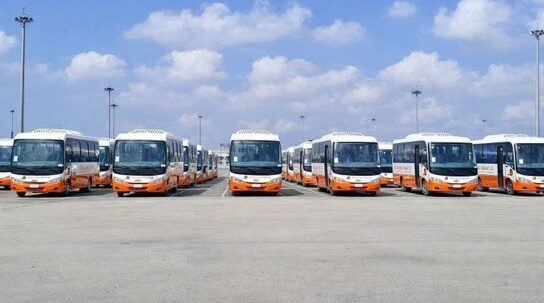
Well, the first batch of 100 buses arrived and were commissioned by the Vice President, Prof Jane Naana Opoku-Agyemang.
Speaking at the commissioning ceremony on Friday, 22nd May, 2026, the Minister of Transport, Joseph Bukari Nikpe said, “the addition of the new buses would improve connectivity for workers, traders, students, and commuters across the country. These buses will connect people to their workplaces, markets, schools, and wherever they need to go safely.”
About a week after the commissioning, the buses were not deployed. Commuters started asking questions, the media posed same to the Transport Minister.
“The 100 new government buses will soon be deployed to ease transportation challenges, especially during peak hours,” he responded during an interview.
Suddenly, the plan changed. He stated in another interview on 5th June- “These new buses are 29-seater buses, and we are assigning them to all regions and bringing all the high occupancy buses from those regions into the intracity arrangement, and so we have received some of the high occupancy buses, and we are refurbishing them.” Ahhh!! I soliloquized.
This was confirmed by the Deputy Managing Director for Operations and Technical Services at Metro Mass Transit, Haruna Apaw-Wiredu. He said, “The intra-city buses will be modern, fit-for-purpose and designed to provide comfortable transport services within our major cities,” he said.
Why the BODMAS approach will not work here
Upon reading the latest statement by Mr Nikpe and the corroboration by Mr Apaw-Wiredu, I asked myself “so these people are bent on adding without subtracting?”
That’s because unlike BODMAS, where you add before you subtract, the solution to Accra’s transport challenges, in my considered opinion, demands a reduction in the number of vehicles on the road before adding more buses. So you subtract, then add.
That is to say, if you add more vehicles, you increase the level of congestion on the roads. Imagine the current situation where there could be snail pace traffic from Obetsebi Lamptey interchange to as far as McCarthy junction near Malam during the “Peak period”- Morning and evening rush hour.
Then you add buses? Fine, the commuters will board the buses, but whether they will reach their destination with ease and in a timely manner, is another matter.
It’s time to go
In the spirit of subtracting before adding, I have already suggested that the trotro operators should be incentivized to relocate to other regional capitals. If this is done, our roads will be free enough to accommodate the high occupancy buses, few of which would transport thousands at a faster rate due to the less vehicular traffic.
The sky train option is also worth considering. Some say it is very capital intensive. I say, if Japan, China, Singapore etc have done it, we can do it if we put our minds to it. Those who have misused the $20 million for feasibility studies should be made to account for the money.
I also wish to suggest that government should initiate a Public-Private-Partnership into water transport. Imagine a boat service from Krokrobite beach to Tema and back. Passengers drop at designated points along the route and continue to their destinations? It is possible!!!
Another thing. Can we have a concerted effort at reducing the stress commuters go through on a daily basis? If the above suggestions are capital-intensive, can we decide that during the rush hour, some of the traffic from the jammed stretch would be redirected to the opposite direction?
Here is the scenario- Between 5:00am and 9:00am or 5:00pm to 9:00pm each day, motorists plying Accra-Kasoa and Kasoa-Accra respectively, stay in traffic for three hours on the average. While the bumper-to-bumper traffic towards Kasoa or Accra lingers on, the section from the opposite direction is relatively empty.
The suggestion is therefore to officially allow motorists heading towards Kasoa or Accra as the case may be, to use one lane out of the three on the opposite side. There is no doubt that this may come with some danger. However, if stakeholders such as the Motor Traffic and Transport Division (MTTD) of the Ghana Police Service and the National Roads Safety Authority (NRSA) buy into this idea, it would surely offer immediate relief to drivers and commuters.
Lastly, some of our employers also need to reset their mindsets. COVID-19 taught us that we can work from home. Thus, there are many work schedules that can be executed remotely.
Yet, many employers want to see the beautiful faces of their employees every morning. They make it seem as though staff cannot report to the office and still be unproductive.
If such employers allow staff who can work from home to do so, the number of commuters who seek transport services during the rush hour will reduce significantly. And so shall the transportation need during that period decline.
Therefore, Mr Nikpe and the Management of Metro Mass Transit Limited, clearly if you don’t subtract from the number of vehicles on our roads before adding the buses, the effect of your effort will be zero. Thus, cos 90°.
A word to the wise…
Meyi hoo – That’s goodbye in Ewe.
Let God Lead. Follow Him directly, not through any human.
The writer is the Ghana Journalists Association’s (GJA) Columnist of the Year- 2022. He is the author of two books whose contents share knowledge on how anyone desirous of writing like him can do so. Eric can be reached via email [email protected]