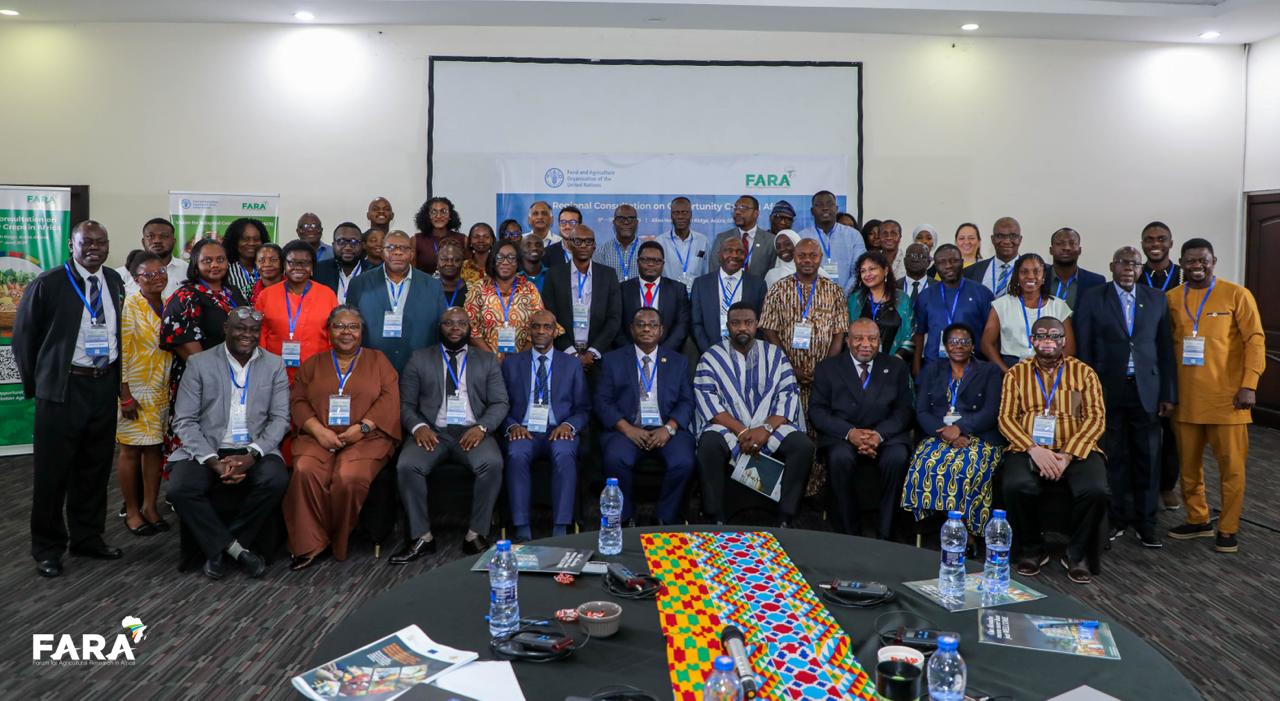

A three-day conference jointly organized by the Forum for Agricultural Research in Africa (FARA) and the Food and Agriculture Organization (FAO) has concluded with a renewed commitment to unlock the potential of Africa’s opportunity crops through stronger policies, research, investment and regional collaboration.
The high-level consultation brought together policymakers, researchers, development partners, private-sector representatives, civil society organizations, farmer groups and regional institutions to accelerate the integration of neglected and underutilized crop species into Africa’s food systems.
Participants reviewed national and regional experiences, examined existing policy and institutional frameworks, and explored strategies to strengthen conservation, sustainable production, seed systems, value chains, research, capacity development, public awareness and market integration.
The meeting also produced a regional roadmap and collaborative action plan to guide future investments, policy reforms and coordinated implementation across the continent.
Often referred to as opportunity crops, these include millets, sorghum landraces, fonio, Bambara groundnut, indigenous vegetables and other traditional crops that have long formed part of African food cultures but remain under-researched, underfunded and poorly integrated into formal seed, research, food and market systems.
The conference comes at a critical time for Africa’s agrifood sector as the continent grapples with hunger, malnutrition, climate change, biodiversity loss, rapid urbanization and growing dependence on imported food.
According to the conference concept note, nearly one in five Africans experienced hunger in 2024, while more than one billion people were unable to afford a healthy diet. At the same time, Africa’s rich plant genetic diversity-essential for food security, nutrition, livelihoods and cultural heritage-faces increasing threats.
Participants identified opportunity crops as a practical and sustainable solution to many of these challenges. Rich in nutrients, resilient to climate shocks and well adapted to local conditions, the crops have the potential to strengthen smallholder farming systems, diversify diets, boost local economies and improve climate resilience.
However, stakeholders acknowledged that their development continues to be constrained by inadequate research investment, weak seed systems, fragmented value chains, low consumer awareness, limited market opportunities and insufficient policy support.
Ahead of the consultation, the organisers stressed the need to reposition opportunity crops as strategic assets for transforming Africa’s food systems, highlighting their contributions to biodiversity conservation, nutrition, resilience and cultural identity.
The initiative also builds on growing continental momentum following the Kampala Comprehensive Africa Agriculture Development Programme Declaration, which calls on African Union Member States to promote the production and consumption of nutritious traditional and indigenous crops through supportive policies, regulatory reforms and targeted financing mechanisms.
Speaking at the conference, FARA Executive Director Dr. Aggrey Agumya said Africa possesses a rich diversity of indigenous crops that remain largely untapped despite their enormous nutritional and economic potential.
He noted that many of these crops have not received sufficient attention in research and commercialisation, adding that the conference sought to build on progress made over the past decade while driving greater investment and scientific attention towards priority indigenous African crops.
Ghana’s Deputy Minister for Food and Agriculture, John Dumelo, underscored the importance of investing in research to improve indigenous crop varieties, saying such efforts would play a significant role in addressing the continent’s food security challenges.
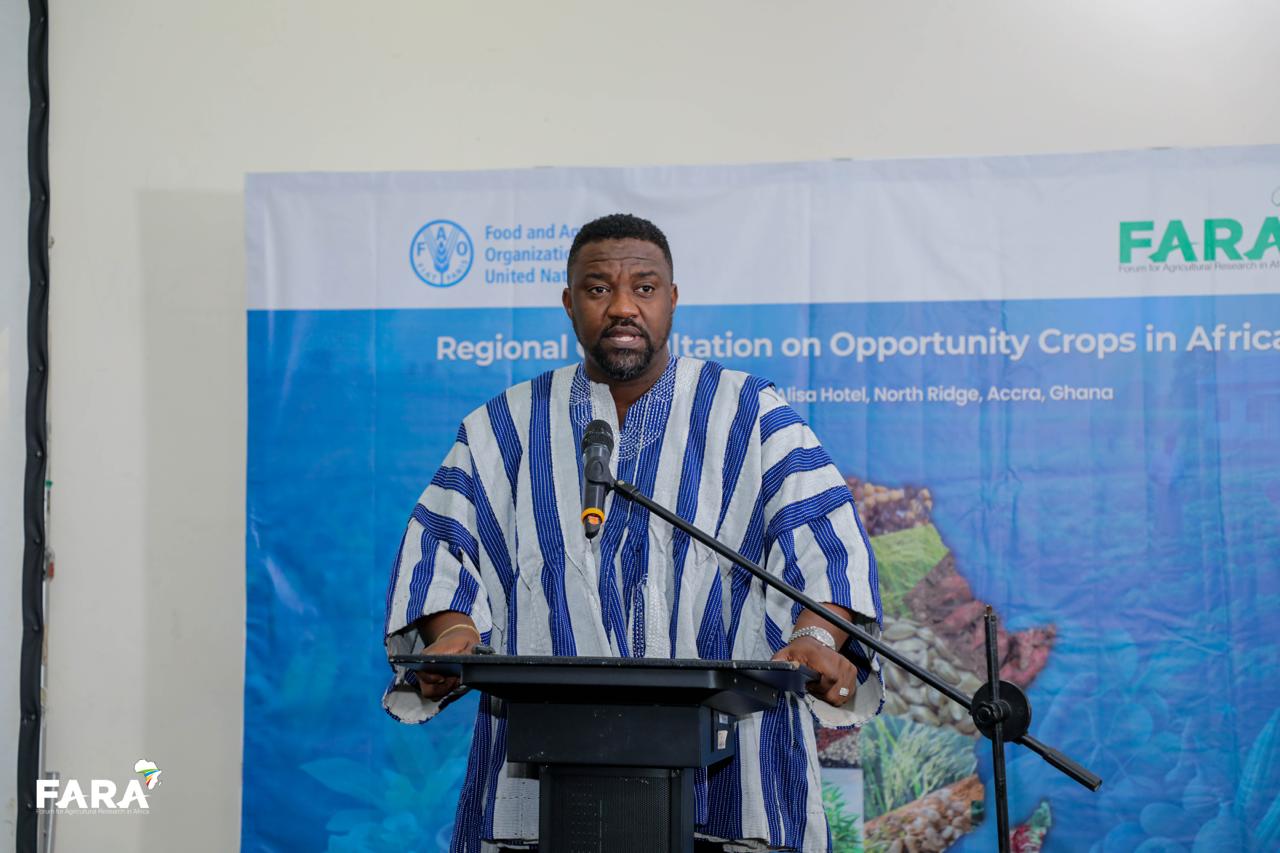
Also addressing participants, FAO Deputy Director of Plant Production and Protection, Chikelu Mba, warned that global food production must increase by about 50 percent to meet future demand.
He noted that millions of people have fallen into poverty, while hunger, malnutrition and humanitarian needs continue to rise amid the worsening impacts of climate change.
The conference concluded with a shared commitment among governments and stakeholders to strengthen collaboration and mobilize investments that will position Africa’s opportunity crops as key drivers of sustainable food systems, improved nutrition and long-term climate resilience.
By Kingsley Adusei-Amakye