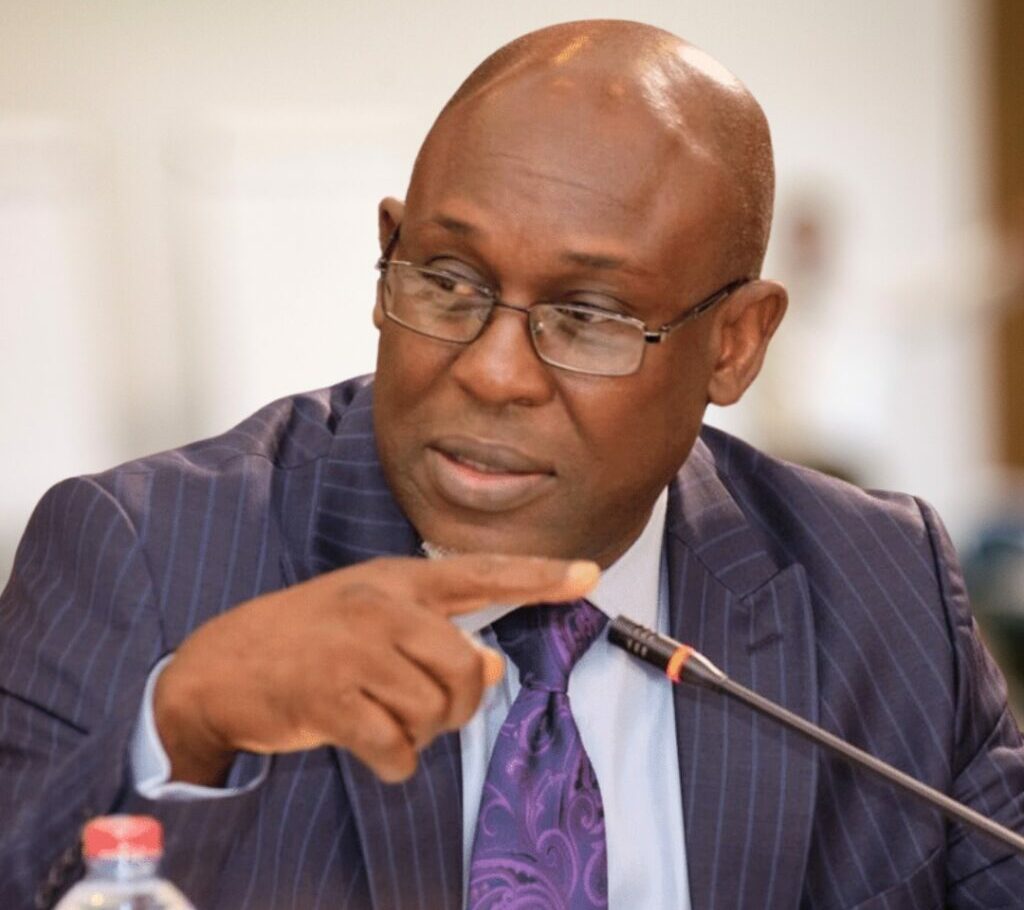

Vice President of IMANI Africa, Kofi Bentil, has expressed concern over what he describes as the growing politicisation of Ghana’s state institutions, warning that the trend could weaken judicial independence and erode public trust in governance.
Speaking in an interview with Alfred Ocansey on the KeyPoints, Mr. Bentil said it was worrying that public commentary and political statements could potentially influence the perception and functioning of independent institutions.
He cautioned against situations where judicial or quasi-judicial decisions are interpreted through a political lens, stressing that such developments risk undermining institutional neutrality.
“It is worrying, and for some people it is even exhausting,” he said on June 27.
Mr. Bentil referenced concerns raised in public discourse about the handling of certain judicial processes, noting that some actors have previously expressed strong opinions about specific judicial panels or outcomes before assuming office.
According to him, such patterns raise questions about whether political transitions could influence the independence of state institutions.
He warned that if political actors consistently express dissatisfaction with judicial processes while in opposition and later act on those views when they assume power, it could create a cycle that undermines institutional stability.
“When people make these statements and later it happens when they come into office, then we have a problem,” he said.
Mr. Bentil argued that Ghana risks gradually turning independent state bodies into political tools if safeguards are not strengthened.
He noted that courts have already recognised a distinction between political and non-political positions in public service and said this distinction must be protected to prevent unnecessary turnover in public institutions after elections.
“Not every position in this country is political,” he stated.
According to him, continued pressure on state institutions could eventually lead to a situation where appointments and dismissals are driven more by political considerations than by law or institutional need.
Mr. Bentil also defended the importance of judicial independence, stressing that judges must be allowed to interpret the law without fear or political pressure.
He said legal disagreements are part of the justice system, but decisions must ultimately be guided strictly by the law as written.
He referenced instances where interpretations of the law have been contested, noting that such disagreements are normal but must not be influenced by external pressure or political expectations.
“I have lost cases before and I have agreed with them. I have also lost cases I did not agree with,” he said, underscoring the importance of accepting judicial outcomes within a lawful framework.
Mr. Bentil warned that history shows that power can be abused if institutions are not properly insulated from political interference.
He said safeguarding judicial and institutional independence is essential to maintaining a stable democracy where decisions are made based on law rather than political influence.
According to him, Ghana must be cautious not to create a system where political transitions automatically trigger changes in the judiciary or other independent institutions.
“If we connect institutions too closely to the political cycle, we will weaken them,” he said.
Mr. Bentil concluded that strengthening trust in the judiciary and other state institutions requires consistent respect for constitutional processes, even when outcomes are unpopular or politically sensitive.
He urged stakeholders to ensure that governance structures remain stable, predictable and insulated from political retaliation, warning that failure to do so could damage Ghana’s democratic progress.
By Christabel Success Treve