
The Ranking Member on Parliament’s Select Committee on Local Government and Decentralisation, Francis Asenso-Boakye, has expressed concerns over the status of several major flood control projects initiated under the previous administration.
He warned that delays in completing these critical interventions could leave thousands of Ghanaians vulnerable to recurring floods.
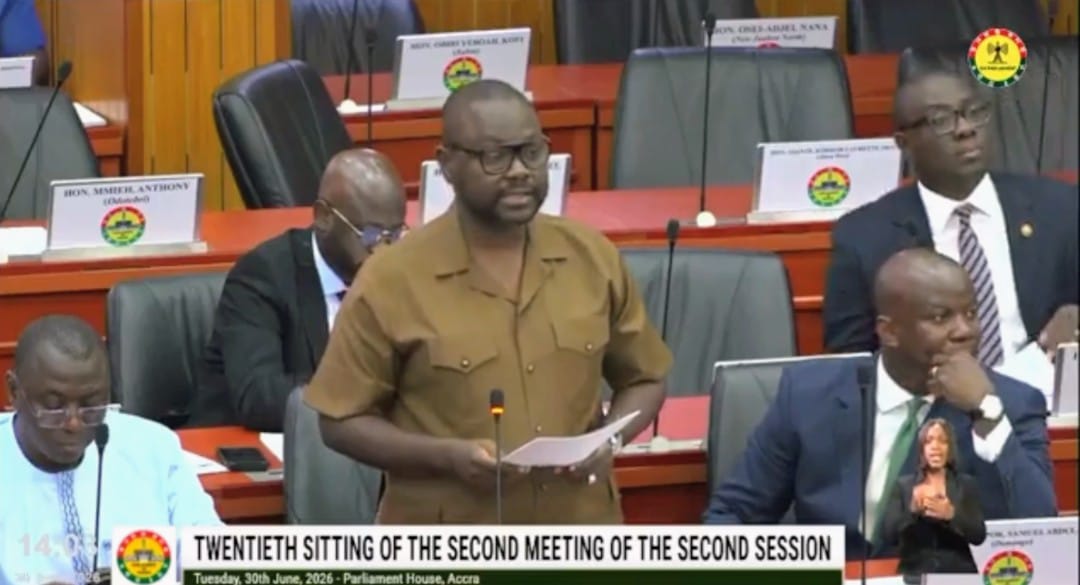
Speaking on the floor of Parliament on Tuesday, June 30th, 2026, during a statement on the recent flooding incidents across the country, the Bantama MP emphasized the urgent need for government to provide clarity on the progress of key flood mitigation projects designed to reduce the devastating impact of heavy rains, particularly in flood-prone areas.
Mr Asenso-Boakye recalled that between 2018 and 2024, the Akufo-Addo administration committed approximately GH¢540 million under the National Flood Control Programme—described as the largest direct government investment in flood control in Ghana’s history—to support drainage construction, rehabilitation, and desilting efforts nationwide.
He further noted that the previous administration secured US$350 million from the World Bank under the Greater Accra Resilient and Integrated Development (GARID) Project to strengthen flood resilience and improve drainage infrastructure in the capital.
According to him, before the change in government, major works under the GARID project were already underway, including the Odaw dredging, Achimota-Abofu Drain, South Kaneshie Drain, and the Dr. Busia Highway Drain—all strategic interventions aimed at reducing flood risk in some of Accra’s most vulnerable communities.
The Bantama MP added that the Accra Flood Early Warning System had also been operationalised to improve disaster preparedness, while procurement processes and engineering designs for key infrastructure such as the Atomic East and West Detention Ponds had reached advanced stages.
Mr Asenso-Boakye raised concern over reports indicating that several of these critical projects may have slowed down or stalled.
He cautioned that such delays should not be treated lightly, emphasizing that these projects are not ordinary infrastructure developments but essential flood protection systems that safeguard lives, properties, and economic activity.
“These are strategic flood protection projects, not ordinary infrastructure,” he stressed.
He therefore called on government to provide Parliament with a comprehensive update on the implementation status of all major flood control projects and take immediate steps to ensure their timely completion.
Mr Asenso-Boakye emphasized that with heavy rains expected to continue, government cannot afford delays in interventions aimed at protecting communities from future flood disasters.
He maintained that sustained investment in drainage infrastructure, coupled with proper maintenance and enforcement of planning regulations, remains critical to addressing Ghana’s persistent flooding challenge.
By Benjamin Aidoo