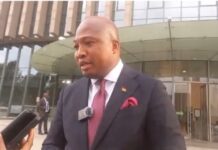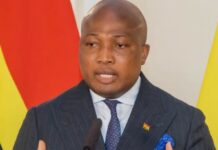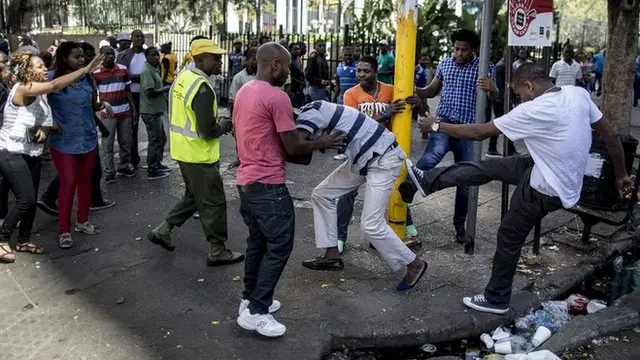

Ghana’s High Commissioner to South Africa, H.E Benjamin Quashie, has raised fresh concerns over recurring anti-foreigner demonstrations in parts of South Africa, warning that the protests continue to threaten the safety and livelihoods of Ghanaians and other African nationals.
Speaking on the KeyPoints with Alfred Ocansey, Mr. Quashie said another demonstration was underway in Pretoria, with protesters preventing foreign nationals from opening their shops and businesses.
According to him, demonstrators have indicated they intend to stage similar protests every Thursday, creating fear among foreign communities living and working in the country.
He called on South African authorities to maintain a strong security presence beyond major protest days to protect lives and property.
“Once the police withdraw and allow the demonstrators to continue their protests, it always ends up not in a very good fashion,” he said.
Mr. Quashie said although South African President Cyril Ramaphosa has publicly stated that citizens should not take the law into their own hands by demanding documents from foreign nationals or forcing them from communities, demonstrators continue to ignore those directives.
“They are still chasing people from their homes and asking them for documents they have no authority to verify,” he said.
The High Commissioner also challenged aspects of the South African Police Service’s account of the killing of a Ghanaian Bashiru Isaka in Cape Town.
He said police initially identified the deceased by a different name and age, referring to him as “Kwabena Boagen,” aged 35.
According to Mr. Quashie, the Ghana High Commission disputed the information and insisted on a positive identification before police eventually admitted they had identified the victim incorrectly.
“They confirmed to us that they got the name wrong and that the correct name is Bashiru Isaka,” he said, adding that the official case documents had yet to be updated.
The High Commissioner also questioned the police timeline surrounding the killing.
He explained that the High Commission initially relied on information provided by South African authorities indicating the incident occurred on June 30.
Police later informed the Commission that forensic investigations suggested the killing actually occurred on June 29, but, according to Mr. Quashie, authorities have yet to provide the requested autopsy report or case file to support that claim.
“We have demanded the autopsy report and the case file so we can verify the date ourselves, but they have not given us those documents,” he stated.
Mr. Quashie said the High Commission has struggled to gather eyewitness testimony because many Ghanaians living in the affected Cape Town community are too afraid to cooperate.
He disclosed that the only known eyewitness, a Zimbabwean who was working with the deceased at the time of the attack, has gone into hiding out of fear for his own safety.
According to the High Commissioner, the Ghana High Commission is working with lawyers in South Africa to secure witness protection so the individual can testify.
“He believes that if he comes forward, his life will be in danger,” Mr. Quashie said.
Rejecting suggestions that the incident was simply a robbery, Mr. Quashie said witness accounts indicate that nine young men entered the shop where Mr. Isaka was working and ordered the occupants to leave South Africa because they were foreigners before the attack took place.
“The gentleman was murdered in cold blood,” he said.
He argued that the circumstances point to a broader pattern of hostility toward foreign nationals rather than an isolated criminal incident.
Mr. Quashie also revealed that Bashiru Isaka is the third Ghanaian to be killed in the same area within a year.
He said Samuel Asante was killed in October 2025, shortly after he assumed office as High Commissioner, while another Ghanaian, Michael Oduro, was killed in February 2026.
According to him, previous appeals to South African authorities produced little action, prompting Ghana’s Ministry of Foreign Affairs to publicly demand accountability following the latest killing.
He expressed hope that South African authorities would thoroughly investigate all three cases and ensure justice for the victims and their families.
By Christabel Success Treve