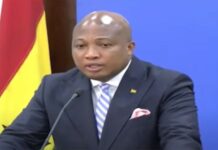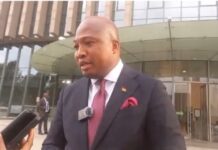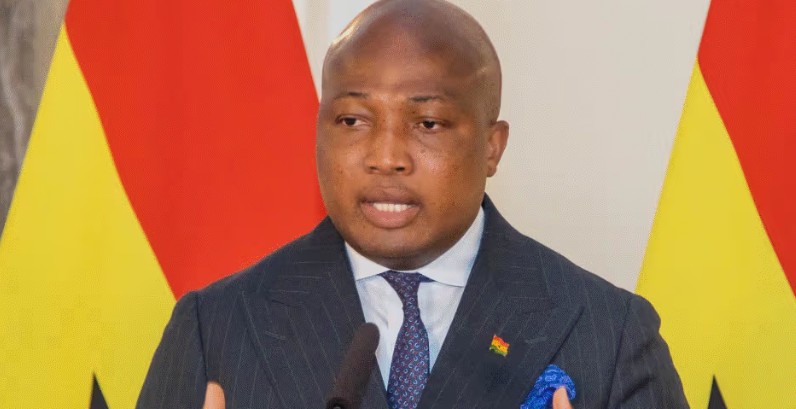

Foreign Affairs Minister Samuel Okudzeto Ablakwa has called on South African authorities to intensify efforts to end the ongoing wave of xenophobic attacks, warning that the violence is damaging the image of the African continent.
Speaking at a ceremony in Accra to receive another group of Ghanaian evacuees from South Africa on Monday, July 27, 2026, the Minister said Ghana would continue engaging the South African Government diplomatically while expecting stronger action to protect foreign nationals.
“We will continue to hold talks with the South African authorities to ease tension. We also hope that they will do better to remedy the situation,” Mr. Ablakwa said.
“This whole xenophobic attacks cast a very bad image of our continent,” he added.
His remarks came as about 150 Ghanaians arrived in Accra aboard the latest evacuation flights, bringing to three the number of flights that have transported citizens home since Ghana began emergency evacuations.
The latest phase is expected to cover about 1,000 more Ghanaians who have voluntarily registered to return home, with priority being given to women, children, the elderly, students and persons with medical conditions.
The returnees observed a moment of silence in memory of two Ghanaians who lost their lives during the violence before the Minister assured the returnees that the government would stand by them.
“You have never been orphaned,” he told them adding that “President John Dramani Mahama always says we should make sure our people are not abandoned. Our President does not compromise when it comes to the safety and welfare of Ghanaians.”
Mr. Ablakwa said the government remains committed to supporting every Ghanaian returning from South Africa, stressing that the assistance package announced for the first batch of evacuees would remain unchanged.
“As we did for your compatriots who came earlier, we’re going to do the same. Travel allowances, reintegration allowances — we’re not amending, not reducing, not changing because you’re all valuable Ghanaians who we adore and cherish so much,” he said.
Beyond the immediate financial support, he said government agencies are working to ensure the long-term reintegration of returnees through employment and entrepreneurship opportunities.
“We’re also following through to make sure that your reintegration in Ghana is complete. We’re compiling your database, and some have already secured jobs,” he disclosed.
Ghana has petitioned the African Union to place the xenophobic attacks high on its agenda while pursuing diplomatic and legal efforts to protect the interests of affected Ghanaians.
“We’re going to ensure that your properties left back are safe and you’re well compensated. The government is not going to abandon you in this moment of distress,” he assured.
Mr. Ablakwa also sought to counter narratives that have linked foreign nationals to criminality in South Africa, revealing that all Ghanaian evacuees had undergone screening.
“Not a single Ghanaian is a criminal or on a wanted list in South Africa after their screening. This shows you’re all law-abiding citizens,” he said.
While condemning the attacks, the minister expressed confidence that those involved did not represent the views of most South Africans.
“I want to believe that really the majority of South Africans do not endorse what a few are doing,” he said.
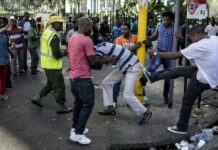
The evacuation exercise follows weeks of anti-migrant protests across parts of South Africa, where vigilante groups have accused foreign nationals of taking jobs and contributing to crime.
Although South African authorities have reported a smaller number of fatalities, Ghana has confirmed that two of its citizens were killed in the violence.
More than 160,000 foreign nationals from several African countries, including Ghana, Zimbabwe, Malawi, Mozambique, Nigeria, Kenya, Lesotho and Uganda, are reported to have left South Africa over the past two months as hostilities escalated.
Ghana has already evacuated more than 900 citizens in earlier phases of the operation.
Returnees are receiving a comprehensive reintegration package that includes direct cash assistance, reintegration allowances, relief items supplied by NADMO, free healthcare enrolment, psychological counselling, employment support and efforts to secure compensation for businesses and properties abandoned in South Africa.
By Christian Yalley