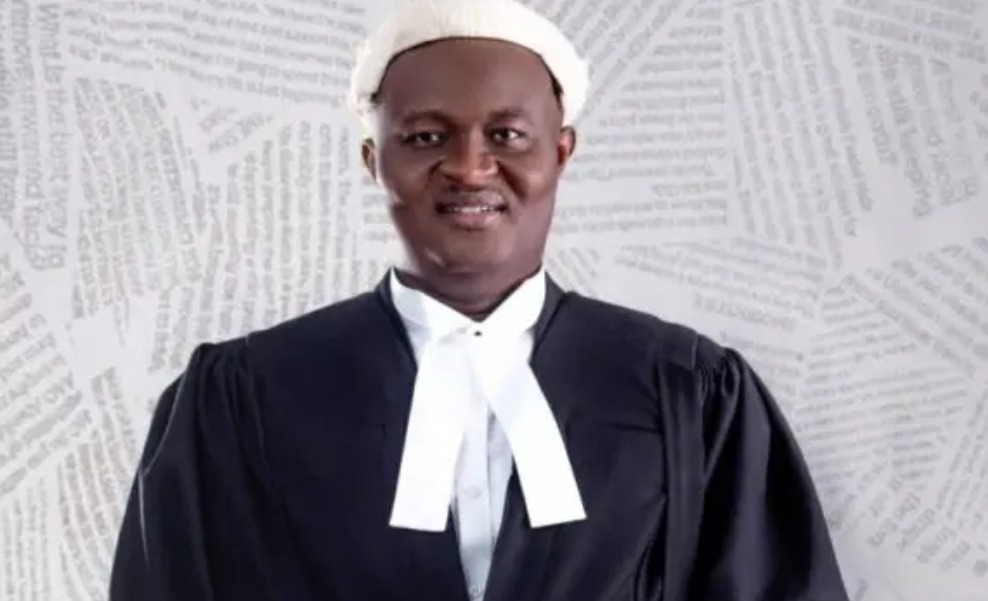

Ghana’s court system is characterised by delays due to the typing of proceedings and other challenges, therefore, the existing courts should be strengthened, instead of introduction of tribunals, a member of the New Patriotic Party (NPP), Kwasi Kwarteng, has said.
He expressed the view that the Tribunals Bill is not the solution to challenges of Ghana’s justice delivery system.
“Creating tribunals will not solve the challenges within our justice delivery system. The solution is to strengthen existing courts, not create parallel institutions.
“The biggest challenge is the trust and confidence people have about our justice system,” Kwarteng, also a legal practitioner, said on the Key Points on TV3 Saturday, July 18.
He added, “Why don’t you strengthen existing courts rather than creating parallel institutions.”
Also commenting on this issue, Martin Kpebu, Private Legal Practitioner, said that he supports the Minority’s call for due diligence in the passage and operationalisation of the Tribunals Bill.
He makes the point that the government ought to listen to the concerns and fine-tune the Bill. If not, he said, a future NPP administration can come in and amend the Bill.
“I support the minority’s call for due diligence in the passage and operationalisation of the Tribunals Bill. At this stage I think we should all join hands to make it work,” he said.
Kpebu said that Ghanaians do not want any excesses regarding the Tribunal Court system.
He commended the Minority for speaking in respect of the character of persons to be appointed to the regional tribunals.
“It’s good the Minority is talking about character. Character is a big problem all over the world… We don’t want excesses with the Tribunal system,” Kpebu said.
The Minority Leader, Alexander Afenyo-Markin, had called for the deletion of a key provision in the proposed Tribunals Bill, 2026, warning that the creation of district and regional tribunals would establish a parallel justice system and undermine Ghana’s existing judicial architecture.
The bill, passed by Parliament, seeks to reintroduce public tribunals as part of efforts to strengthen the administration of justice and improve access to courts.
The Bill will establish a reformed tribunal system to operate alongside the traditional courts, with constitutional backing, oversight mechanisms and safeguards for due process and human rights.
It also seeks to operationalise Article 126 of the 1992 Constitution, which provides for tribunals within Ghana’s judicial system but has largely remained dormant over the years.
Contributing to the debate on the bill in Parliament on Thursday, July 16, 2026, Mr. Afenyo-Markin urged the House to delete Clause 4 in its entirety, arguing that there was no justification for creating additional judicial structures when the country’s existing courts remained functional.
“Mr. Speaker, I move that the entire Clause 4 be deleted,” he said.
“My reason is very simple.”
The Minority Leader argued that while Articles 125 and 126 of the Constitution recognise the possibility of establishing tribunals, they do not compel Parliament to create them.
He maintained that Parliament should instead strengthen the existing court system rather than establish new institutions that could create uncertainty in the administration of justice.
“What kind of chaos are we introducing?” he asked.
“You have a district court, you have a circuit court, you have a high court, you have a court of appeal, you have a judiciary architecture that is not broken.”
According to him, disagreements over some judicial decisions should not be used to justify the establishment of what he described as a competing justice system.
“The disagreement we may have with certain pronouncements of certain judges… does not mean that we create some parallel structures that we call a justice system,” he said.
Mr. Afenyo-Markin questioned the intended jurisdiction of the proposed tribunals and whether they would handle civil or criminal matters, arguing that the bill lacked clarity on how the new bodies would fit into Ghana’s existing judicial hierarchy.
“How on earth do we create a new system to compete with a known system just because somewhere in the Constitution certain pronouncements are made?” he asked.
The Minority Leader said the Constitution deliberately gives Parliament discretion over whether to establish tribunals, insisting that lawmakers should exercise that discretion by rejecting the proposal.