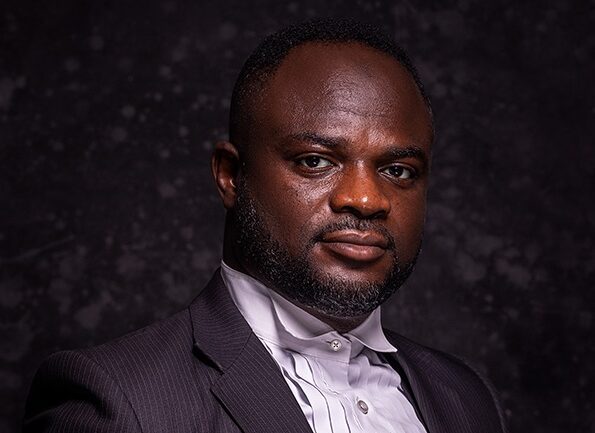

Private legal practitioner Justice Abdulai has called on government to invest in Ghana’s existing court system rather than establishing new tribunals to handle economic crimes and corruption cases.
According to him, the major challenges affecting justice delivery in Ghana are not the absence of tribunals, but inadequate infrastructure, limited judicial personnel and insufficient logistics.
Speaking on the debate over the proposed regional tribunals, Justice Abdulai argued that resources earmarked for creating new institutions could instead be used to strengthen existing courts.
“Why not use the same resources to strengthen what we already have?” he questioned on the KeyPoints on July 18.
He said Ghana’s judicial system continues to struggle with basic challenges, including a shortage of court buildings, judges and staff.
“The problems within our justice system go way beyond typing. We do not have enough buildings, we do not have enough judges, we do not have enough staff and we do not have enough logistics,” he stated.
Justice Abdulai said Ghana has made progress in expanding the judiciary over the years, but the growth has not matched the increasing number of cases before the courts.
He noted that some courts across the country operate without resident judges, forcing judges from other courts to assist.
“Today, I can give you more than 50 courts that do not have judges, and judges have to come from other courts to sit on those matters,” he said.
He added that even judges continue to face accommodation challenges, while several courts are overwhelmed with hundreds of pending cases.
“I can give you more than 10 courts that have over 500 cases each. That is practically impossible,” he said.
The legal practitioner also shared his experience with long-running cases, arguing that delays in Ghana’s justice system are far beyond the timelines often discussed.
Responding to concerns about cases taking two years to conclude, he said such a period could even be considered unusually fast in Ghana’s current system.
“Two years is like a birthday gift to you. If you are able to finish your case in two years, that is something,” he said.
Justice Abdulai cited a case that lasted 32 years, which he eventually inherited as a lawyer after previous lawyers had handled it.
“There was a case I studied in law school, I came and inherited it and I left it behind. This is what we are dealing with,” he stated.
On the fight against corruption, Justice Abdulai argued that Ghana already has structures capable of handling specialised cases if properly equipped.
He suggested the creation of dedicated courts within the existing judicial system instead of establishing tribunals.
“If we want to fight corruption, why don’t we have expanded circuit courts dedicated solely to those cases?” he asked.
According to him, such an approach would require fewer resources because existing legal structures are already in place.
“You don’t need to reinvent the wheel when you have an existing wheel fit for purpose that can be expanded to achieve the same objective,” he said.
Justice Abdulai acknowledged that public tribunals are recognised under the Constitution but argued that their historical baggage cannot simply be ignored.
He said changing the name or structure of tribunals does not erase public perceptions associated with their past.
“Changing the name, changing the clothes does not negate the history that it has,” he stated.
He maintained that Ghana must focus on fixing the underlying weaknesses in the justice system rather than introducing another institution.
By Christabel Success Treve