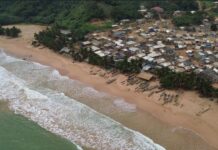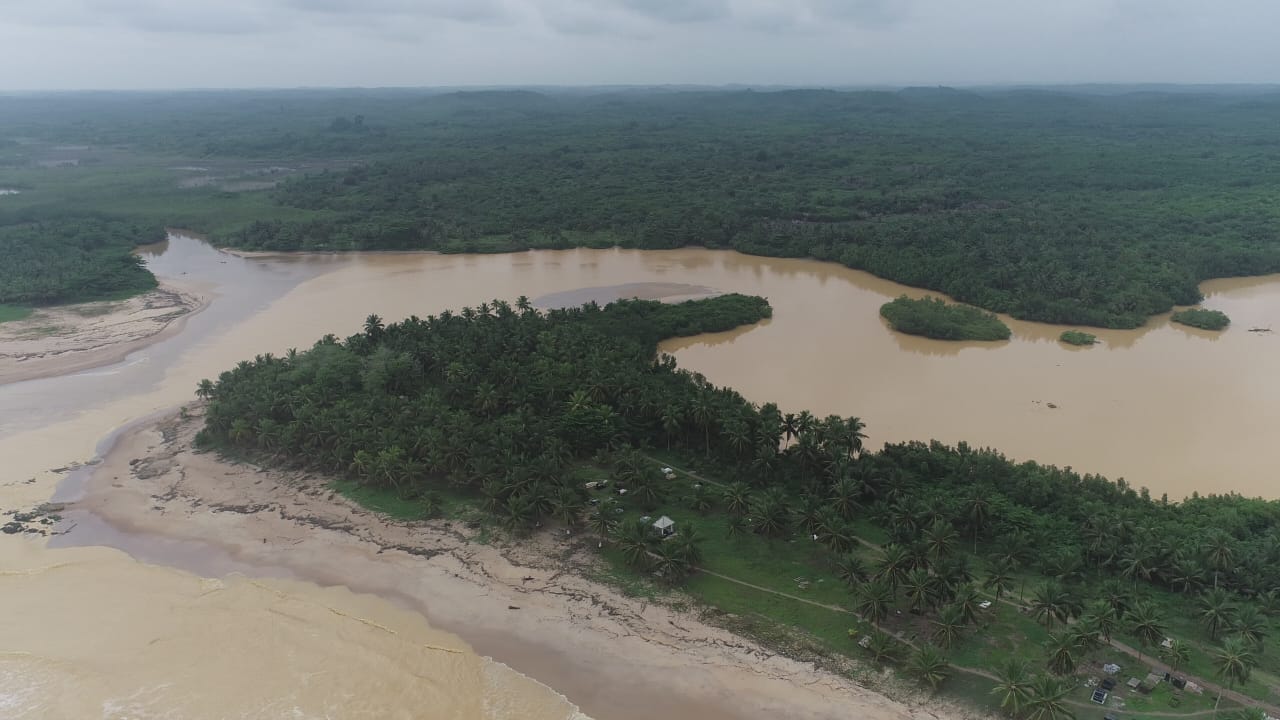

The Paramount Chief of Lower Dixcove, Nana Akwasi Agyeman IX, has issued a stark warning over illegal mining activities encroaching on the Greater Cape Three Points enclave, stating that the “galamsey invasion” is rapidly undermining Ghana’s first-ever Marine Protected Area (MPA) and threatening the livelihoods of coastal communities.
Speaking to Connect News on July 20, the traditional ruler expressed profound distress over the environmental devastation unfolding in the Cape Three Points Forest Reserve and along the coastline, noting that the destruction has reached a tipping point.
“If you go into that forest reserve, and see the destruction that is going on, you will cry as a Ghanaian,” Nana Akwasi Agyeman IX said.
The Paramount Chief drew urgent attention to the visible contamination of coastal waters, drawing a parallel to the heavily polluted Pra River in Shama, which has been rendered virtually lifeless by years of illegal mining discharge.
“That water is also changing colour, like what is happening with the Pra River in Shama,” he stated.
“Unfortunately, the area has also been declared as a Marine Protected Area to make sure we do something about our declining fish stock.”
He explained that the chemical runoff from upstream galamsey operations is altering the composition of the sea, with dire consequences for marine life.
“When the sea changes colour, definitely because of the chemicals used in illegal mining, the fish will not stay there. They will also try to survive…they will go deeper into the sea. And it is also going to affect that arrangement also. This is a very serious crisis,” the chief warned.
A Historic Declaration Under Siege
In April 2026, Vice-President Professor Naana Jane Opoku-Agyemang formally declared the Greater Cape Three Points area as Ghana’s first Marine Protected Area.
Covering approximately 700 square kilometres between Ampatano and Domunli, the MPA was established to restore declining fish stocks, conserve marine biodiversity, and strengthen coastal livelihoods for 21 communities in the catchment area.
The area is recognised as a biodiversity hotspot, home to critical spawning and nursery grounds for small pelagic fish such as sardinella, as well as marine mammals including whales, dolphins, and endangered sea turtles.
However, less than three months after its declaration, environmental advocates and traditional leaders are raising alarm that illegal mining activities upstream are already threatening the sanctuary’s survival.
Forest Reserve Devastation
The Cape Three Points Forest Reserve, which flanks the coastal MPA, has become a battleground for illegal miners. Reports indicate that vast swathes of the forest have been destroyed, with heavy machinery including excavators and “changfan” machines—locally known as “one leg”—operating deep within the environmentally sensitive enclave.
The National Anti-Illegal Mining Operations Secretariat (NAIMOS) has conducted multiple raids in recent months, arresting dozens of illegal miners and seizing equipment. In one operation, taskforce members resisted an attempted GH¢20,000 bribe from a suspected galamsey kingpin. Despite these enforcement efforts, the problem persists, with miners often returning to the sites shortly after operations conclude.
Threat to Fisheries and Livelihoods
Conservationists warn that pollution from illegal mining inland is flowing through rivers and estuaries into coastal ecosystems, depositing toxic sediments that threaten fisheries, mangroves, and aquatic habitats. Estuaries in communities such as Butre and Nyan are already showing signs of environmental stress linked to upstream mining operations.
Echoing these concerns, Stephen Kankam, Director of Hen Mpoano, a marine conservation organisation based in Takoradi, has called for immediate and decisive action. Speaking to Connect News, he outlined the urgent interventions required to salvage the situation.
“There should be immediate law enforcement within the Cape Three Points Reserve, adjourning rivers and watersheds, and also streams to flush out all the illegal miners; and also establish permanent protection camps within the forest raided to ensure that there is permanent law enforcement within the area.”
Kankam stressed that the destruction inland cannot be viewed in isolation, as the entire ecosystem is interconnected.
“The Cape Three Points Forest Reserve, and the adjourning mangrove ecosystem and rivers, are all connected ecologically with the marine protected area. So, all these systems should be managed as one integrated ecosystem, and this requires a partnership model around conservation.”
He further warned that without swift intervention, the MPA’s potential to restore fish stocks would be rendered meaningless.
“At the moment, with the ongoing trend in illegal mining activities and the pollution washing down the marine protected area, I think this will be a ‘pipe dream’ in terms of the marine protected area’s contribution to fish stock recovery.”
By Abraham Mensah