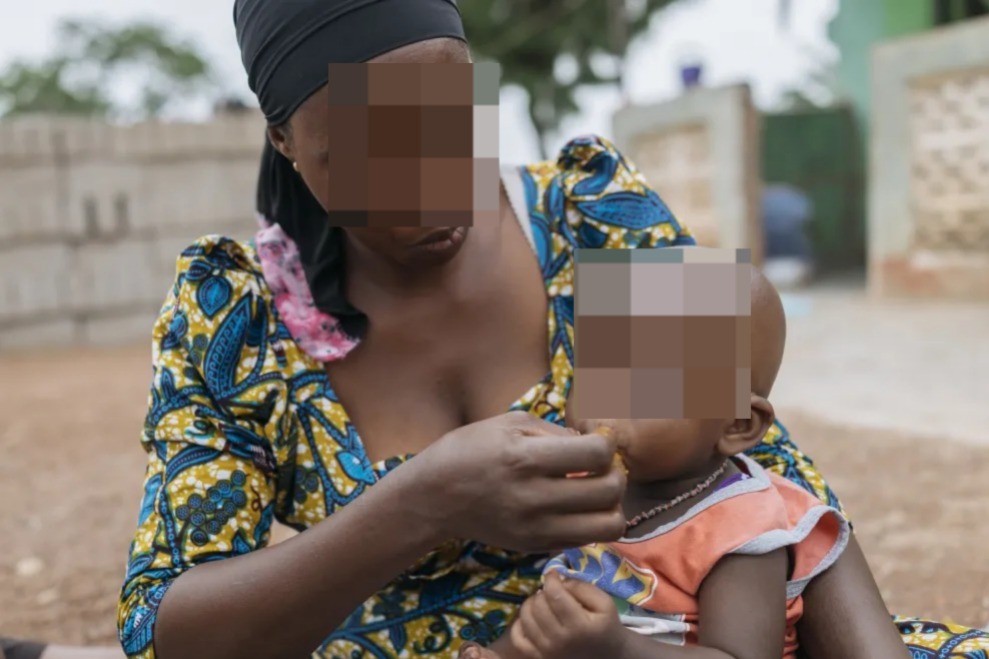

Health experts say the fight against child malnutrition begins long before a baby is born based on the health and nutrition of the mother during pregnancy.
Despite years of nutrition interventions, poverty, poor feeding practices and limited access to nutritious foods continue to place many children at risk.
Dozens of expectant mothers wait patiently for their routine antenatal check-ups at the ridge hospital ANC unit, each carrying a new life and the hope of delivering a healthy baby.
Bernice Adu Antwi is no exception.
As a first-time mother, she gave birth to underweight twins, although she understood the importance of eating well during pregnancy.
‘‘I had my babies underweight not because I didn’t eat well but because of complications. I used to eat kontomire a lot. At birth weight 1.3 and all, it was disturbing. They are five months now and I can’t wait to start complementary feeding next month. I want them to grow big. Now I do exclusive breastfeeding. I follow every instruction by the doctors.’’ She said.
For her, every antenatal and postnatal visit is helping her prepare for a healthier future, not only for herself but also for her children. Bernice’s story reflects a simple but powerful message: preventing child malnutrition starts before birth.
Health workers say Bernice’s experience is one they encounter all too often. When pregnant women do not receive adequate nutrition or suffer from conditions such as anaemia, undernutrition or obesity, their health and that of their unborn babies can be affected.
Such babies are more likely to have low birth weight, face malnutrition risks, or experience delays in physical growth and brain development.
Felicia Karley Martey, a Principal Nursing Officer at the Greater Accra Regional Hospital (Ridge) said, ‘‘I always tell my pregnant women that when you are pregnant, think about the baby as well as yourself. Because whatever you do affects your baby. They sometimes come with this spiker. They eat non-nutritional foods and they have the urge to eat this edible clay (ayilo), taking in caffeinated drinks which are all not good at that point for the pregnant woman because they are inhibiters of irons so when you take in those things, it doesn’t make your body absorb the iron that it needs from the food so we keep encouraging them’’.
The challenge does not end after birth.
Health workers say some babies are introduced to complementary foods too early or too late, while others are fed diets lacking the nutrients needed for healthy growth.
Madam Olivia Timpo, Deputy Director in charge of Nutrition. Family Health Division of the Ghana Health Service said ‘‘right from before pregnancy, through pregnancy, through delivery, till the child is three years, that is a critical period where we should ensure that the child is well nourished and would then grow and develop appropriately.
If we miss that window of opportunities, there are consequences. There will be brain malformation so the child would go to school and would not be as excellent as one will expect because the IQ is so low’’. She explained.
Nationally, about 17 percent of Ghanaian children under five are stunted, an indication of chronic malnutrition, while around six percent are underweight and seven percent are wasted.
Health experts warn that poor nutrition during the first 1,000 days from pregnancy to a child’s second birthday—can have lifelong consequences for learning, growth and productivity.
Although interventions such as growth monitoring, Vitamin A supplementation, and iron and folic acid support for pregnant women have improved child survival, challenges remain. Many vulnerable families still struggle to access nutritious food, despite efforts to promote exclusive breastfeeding and expand community nutrition services.
Madam Olivia Timpo says the recent flooding in parts of the country has heightened concerns about food insecurity, raising fears that more children could be at risk of malnutrition if support is not sustained.
‘‘For ready to use therapeutic foods, we currently have stock. For iron and folic supplementation for adolescent girls we have some stock out and for the IFA for pregnant women too we have some stock outs likewise the vitamin A.
But I am happy to say that the government is putting in efforts to get local production to start but generally we have attained a lot of success because of the way and manner our programmes are structured and implemented.’’ She noted.
With improved maternal nutrition, quality antenatal care, exclusive breastfeeding and sustained family support, health professionals say more Ghanaian children can have the healthy start they deserve.
By Sarah Apenkroh