

The Chiefs and people of Aboso and Bompieso in the Prestea Huni-Valley Municipality of the Western Region have issued a passionate appeal to the Minister for Lands and Natural Resources, Mr. Armah Kofi Buah, to reject a proposed takeover of their cooperative mining concessions by Global Ghana Ore Mining Industries Limited.
With a population exceeding 50,000, the communities argue that the takeover threatens not only their economic survival but also the social fabric that holds their towns together.
The mining firm officially acquired the Aboso-Bompieso mining concession after the Ministry of Lands and Natural Resources approved the transfer of the lease on January 3, 2025. The company was granted a 17-year large-scale mining lease in December 2024.
The concession stretches from Fanti Mine to Bompieso.
However, residents claim the concession has been a community-held resource since the 1980s, originally handed over to them by Goldfields Ghana Limited. Two community mining groups at Bompieso were granted five-year licences in March 2024, though some licences issued by the previous administration expired in November 2025.
The youth of Aboso have already staged protests against what they describe as the “sale” of their community mining concession to a foreign entity, warning that a takeover would lead to economic collapse and a resurgence of criminal activity.
For the people of Aboso and Bompieso, mining is not merely an economic activity it is identity.
Cooperative mining gives local people a sense of ownership over their natural resources. Replacing this with an external operator, residents fear, will create feelings of exclusion and resentment.
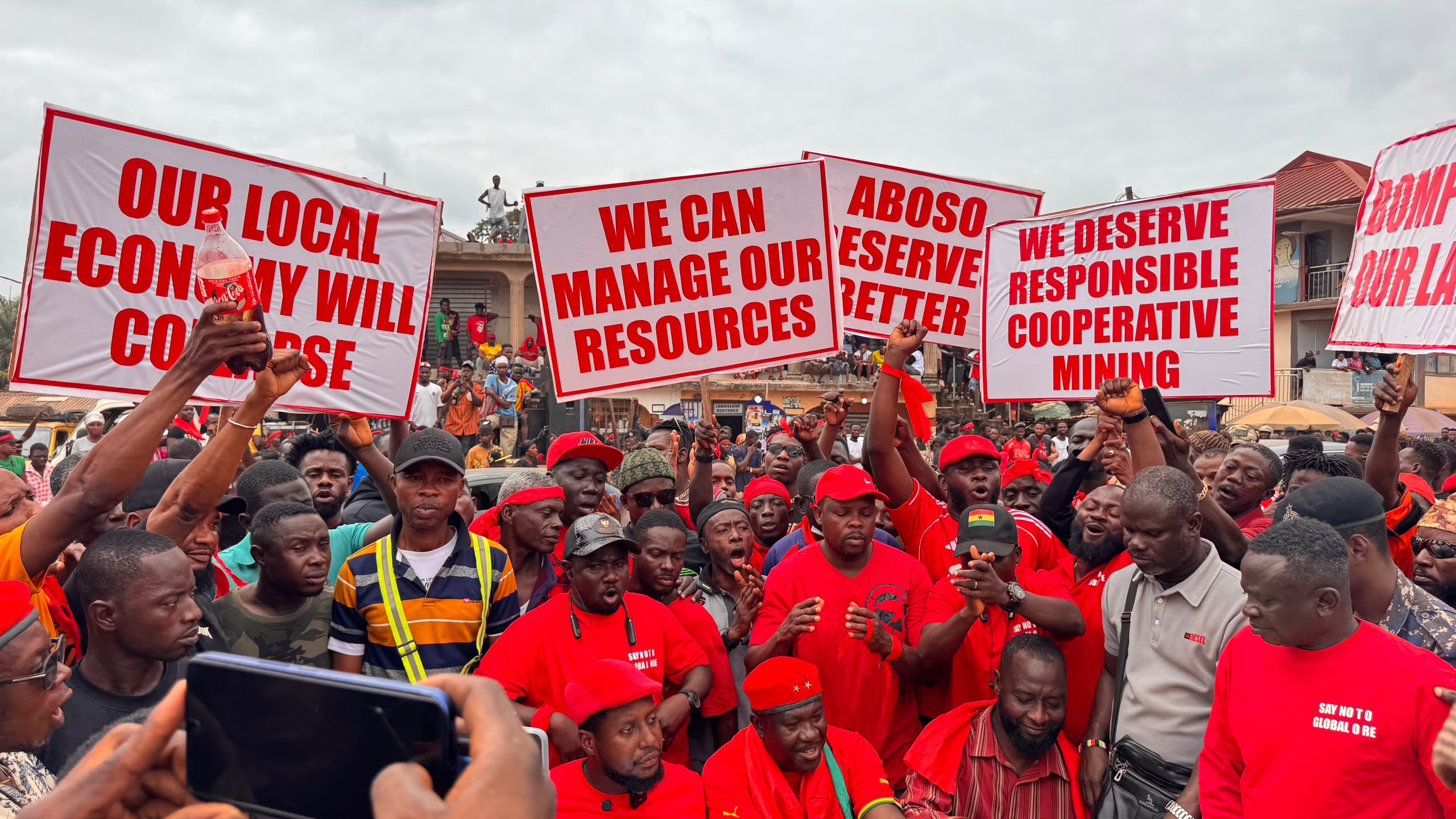
If livelihoods are threatened, tensions could escalate into demonstrations and conflicts, straining relationships between the community, authorities, and the company.
Chairman Dela Gudda, leader of the Aboso youth, noted that the availability of work at the concession has significantly reduced crime rates, as young people are engaged in productive labour rather than social vices. “The site has always remained a ‘community-first’ resource,” he emphasised.
The economic argument against the takeover is compelling. Cooperative mining allows earnings to remain within the local economy. If profits are transferred outside the community or abroad, local economic activity may grind to a halt.
The potential collapse of small businesses looms large. Food vendors, transport operators, gold buyers, equipment suppliers, mechanics, tailors, traders, and local landlords all depend on miners’ spending. Reduced household purchasing power would affect every sector of the local economy.
Cooperative members often invest in housing, education, farming, and businesses. Reduced earnings would slow community development and widen the gap between those who benefit from the new arrangement and those who do not.
Job losses are perhaps the most immediate and visceral concern. Existing cooperative workers may lose their employment if the foreign company restructures operations. Large mining companies often require specialised skills or qualifications that many current workers may not possess, limiting employment opportunities for local residents.
Thousands of people who earn indirect incomes from mining-related activities including site (“ghetto”) owners, leaching operators, gold buyers, equipment owners, and transport operators could be affected.
Youth frustration is particularly acute. Reduced opportunities for young people could contribute to higher levels of unemployment, crime, substance abuse, or migration.
Perhaps the most poignant irony is that Aboso and Bompieso are thriving because of cooperative mining. The communities themselves list their achievements:
· Infrastructure is developing well
· The town is always busy
· Businesses are booming
· Crime and social insecurity are no longer challenges
· Every household has a gainfully employed youth
· The towns are choked with traffic congestion—a sign of economic vitality, not a ghost town
Cooperative mining revenues often support local initiatives such as roads, schools, health facilities, water projects, and community programmes. The communities fear that a takeover would mean reduced local decision-making over how resources are managed and how development priorities are determined.
If economic activity contracts, local businesses may generate less taxable income, affecting municipal revenue. People who lose their livelihoods may leave the community in search of work elsewhere, reducing the local labour force and weakening the community’s economic base.
Global Ore has pledged to transform host communities through infrastructure development and full local content participation. Managing Director Joseph Yankson Forbah stated, “We are not just here to mine. We are here to transform lives”.
The company has promised to construct first-class roads, build schools and health facilities, and ensure strict environmental protection measures. In line with the government’s local content policy, the company would outsource some operations—including mining, catering, and engineering services—to Ghanaian businesses. A Community Employment Committee would be established to ensure qualified local people are given employment opportunities.
The Attorney-General’s Office has affirmed that Global Ore holds a valid large-scale mining lease and has the legal right to operate. The Western Regional Head of the Minerals Commission confirmed that the company has fulfilled all legal requirements.
However, questions remain. The Municipal Chief Executive for Prestea Huni-Valley noted that about six different groups, including Global Ore, are claiming ownership of the same concession. He raised doubts about the legitimacy of the transaction, noting that officials of Global Ore claimed to have purchased the concession but have been unable to contact the supposed seller.
The Chiefs and people of Aboso and Bompieso stand firmly united in their opposition. They are calling on the government to:
· Reject the proposal outright
· Conduct a thorough investigation into the matter
· Protect community interests over corporate ambitions
“Every household has a gainfully employed youth, thanks to cooperative mining,” the community leaders remind us. They argue that the takeover threatens to undo decades of community-led development and replace it with an uncertain future.
The youth have warned that they are prepared to defend their interests and have already begun organising a massive demonstration. The question now is whether the government will listen to the voices of over 50,000 residents or prioritise the interests of a foreign investor.
By Ebenezer Atiemo