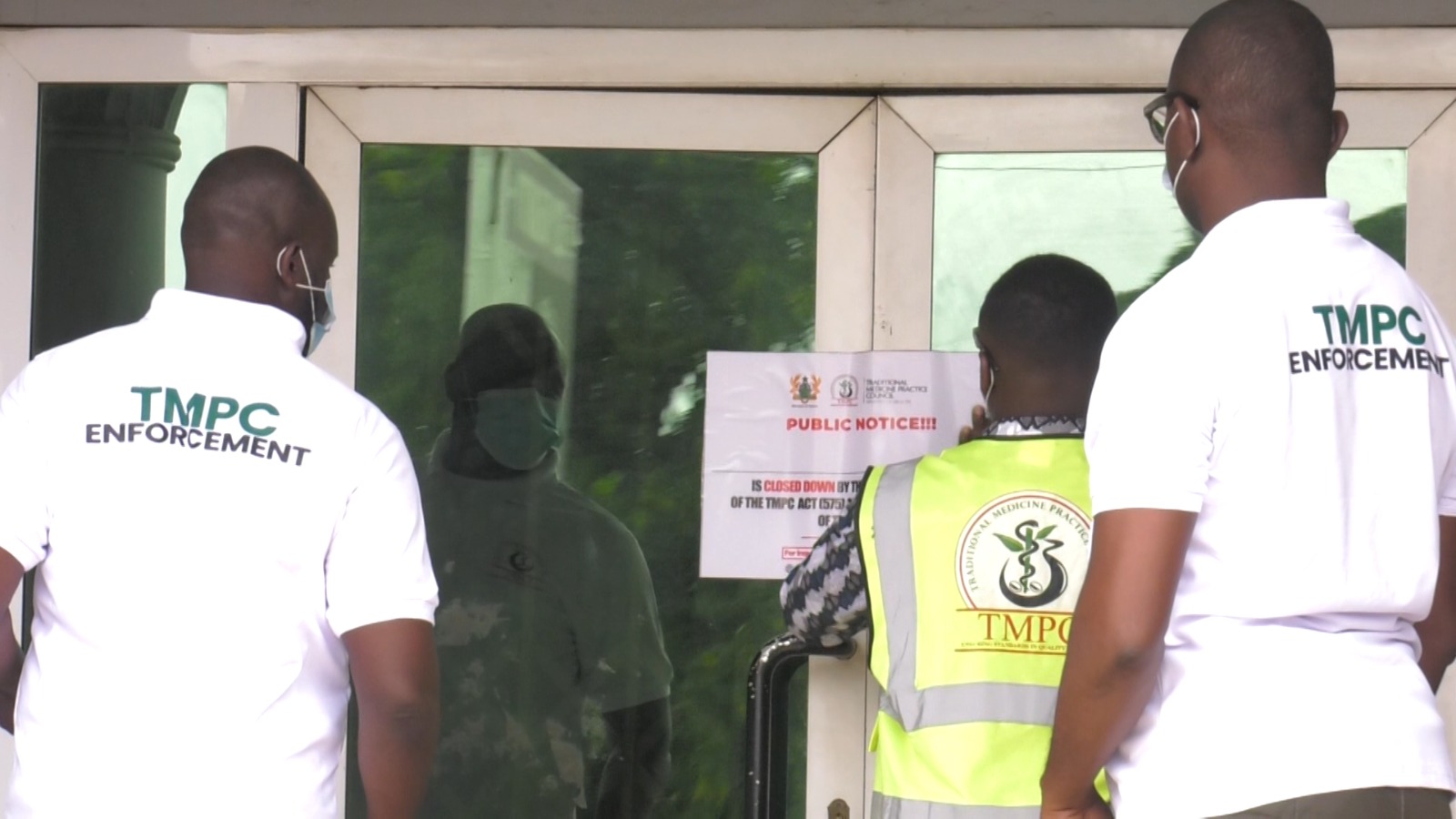

The Traditional and Alternative Medicine Practice Council (TMPC) has shut down about 30 traditional and alternative medicine facilities in the Ashanti Region for operating in breach of Ghana’s regulatory laws.
The closures followed the first phase of an enforcement exercise that inspected 55 facilities across the region to ensure compliance with the Traditional and Alternative Medicine Practice Act.
Head of Enforcement, Compliance and Inspection at the TMPC, Michael Lawson, said the exercise is aimed at protecting the public by ensuring only qualified and licensed practitioners provide traditional and alternative healthcare services.
“The Council is mandated to regulate providers of these services and ensure that they are licensed and certified. This is to guarantee public safety, public trust and public assurance that those providing these services are qualified and have the necessary expertise governed by the laws of Ghana,” he said.

According to him, the law requires three key components to be licensed or certified – the practice, the premises, and the practitioner.
He explained that services such as herbal medicine, chiropractic care, massage therapy, yoga, Ayurveda, naturopathy and homeopathy all fall under the Council’s regulatory mandate.
Mr. Lawson disclosed that inspectors found widespread violations during the operation, with many practitioners failing to display their licences as required by law.
“We have not visited a single facility where a practitioner had displayed his or her licence. Some say the licence is at home, others promise to bring it later. This is a serious infraction because the licence must be displayed in the facility at all times,” he stated.
The Council also expressed concern over facilities where unqualified persons were allegedly attending to patients in the absence of licensed practitioners.
“You visit those facilities and realise the practitioner is not on the premises. Some have established different branches and contracted unqualified persons to conduct consultations. This poses a very serious threat to public health and public safety,” Mr. Lawson warned.
He likened the situation to receiving treatment at a conventional hospital from someone without medical qualifications.
“It is just like going into an orthodox health facility and discovering that the medical officer does not have the necessary qualifications to provide the services you require.”
The TMPC says the enforcement exercise will continue in the coming weeks and has urged all practitioners to regularise their operations before inspectors return.
Mr. Lawson warned that operators who fail to comply with the law risk closure, prosecution and imprisonment.
“If you are found flouting the Council’s regulations, the Council has the power to prosecute you. Offenders may be fined or made to serve a jail term of up to two years.”
He disclosed that while some of the affected facilities have appealed to the Council and are taking steps to address the violations, legal action will be initiated against those that fail to comply.
“When we go back, we will engage the legal team to initiate criminal proceedings against practitioners who continue to operate without the necessary certifications and credentials.”
The Council has advised practitioners to visit offices, to obtain the required licences and certifications and avoid sanctions.