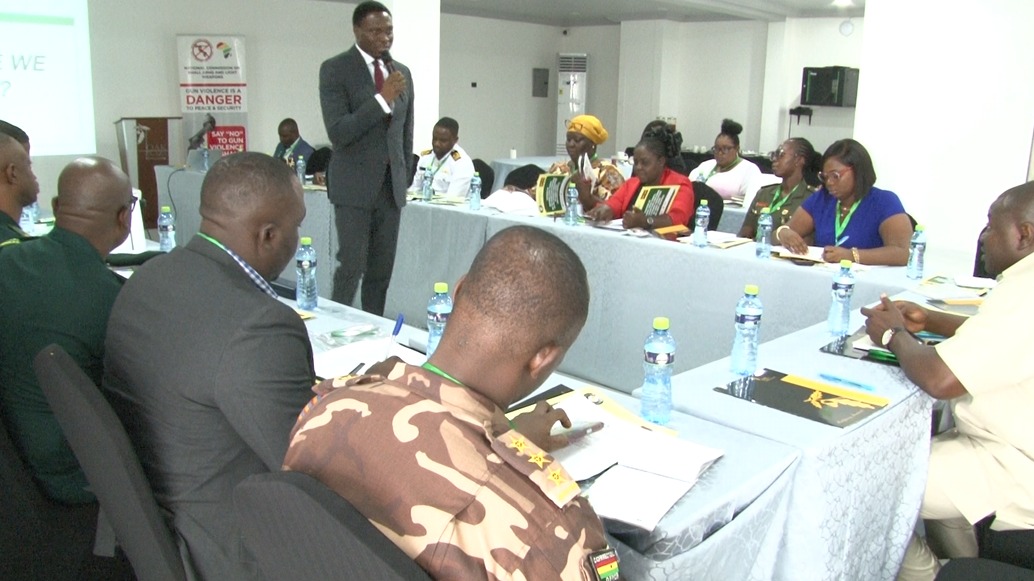

ECOWAS has begun a three-day training programme for national focal persons on exemptions under the ECOWAS Convention on Small Arms and Light Weapons.
The training, which began on August 17, 2026, seeks to strengthen arms transfer controls, promote transparency and improve cooperation among member states.
Although the ECOWAS Convention prohibits the import and export of small arms and ammunition, it allows limited exemptions under specific conditions and with the appropriate certification.
Acting Head of the ECOWAS Small Arms Control Division, Abayomi Adeomi, says the exemption process is intended to ensure legitimate arms transfers are properly regulated and documented.
He also identified porous borders and attacks on national armouries as major sources of weapons for violent extremist groups.
“One of them is our porous borders. If you travel across the region, you’ll find out many of the borders are not manned. So, the borders are porous, so this gives easy access to these groups to acquire arms and ammunition.”
Adeomi says ECOWAS is working with member states to strengthen border security, improve the management of national armouries and secure weapons stockpiles.
Executive Secretary of the Small Arms and Light Weapons Commission, Dr. Adam Bonaa, warned that exemptions must not become loopholes for illicit arms transfers.
He called for stronger inter-agency coordination, standardised procedures and continuous oversight to ensure exemptions remain strictly regulated.
“The exemption mechanism must not be regarded as an unrestricted avenue for arms transfer, but instead a careful control exception within the ECOWAS arms control regime.”
Dr. Bonaa also called for adequate resources to strengthen efforts to combat the illicit flow of weapons across the region.
Stakeholders say effective enforcement of the ECOWAS Convention, stronger border controls and sustained commitment from member states are critical to stemming the flow of illicit arms across West Africa.
By Beatrice Sowah