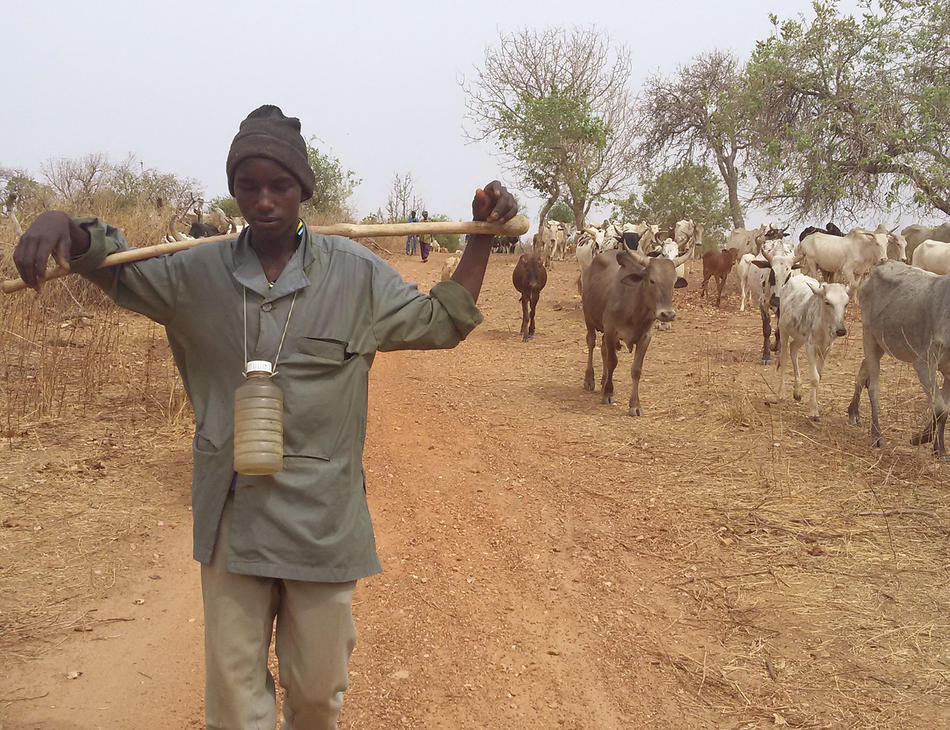

Between June and November 2025, the Transhumance Flow Monitoring (TFM) component of the Transhumance Tracking Tool (TTT) by the International Organization for Migration (IOM) and supported by Changing Lives in Innovative Partnership (CLIP) has recorded substantial livestock mobility across the Upper West and Upper East regions of Ghana.
A total of 4, 239 transhumant herders and 97, 395 animals here recorded in Upper East and Upper West regions with the Upper west Region recording the highest transhumant herders flow and animals of 3,694 and 72,745 respectively.
The objectives of the Transhumance Tracking Tool (TTT) include; Mapping of Transhumance Mobility, Established early warning system, Farmer-Herder Conflict Resolution and Improve Transhumance host communities resilience. The project collected data in two phases, June to November 2025 and February to June 2026.
The establishment of early warning signs and the Transhumance host community’s resilience under the tracking tool has managed to reduce conflicts between herders and community members through the creation of advocacy groups and volunteers in all the hot spots farmer herder communities in the two Upper regions.
These movements are primarily driven by seasonal patterns, as pastoralists migrate with their livestock in search of pasture and water resources during the dry season.
In the Upper West Region, a total of 3,694 transhumant herders were recorded traveling with approximately 72,745 animals across monitored corridors. The livestock composition was dominated by cattle (59,632), followed by sheep (10,166) and goats (2,621), with a smaller number categorised as other livestock (326).
The demographic profile of transhumant groups indicates that men constitute 42 per cent of the herders, while boys represent 21 per cent, women 20 per cent, and girls 17 per cent.
In the Upper East Region, the monitoring system recorded 545 transhumant herders traveling with approximately 24,650 animals. Similarly, in the Upper West Region, cattle constituted the majority of livestock (21,496), followed by sheep (2,910) and goats (241), with a minimal number categorized as other livestock (3).
The demographic composition in the Upper East Region differs slightly from that observed in the Upper West Region, with men accounting for 83 per cent of the herders, while women and boys each represent 7 per cent, and girls account for 4 per cent.
At a stakeholders’ meeting to disseminate the final results of the TTT, the monitoring and Evaluation officer of Changing Lives in Innovative Partnerships (CLIP), Dr. Alhassan Issah Suhiyini, said TTT became necessary due to negative effects it has on the sub-region and Ghana at large as far as cross-border movements are concerned.
Dr. Suhiyini indicated that, the results from the tracking tool will give stakeholders including the government an insight and a full understanding of the Transhumance movement into Ghana by herders from the Sahelian regions and how best to tackle and control these movements including Farmer-Herder conflicts.
A representative from IOM, Cyril Lamptey reiterated the need for government and other agencies to adopt the findings of the Transhumance Tracking Tool for a policy direction on how to manage the movement of Transhumance and animals.
The Fulani chief in Paga, Adama Musah, expressed satisfaction on the findings and has pledged the support on behalf of the Fulbe people of helping government agencies in controlling Farmer-Herder conflicts in host communities.
By Tanko Mohammed Rabiu