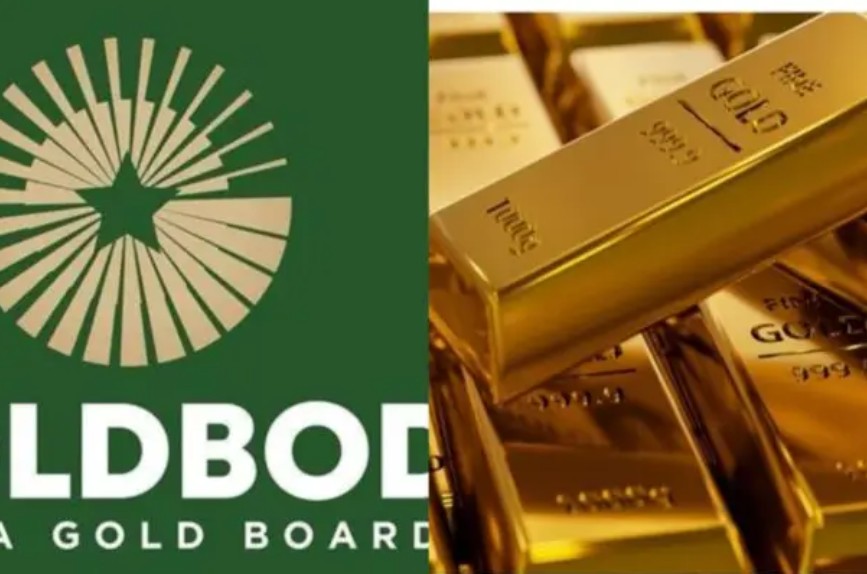

The Ghana Gold Board (GoldBod) is tightening Ghana’s gold export regime, ordering Self-Financing Aggregators (SFAs) to refine all gold doré in Ghana before it can be exported from September 1, 2026.
The directive comes at a time when the country is under growing pressure to extract greater economic value from its booming gold industry, following revelations by the International Monetary Fund (IMF) that the Bank of Ghana’s Domestic Gold Purchase Programme (DGPP) recorded losses of more than US$1.7 billion in 2025.
The IMF said the losses, equivalent to about 1.5 percent of Ghana’s GDP, were driven largely by the Gold-for-Reserves doré programme and included service and assay fees, discounts given to off-takers and, importantly, exchange-rate losses arising from the gap between the forex bureau rate used to purchase gold and the cedi reference rate used for BoG accounting.
The Fund, however, also acknowledged that the DGPP played a major role in rebuilding Ghana’s foreign exchange reserves. Gold-related inflows rose sharply, helping drive the country’s gross international reserves to US$11.9 billion by the end of 2025.
It is against this backdrop that GoldBod’s new refining requirement becomes significant.
Under the directive, which takes effect on September 1, “no gold doré shall be exported in its unrefined state.”
GoldBod says every offtake agreement between an SFA and an approved international buyer must now expressly provide for the mandatory refining of gold in Ghana before export.
“No request for the export of gold doré shall be approved by the GoldBod unless the gold has first been refined locally,” the Board said.
The policy is designed to keep more of the value generated from Ghana’s gold within the country instead of exporting doré for further processing abroad.
Doré is partially refined gold that still contains other metals and requires further refining before reaching high-purity bullion standards. By requiring that process to happen locally, Ghana can retain more refining activity, fees, technical expertise and other economic benefits associated with the gold value chain.
The directive also gives GoldBod control over where the refining takes place.
“All refining shall be undertaken only at a refinery approved or designated by the GoldBod,” the notice states, adding that the Board reserves the right to determine the refinery to be used for particular shipments.
The cost of refining will be borne by the SFA or its approved off-taker according to their commercial agreement, but the charge must be settled before the refined gold is exported.
Existing agreements must also be changed.
GoldBod has given all SFAs until August 31, 2026, to amend their existing offtake agreements and related commercial arrangements to include the mandatory local refining requirement.
The Board says it may request evidence of the amendments at any time.
From September 1, export approval will depend on GoldBod confirming that the gold has been refined in Ghana, the applicable refining charges have been paid or settled, all assay and regulatory requirements have been met and all other export conditions have been satisfied.
The consequences of non-compliance could be serious.
GoldBod warns that the export or attempted export of unrefined doré will constitute a breach of an SFA licence and could result in “the refusal or suspension of export approvals, suspension or revocation of licences, administrative sanctions and/or any other enforcement action” permitted under the Ghana Gold Board Act, 2025 (Act 1140).
The move also fits into a broader restructuring of Ghana’s gold sector.
The IMF says responsibility for the DGPP was transferred from the Bank of Ghana to GoldBod from July 1, 2026, removing the central bank’s exposure to the programme’s operational losses. The government and GoldBod are now responsible for the programme’s costs. (IMF eLibrary)
The IMF has also said Ghana is targeting a significant reduction in the cost of domestic gold purchases, from an average of 14.5 percent of gold purchase costs in 2025 to 5 percent. Reducing the foreign exchange spread, cutting fees and charges, streamlining the supply chain and improving negotiations with off-takers are all part of that effort.
GoldBod has defended the broader gold purchasing strategy, arguing that the programme generated substantial foreign exchange for Ghana. The Board says gold purchases and exports from the artisanal and small-scale mining sector generated more than US$10.8 billion in foreign exchange and helped the Bank of Ghana intermediate about US$10.6 billion into the market. It also says international reserves increased from US$8.9 billion to US$13.8 billion by December 2025.
The latest refining directive therefore represents another attempt to make the country’s gold strategy deliver more value.
The immediate objective is straightforward: Ghana does not want to simply buy gold locally and ship partially refined doré abroad. It wants more of the processing and value creation to happen at home.
And after a gold purchasing programme that helped generate billions of dollars in foreign exchange but also exposed the state to significant costs and exchange-rate losses, the challenge for GoldBod is now to ensure that Ghana captures more of the upside while reducing the leakages that contributed to the DGPP’s US$1.7 billion loss.
The policy takes effect September 1.
By Wisdom Sarfo